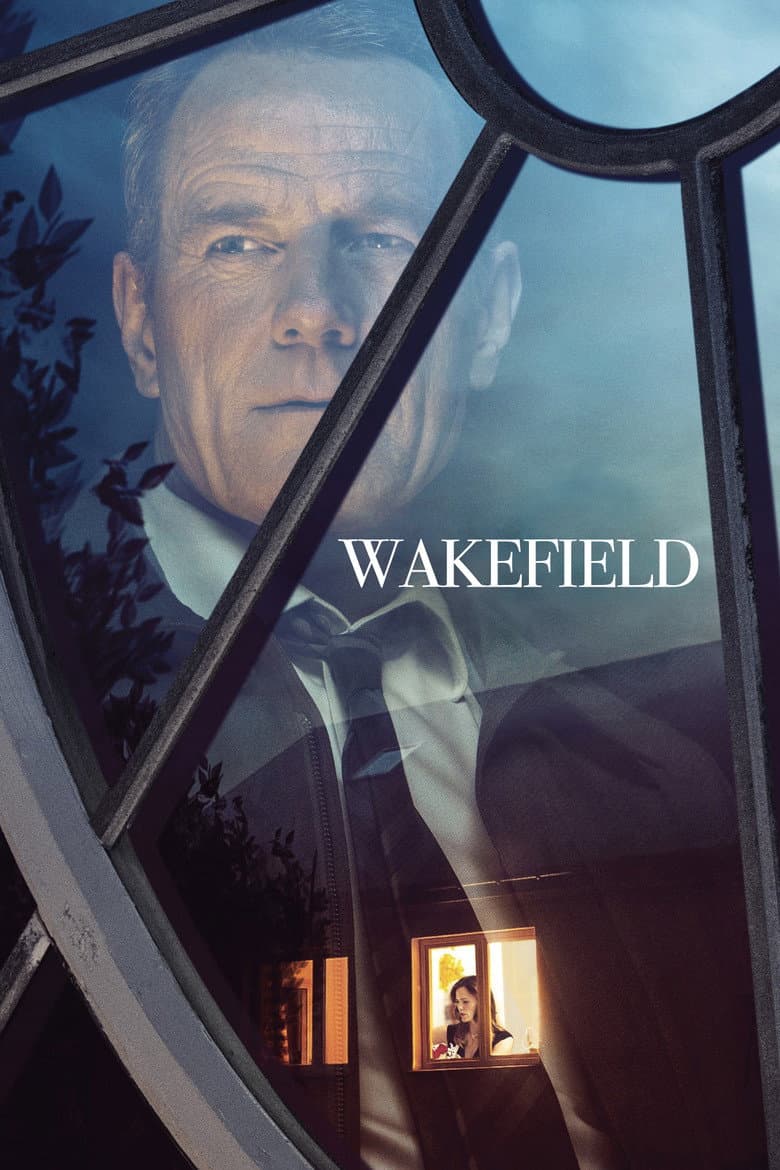
Howard Wakefield is a successful Manhattan lawyer who comes home after a hard commute and follows a raccoon into the attic above his garage. He decides to stay there instead of facing his wife, Diana, and their twin daughters. He watches the family through a window, steals food at night, and lets them think he is gone. The quiet drama is dark, strange, and sometimes funny as Howard turns a short escape into months of hiding.
The film makes Howard's selfish view of marriage its main subject. Howard sees Diana as a wife who belongs to him, but Diana keeps working, guards the family money, and raises the girls while he is away. The story criticizes his male entitlement and the old provider role, and it also includes lines about feminism, body shame, and caring for neighbors with Down syndrome. These ideas matter to Howard's change, but the film stays focused on one broken marriage instead of a broad political campaign.
Community feedback
Was our 44% Woke rating accurate?
Breakdown
These are the editorial factors and ratings behind our score for Wakefield.
Woke representation / casting
Not present. The main cast centers on a white married couple and their two daughters. The film includes an Asian male lawyer, a black female neighbor, and two neighbors with Down syndrome in supporting roles, but it does not frame this cast as a diversity message.
0%
Woke political dialogue
The film includes a brief gender-focused exchange about feminism and a woman's right to show her body without shame. Diana says she will not teach her daughters to feel ashamed of having bodies. Howard also treats support for neighbors with Down syndrome as a moral issue. These lines appear in a personal story and never become a repeated activist speech.
26%
Identity-driven story themes
The story centers on Howard's anger at marriage, fatherhood, and the role of the male provider. Howard treats Diana's choices as a threat and watches her learn to run the home without him. Diana keeps working, protects the money, and raises the girls while Howard learns that his old power came from being needed. The film presents male entitlement and fixed family roles as causes of harm. The theme runs through the whole story, but it stays tied to one troubled couple.
48%
Western institutional / cultural critique
Howard calls his job, suburb, marriage, and family routine a prison. Howard treats the provider role and the rules of marriage as limits that he can escape. The film shows a wife and children managing better after the father's disappearance. Swicord's title-related comments connect Howard's behavior to white male privilege, which adds a modern gender critique. The movie does not attack Western religion, capitalism, or public institutions in a broad way.
42%
Woke character or canon changes
Not relevant. The movie adapts a short story but keeps the same basic male lead, wife, family, and disappearance. No identity-based change to an established character or real historical figure appears.
0%
Anti-woke backlash and complaints
Not present. No clear anti-woke, DEI, or identity-politics backlash appeared in news, Reddit, or audience reviews. The supplied X pass also found no reaction, while the “could be more woke” review complained that the film did not go far enough and is not anti-woke.
0%
Creator track record context
Robin Swicord has an existing 34/100 score and a long focus on strong women. Amy Lippens has an existing 44/100 score and has described diversity as one part of her casting work. E. L. Doctorow has an existing 12/100 score, and most listed producers score low or moderate, with Jim Kierstead at 62/100 because of recurring LGBTQ theater work. The group gives moderate background context, but it does not show a strong activist profile for this film.
30%
Production

Movie · 2024
On the brink of the Second World War, a young Norwegian man's drive to resist the Nazis sets a new course for his future – and the future of his country.

Movie · 2023
The story of J. Robert Oppenheimer's role in the development of the atomic bomb during World War II.
Movie · 2020
A man refuses all assistance from his daughter as he ages and, as he tries to make sense of his changing circumstances, he begins to doubt his loved ones, his own mind and even…

Movie · 2016
After his older brother passes away, Lee Chandler is forced to return home to care for his 16-year-old nephew.

Movie · 2017
Members of the Granite Mountain Hotshots battle deadly wildfires to save an Arizona town.

Movie · 2023
American ballet dancer Joy Womack is accepted into Moscow's infamously tough Bolshoi Ballet Academy, with the dream of becoming a great ballerina.
Movie · 2016
On 15 January 2009, the world witnessed the 'Miracle on the Hudson' when Captain 'Sully' Sullenberger glided his disabled plane onto the Hudson River, saving the lives of all 155…

Movie · 2026
While people across 1990s Iraq struggle to survive the war and food shortages, Saddam Hussein requires each school in the country to prepare a cake to celebrate his birthday.
