Movie review
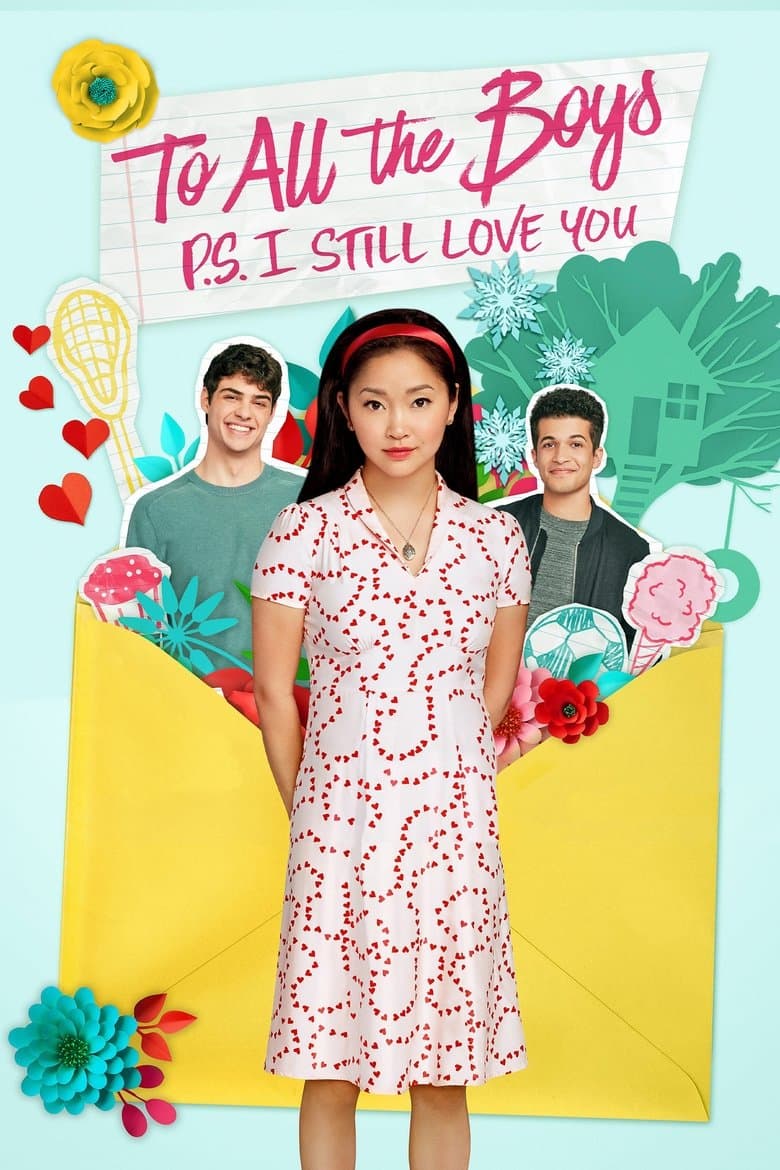
Lara Jean Covey is a shy high school student who has finally become Peter Kavinsky’s real girlfriend. She wants their first dates, kisses, and Valentine’s Day to feel like the perfect love story. Her old crush John Ambrose returns after receiving one of her secret letters, and Lara Jean starts to question what she wants. The story moves between school, family life, and a retirement home where Lara Jean volunteers. The tone is bright, sweet, and tense as the teenagers face jealousy, hurt, and first love.
Lara Jean’s Korean-American family and Korean traditions are visible in home scenes and at a formal dance. The film also gives Lara Jean a gay friend named Lucas, who offers advice but has no romance story of his own. A black actor plays John Ambrose, a major love rival beside the Asian-American lead. These identity elements are easy to notice, but the story keeps them inside a personal romance instead of turning them into political arguments.
Community feedback
Was our 32% Woke rating accurate?
Breakdown
These are the editorial factors and ratings behind our score for To All the Boys: P.S. I Still Love You.
Woke representation / casting
The movie places a Korean-American girl at the center of a mainstream teen romance. Lara Jean’s family shows Korean traditions, and John Ambrose is played by black actor Jordan Fisher as a major love rival. Lucas is also a black gay friend who appears in school and party scenes. These choices make diversity easy to notice, but the modern school setting makes them plausible and the film does not turn them into political speeches.
31%
Woke political dialogue
Not present. Lara Jean talks about love, jealousy, trust, and first experiences. The film does not use political or activist speeches.
0%
Identity-driven story themes
The movie gives Lara Jean a visible Korean-American family life and includes Lucas, who says he is gay and has only a few gay boys to date at school. Lara Jean tells him that life may offer more choices after high school. These identity details are clear but brief, while the main story stays about love, trust, jealousy, and growing up.
18%
Western institutional / cultural critique
Not present. The story does not attack family, religion, school, men, or Western institutions. Its conflicts concern jealousy, trust, and dating between teenagers.
0%
Woke character or canon changes
The film changes John Ambrose from a book character implied to be white to Jordan Fisher, a black actor. John is not a background figure because he becomes Lara Jean’s main romantic rival and shares several important scenes with her. Lana Condor publicly said she wanted the diverse film to be even more diverse and to look like the world she sees. The change is an identity-driven casting choice with a strong effect on a central subplot.
40%
Anti-woke backlash and complaints
Not present. Public discussion centered on the love triangle, the missing Josh, and whether the sequel matched the first film. No clear anti-woke or right-leaning campaign against the film was found.
0%
Creator track record context
Jenny Han has a mild representation focus because her stories center Asian-American teen leads and she has spoken about wider casting. Michael Fimognari and the other credited writers have no strong record of activist work. Several credited producers have supported women in complex roles and wider voices, but their careers are mostly commercial. The overall creator context is a mild supporting signal, not a strong activist pattern.
20%
Production
Movie · 2021
Senior year of high school takes center stage as Lara Jean returns from a family trip to Korea and considers her college plans — with and without Peter.
Movie · 2018
When teenager Elle's first kiss leads to a forbidden romance with the hottest boy in high school, she risks her relationship with her best friend.

Movie · 2025
Two down-on-their-luck hourly workers team up to rob a posh London department store on Christmas Eve. Will they steal each other's hearts along the way?

Movie · 2024
Fresh off an almost career-ending accident, stuntman Colt Seavers has to track down a missing movie star, solve a conspiracy and try to win back the love of his life while still…

Movie · 2018
A quirky couple spends their three-year dating anniversary looking back at their relationship and contemplating whether they should break up.

Movie · 2024
Fran likes to think about dying. It brings sensation to her quiet life. When she makes the new guy at work laugh, it leads to more: a date, a slice of pie, a conversation, a…

Movie · 2023
Michelle and Allen, who have reached the point in their relationship where they are considering next steps, decide to invite their parents to finally meet and to offer some…

Movie · 2026
Poppy's a free spirit. Alex loves a plan. After years of summer vacations, these polar-opposite pals wonder if they could be a perfect romantic match.
