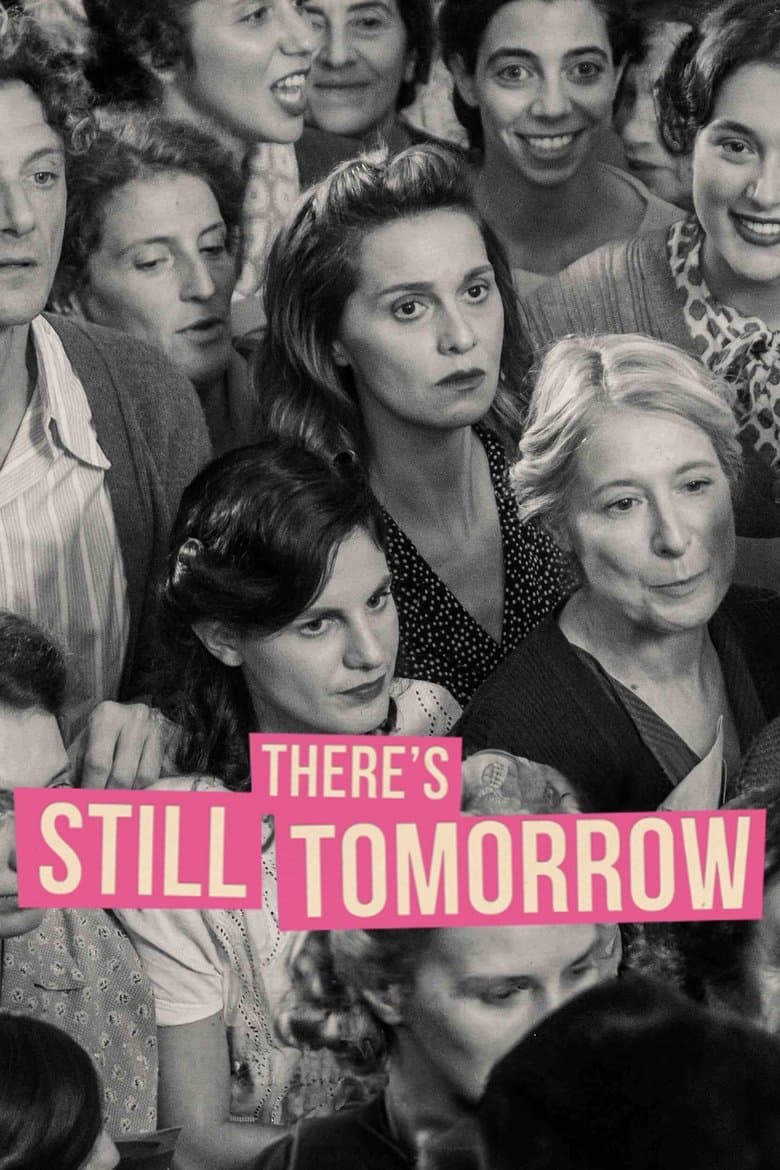
Delia is a poor wife and mother living in Rome in 1946. She works several small jobs, cares for her family, and hides the beatings and insults she receives from her husband Ivano. Her teenage daughter Marcella is preparing to marry a young man who seems kind but repeats the same controlling ideas. The film mixes painful domestic drama with jokes, music, and a final burst of hope.
The film makes women’s freedom its main subject. Delia slowly sees that obedience, marriage, money, schooling, and voting have all been used to limit women’s choices. The story treats male authority and family rules as a chain that can pass abuse from one generation to the next. Delia’s final trip to vote, alongside many other women, turns her private escape into a public sign of change. Its message is direct and modern, but it grows out of the 1946 setting rather than a race, sexuality, or diversity plot.
Community feedback
Was our 79% Woke rating accurate?
Breakdown
These are the editorial factors and ratings behind our score for There's Still Tomorrow.
Woke representation / casting
Not present. The film mostly casts Italian actors as a 1946 Roman family and neighborhood. William, the black American soldier, fits the Allied presence in postwar Rome, and the film does not present his race or the women-led cast as a diversity program.
0%
Woke political dialogue
Characters repeatedly say that women must obey men, work without control of money, marry for security, and stay quiet. Delia and Marcella discuss the choices that women are denied. The final voting scenes turn those ideas into a public call for women to take part in the country’s future. The film uses period dialogue more often than modern slogans, so the political wording is recurring but not constant.
43%
Identity-driven story themes
Delia’s fight for freedom is the main story, not a side plot. The film links wife beating, money control, forced obedience, early marriage, and lack of voting rights to a male-dominated society. Marcella faces the same danger through her fiancé, and Delia acts to stop it. The ending treats women voting together as a hopeful step toward equal lives.
76%
Western institutional / cultural critique
The film presents the traditional family order as a place where men claim authority and women are expected to serve. Ivano, his father, and Marcella’s fiancé show different forms of male entitlement. The story treats their behavior as part of a wider patriarchal culture and links private abuse to public rules about women. A brief church scene shows a distant priest, but the film does not make the Church a main target.
58%
Woke character or canon changes
Not relevant. The film is an original story about invented characters in a real historical setting. It does not change an established character’s race, sex, sexuality, or leadership role.
0%
Anti-woke backlash and complaints
Several Italian X accounts called the film feminist or woke propaganda and attacked its picture of an evil white husband, a kind black American soldier, and the voting ending. A right-leaning Italian outlet said the film was against the traditional family and used an unfair picture of the old Church. These complaints repeated across posts and received some reach, but no boycott, review-bomb, or large news cycle followed. Claims that Oscars rejected the film because of diversity rules were later corrected, so they do not add to the score.
38%
Creator track record context
Cortellesi’s cached profile shows a repeated focus on women’s equality, freedom, and abuse. Calenda and Andreotti have long records of stories about women, family pressure, unequal chances, and social exclusion. Casting director Laura Muccino has discussed female leads, the male gaze, and casting as a cultural choice. The listed producers are more mixed, and most have no strong public activist profile.
60%
Production

Movie · 2023
Two mismatched entrepreneurs – egghead innovator Mike Lazaridis and cut-throat businessman Jim Balsillie – joined forces in an endeavour that was to become a worldwide hit in…

Movie · 2023
The true story of how Dave Fishwick, a working class man and self-made millionaire, fought to set up a community bank so that he could help the local businesses of Burnley not…

Movie · 2025
An eccentric lottery winner who lives alone on a remote island tries to make his fantasies come true by getting his favourite musicians to perform at his home.

Movie · 2020
A teenager lives out the hilarious and often tragic consequences of being lethally attractive, until he meets a girl with a congenital defect.
Movie · 2017
When dictator Joseph Stalin dies, his parasitic cronies square off in a frantic power struggle to become the next Soviet leader.

Movie · 2017
Ingrid becomes obsessed with a social network star named Taylor Sloane who seemingly has a perfect life. But when Ingrid decides to drop everything and move west to be Taylor's…

Movie · 2018
An American hypochondriac who is working as a baggage handler is forced to confront his fears when a British teenager with a terminal illness enlists him to help her carry out her…

Movie · 2025
Lily Trevino unexpectedly befriends an online stranger who shares her self-centered father’s name. This new Bob Trevino’s support could transform her life.
