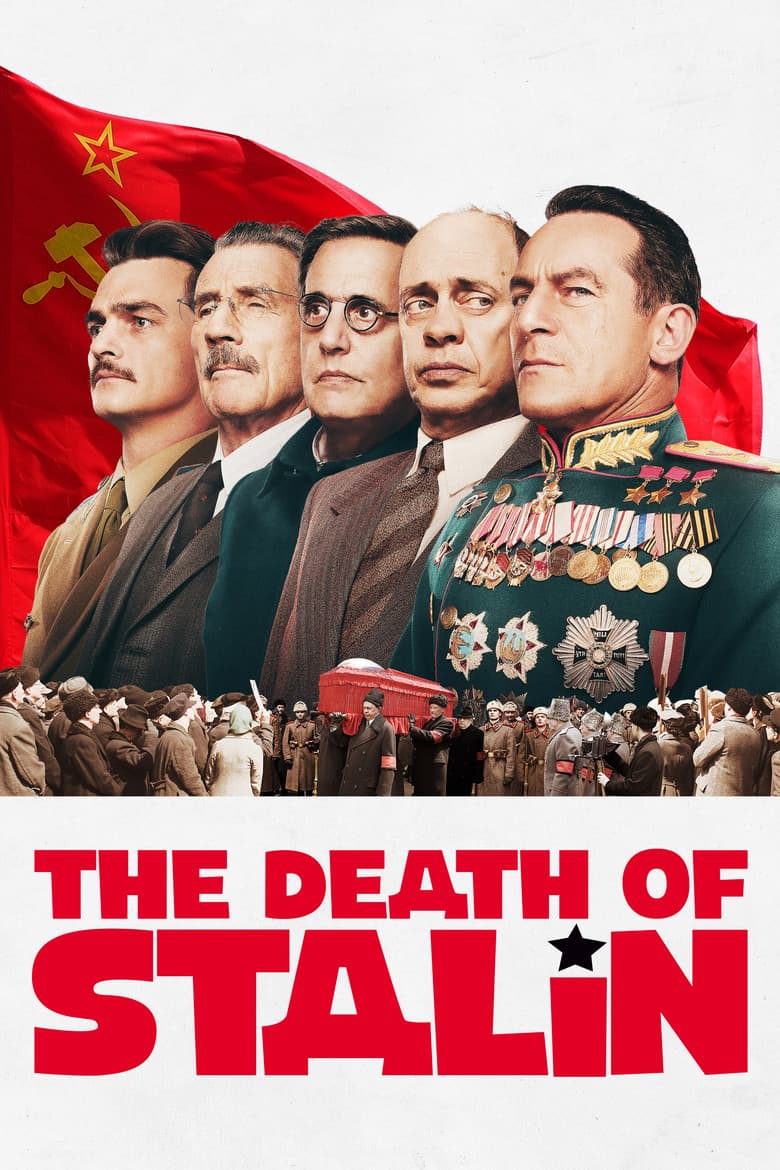
The Death of Stalin is a dark comedy about the power fight that starts after Joseph Stalin dies. Soviet leaders scramble for control while living in fear of purges and betrayal. The story comes from a French graphic novel and focuses on terror under dictatorship and the absurd habits of communist bureaucracy. It treats Stalinism as a moral black hole and shows backstabbing for succession. It is not a modern identity politics story.
There is little to no woke content. The cast plays real historical figures, and there are no race or gender swaps made for diversity goals. The dialogue stays inside the period power struggle and does not push modern social justice language. Beria’s crimes and other horrors read as historical evil and regime terror, not as messages about current Western equity ideas. Public fights around the film came from Russia’s ban and some left wing claims that it is anti communist propaganda, not from anti woke complaints about DEI.
Community feedback
Was our 5% Woke rating accurate?
Breakdown
These are the editorial factors and ratings behind our score for The Death of Stalin.
Woke representation / casting
Not present. Ensemble of mostly British and American men playing 1953 Soviet leaders and Stalin’s children; women are historically grounded (Svetlana, pianist Maria Yudina, Polina Molotova). No quota-style diversity pattern or identity-first casting in heroic or power roles.
0%
Woke political dialogue
Not present. Dialogue is period power-struggle farce about purges, loyalty tests, and succession. No activist language about race, gender identity, systemic privilege, or modern social-justice causes.
0%
Identity-driven story themes
Not present. Story is succession comedy-horror under Stalinism. Beria’s rapes and the Doctors’ Plot read as historical evil and regime terror, not as identity-politics messaging about current Western equity frameworks.
0%
Western institutional / cultural critique
The film mainly mocks Soviet tyranny and communist bureaucracy. It is anti-tyranny satire rather than a modern attack framed around toxic masculinity, patriarchy, or colonial guilt. Any mild present-day edge comes only from autocrat and media-control parallels some critics and Iannucci noted after release. It is not a sustained attack on Western institutions, faith, or traditional family norms.
5%
Woke character or canon changes
Not relevant. Adaptation compresses history and uses comic anachronistic speech and accents. There are no identity-driven race or gender swaps of established figures or ideological rewrites of source characters for DEI aims.
0%
Anti-woke backlash and complaints
Not present. Controversies were Russia’s ban over anti-Russian and anti-Soviet insult claims and some left or communist complaints that it is anti-communist propaganda. No significant right-leaning or anti-woke audience campaign claims the film pushes DEI or identity politics.
0%
Creator track record context
Iannucci and his circle are liberal political satirists known for The Thick of It and Veep. They lean left on issues like Brexit and Labour, yet Iannucci has also criticized comedy self-censorship and wokeness. Producers and other writers are largely non-activist. The overall pattern is classical political satire, not identity or DEI activism.
12%
Production
Movie · 2018
Vignettes weaving together the stories of six individuals in the old West at the end of the Civil War. Following the tales of a sharp-shooting songster, a wannabe bank robber, two…
Movie · 2022
Two lifelong friends find themselves at an impasse when one abruptly ends their relationship, with alarming consequences for both of them.
Movie · 2024
Pansy is a woman so full of rage that every interaction she has devolves into lashing out, whether at her utterly cowed husband and son, or random strangers who have the temerity…
Movie · 2017
Ingrid becomes obsessed with a social network star named Taylor Sloane who seemingly has a perfect life. But when Ingrid decides to drop everything and move west to be Taylor's…
Movie · 2023
Single mom Flora is at a loss about what to do with her rebellious teenage son, Max. Her efforts to keep him out of trouble lead to a beat-up acoustic guitar, a washed-up LA…
Movie · 2016
Two high school girls are best friends until one dates the other's older brother, who is totally his sister's nemesis.

Movie · 2019
An unlikely friendship between two neighbors becomes an unexpectedly emotional journey when the younger man is diagnosed with terminal cancer.
Movie · 2017
The true story of pilot Barry Seal, who transported contraband for the CIA and the Medellin cartel in the 1980s.
