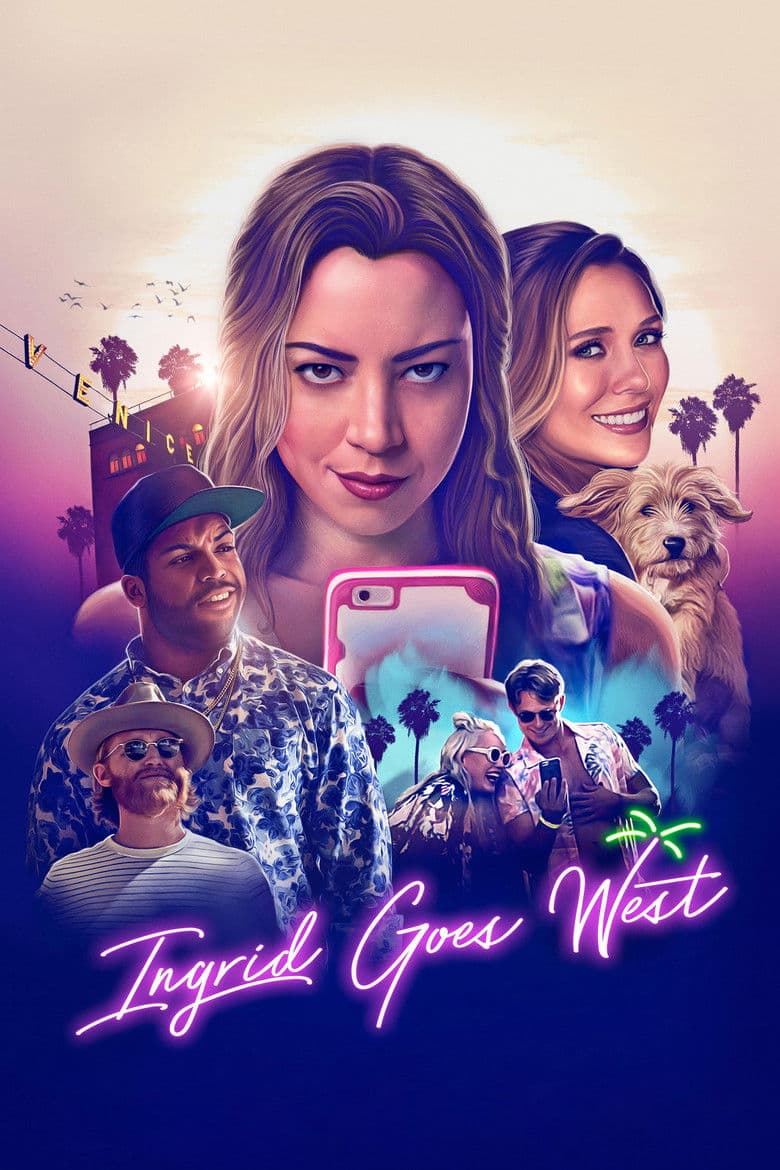
Ingrid Thorburn is a lonely young woman who has just left a treatment center after attacking a woman whose wedding she followed online. After her mother dies, Ingrid uses the money she receives to leave Pennsylvania and move to Venice Beach, California. She chooses a new target, Instagram star Taylor Sloane, and tries to become her closest friend. Ingrid steals Taylor’s dog, copies her tastes, and lies to enter her life. The movie is a dark, tense comedy about stalking, grief, and the need to be noticed.
The main identity-related material is the film’s focus on two women and Ingrid’s intense, partly romantic crush on Taylor. Ingrid copies Taylor because she does not know who she is, while Taylor sells a polished image of female friendship, beauty, and success. The story also pokes at the pressure on women to look happy, stylish, and socially wanted online. It does not turn these ideas into a political speech, and it shows both women as selfish, dishonest, and damaged. Most of the film’s message targets social-media addiction, fake lifestyles, loneliness, and mental health rather than identity politics.
Community feedback
Was our 11% Woke rating accurate?
Breakdown
These are the editorial factors and ratings behind our score for Ingrid Goes West.
Woke representation / casting
Not present. The lead cast is mainly white, with a black male landlord and supporting actors in a modern Los Angeles setting. The film does not frame these choices as a diversity or identity message.
0%
Woke political dialogue
Not present. The dialogue uses hashtags, dating talk, insults, and arguments about honesty. It does not push modern identity, DEI, or activist ideas.
0%
Identity-driven story themes
Ingrid builds her identity around Taylor and copies another woman’s style, tastes, and online image. Ingrid’s fixation includes a female-to-female crush, and the story repeatedly links being liked with feeling real. Taylor’s polished image shows pressure on women to look happy, stylish, and wanted. The film treats these problems as personal and social-media problems, not as a campaign about gender or sexuality.
18%
Western institutional / cultural critique
Not present. The film mocks influencer culture, luxury wellness, and online marketing. It does not attack Christianity, traditional family life, or Western institutions through a modern activist message.
0%
Woke character or canon changes
Not relevant. This is an original story with no pre-existing characters, real historical figures, or source canon to change.
0%
Anti-woke backlash and complaints
Not present. The supplied X pass found no anti-woke reaction. Other discussions focused on social-media satire, mental health, the ending, and whether the film was too cynical, not woke or DEI complaints.
0%
Creator track record context
Matt Spicer’s cached score is 14/100. His work centers on social media and personal obsession, and no activist record is reported. David Branson Smith’s cached score is 7/100, with no public identity-activist pattern. Aubrey Plaza’s cached score is 35/100 because she has a left-leaning Democratic record and has spoken about attraction to women and men, but she is not a full-time DEI activist. The other cached producers have low scores or no clear activist pattern.
12%
Production
Movie · 2017
Matt Ryder is convinced to drive his estranged and dying father Benjamin Ryder cross country to deliver four old rolls of Kodachrome film to the last lab in the world that can…
Movie · 2023
Two mismatched entrepreneurs – egghead innovator Mike Lazaridis and cut-throat businessman Jim Balsillie – joined forces in an endeavour that was to become a worldwide hit in…

Movie · 2022
Two lifelong friends find themselves at an impasse when one abruptly ends their relationship, with alarming consequences for both of them.

Movie · 2016
Aspiring New York City artist John Hollar returns to his Middle America hometown on the eve of his mother’s brain surgery.

Movie · 2016
Having suffered a tragedy, Ben becomes a caregiver to earn money. His first client, Trevor, is a hilarious 18-year-old with muscular dystrophy.

Movie · 2019
An unlikely friendship between two neighbors becomes an unexpectedly emotional journey when the younger man is diagnosed with terminal cancer.

Movie · 2018
An American hypochondriac who is working as a baggage handler is forced to confront his fears when a British teenager with a terminal illness enlists him to help her carry out her…

Movie · 2018
Vignettes weaving together the stories of six individuals in the old West at the end of the Civil War. Following the tales of a sharp-shooting songster, a wannabe bank robber, two…
