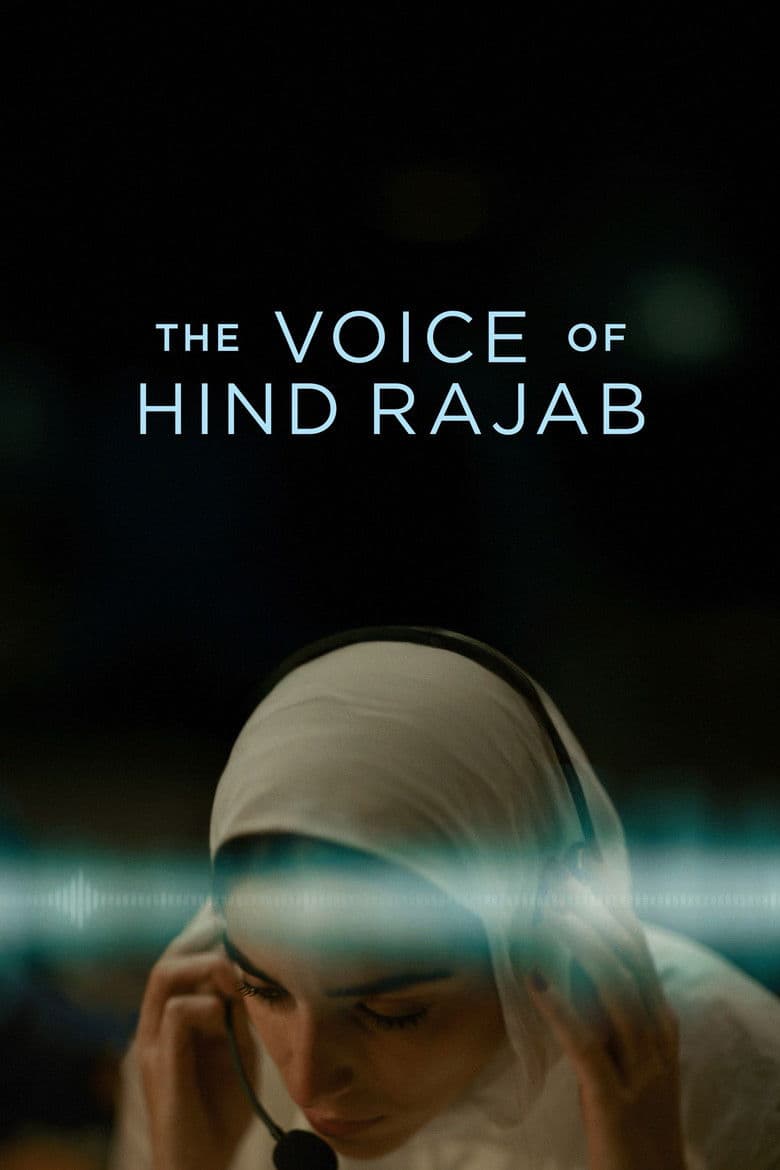
The film follows Hind Rajab, a young Palestinian girl trapped in a bullet-hit car in Gaza after her family is killed around her. Red Crescent workers in Ramallah stay on the phone with her while they try to send an ambulance through a dangerous war zone. The film stays mostly inside their call center and turns the rescue into a slow, painful thriller. The tone is tense, grim, and deeply sad.
The film's main woke element is its direct political message about Palestinian suffering and Israeli military control. It repeatedly shows the rescue blocked by rules, permissions, and aid systems linked to the war. The workers speak about the army, the occupation, Gaza's wider suffering, and the need to make a child's voice heard. The real phone recording and the ending cards turn the story into a strong act of public witness.
Community feedback
Was our 79% Woke rating accurate?
Breakdown
These are the editorial factors and ratings behind our score for The Voice of Hind Rajab.
Woke representation / casting
Not present. The film uses Palestinian actors to play Palestinian rescue workers in a Palestinian setting. This matches the story and does not show a diversity-first cast.
0%
Woke political dialogue
The characters repeatedly discuss the Israeli Army, military approval, phone jamming, and the need for a safe route. Omar demands action while the rescue is delayed by military rules. Mahdi explains COGAT and the system that controls ambulance movement. The dialogue also says that a child's rescue could be used for propaganda and describes Gaza as needing wider help.
55%
Identity-driven story themes
The story centers on a Palestinian child whose voice becomes a symbol of civilian suffering in Gaza. The rescue workers try to keep her alive while a military system blocks their path. The film links her death to the wider suffering of Palestinians and to the world's failure to respond. The ending asks viewers to remember her and the other dead.
74%
Western institutional / cultural critique
The dispatchers face rules from the Red Cross, outside offices, and military authorities before they can send an ambulance. The film shows the international aid system as slow and unable to protect a child. The characters describe a system in which help depends on permission from the army. This repeated focus makes Western institutional / cultural critique a major part of the rescue story.
56%
Woke character or canon changes
Not relevant. The film is a dramatization of a recent real event. It changes timing and dialogue for a movie, but it does not make an identity-based change to the real people or event.
0%
Anti-woke backlash and complaints
A JNS opinion article called the film a tool for Palestinian victimhood and Israeli oppression. Some online posts and a small YouTube commentary called the film propaganda and accused it of serving a pro-Palestinian agenda. Other coverage treated these claims as opinion or debate rather than proven facts. The separate X research pass found no anti-woke reaction.
38%
Creator track record context
Kaouther Ben Hania has a long record of films about women, oppression, migration, and marginalized Arab voices. Her public comments about Gaza describe silence as complicity and say film can protect Palestinian memory. Several producers also have records tied to race, Palestinian stories, or social justice. Other producers have low or mild activist profiles, so the context is strong but not uniform.
63%
Production
Movie · 2016
After his older brother passes away, Lee Chandler is forced to return home to care for his 16-year-old nephew.
Movie · 2017
Members of the Granite Mountain Hotshots battle deadly wildfires to save an Arizona town.
Movie · 2016
WWII American Army Medic Desmond T. Doss, who served during the Battle of Okinawa, refuses to kill people and becomes the first Conscientious Objector in American history to…
Movie · 2023
The story of J. Robert Oppenheimer's role in the development of the atomic bomb during World War II.
Movie · 2020
A man refuses all assistance from his daughter as he ages and, as he tries to make sense of his changing circumstances, he begins to doubt his loved ones, his own mind and even…
Movie · 2025
Diagnosed with Tourette Syndrome at 15, John Davidson navigates his way against the odds through troubled teenage years and into adulthood, finding inspiration in the kindness of…
Movie · 2022
Based on a true tragedy, the emotionally triggering film sheds light on the plight of Kashmiri Pandits (Hindus), a religious minority in the 1990s Kashmir valley, who were…
Movie · 2016
On 15 January 2009, the world witnessed the 'Miracle on the Hudson' when Captain 'Sully' Sullenberger glided his disabled plane onto the Hudson River, saving the lives of all 155…
