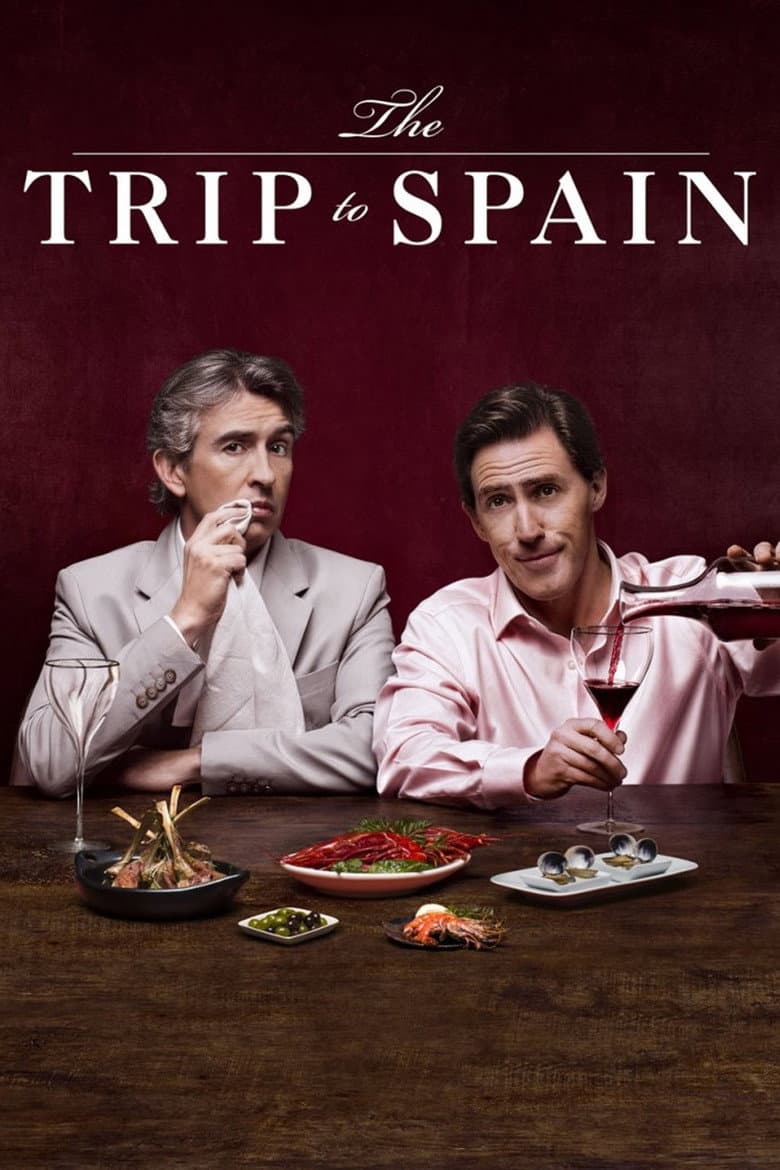
The Trip to Spain follows made-up versions of Steve Coogan and Rob Brydon as they travel through Spain on a restaurant review job. Steve wants to turn the trip into a book about his younger days, while Rob enjoys the food and jokes but misses his wife and children. Steve also faces lost work, family trouble, and fear about growing older. The film uses quiet roads, fine meals, celebrity impressions, and dry arguments to create a loose and sometimes sad comedy.
The film's main social focus is the contrast between Steve's restless life and Rob's settled family life. Steve's dating, fatherhood problems, and wish to repair an old relationship give the story a mild look at male pride and responsibility. The ending includes a short phone scene in which Steve says a child could have two fathers and mentions gay men who raise children. The film does not build its plot around that idea, and its wider themes stay focused on friendship, vanity, work, family, and getting older.
Community feedback
Was our 11% Woke rating accurate?
Breakdown
These are the editorial factors and ratings behind our score for The Trip to Spain.
Woke representation / casting
Not present. The two leads are white British men playing made-up versions of themselves. The supporting roles fit the Spanish travel setting and the men's family story. The movie does not present its casting as a diversity or identity statement.
0%
Woke political dialogue
Steve briefly says a child could have two fathers and mentions gay men who raise children. The line treats gay fatherhood as an ordinary possibility. The movie does not return to LGBTQ issues or make the line part of a wider message.
12%
Identity-driven story themes
Not present. The repeated themes are male friendship, aging, family responsibility, career stress, and vanity. The movie does not build its story around identity politics or activist ideas.
0%
Western institutional / cultural critique
Not present. The movie jokes about Catholic history, Moorish rule, and the Spanish Civil War. It does not attack modern Western institutions, traditional family life, or Christianity.
0%
Woke character or canon changes
Not relevant. The movie does not swap or rewrite an established character's race, gender, sexuality, or heroic role.
0%
Anti-woke backlash and complaints
Not present. Searches found no complaints that the movie pushed woke, DEI, identity politics, or left-wing ideas. X evidence also reported no anti-woke reaction.
0%
Creator track record context
Michael Winterbottom has a cached woke score of 44/100 because his wider work often covers war, migration, state power, and inequality. The cached producer scores are 12/100, 23/100, 0/100, and 0/100. This gives the movie some left-leaning background, but its interviews focus on food, travel, improvisation, and male friendship.
24%
Production
Movie · 2016
An improv group deals with several crises, including the loss of their lease and one member hitting the big time.
Movie · 2017
Matt Ryder is convinced to drive his estranged and dying father Benjamin Ryder cross country to deliver four old rolls of Kodachrome film to the last lab in the world that can…
Movie · 2020
Scott has been a case of arrested development ever since his firefighter father died when he was seven. He's now reached his mid-20s having achieved little, chasing a dream of…

Movie · 2018
An American hypochondriac who is working as a baggage handler is forced to confront his fears when a British teenager with a terminal illness enlists him to help her carry out her…
Movie · 2025
An eccentric lottery winner who lives alone on a remote island tries to make his fantasies come true by getting his favourite musicians to perform at his home.
Movie · 2017
When dictator Joseph Stalin dies, his parasitic cronies square off in a frantic power struggle to become the next Soviet leader.

Movie · 2019
An unlikely friendship between two neighbors becomes an unexpectedly emotional journey when the younger man is diagnosed with terminal cancer.
Movie · 2017
Brigsby Bear Adventures is a children's TV show produced for an audience of one: James. When the show abruptly ends, James's life changes forever, and he sets out to finish the…
