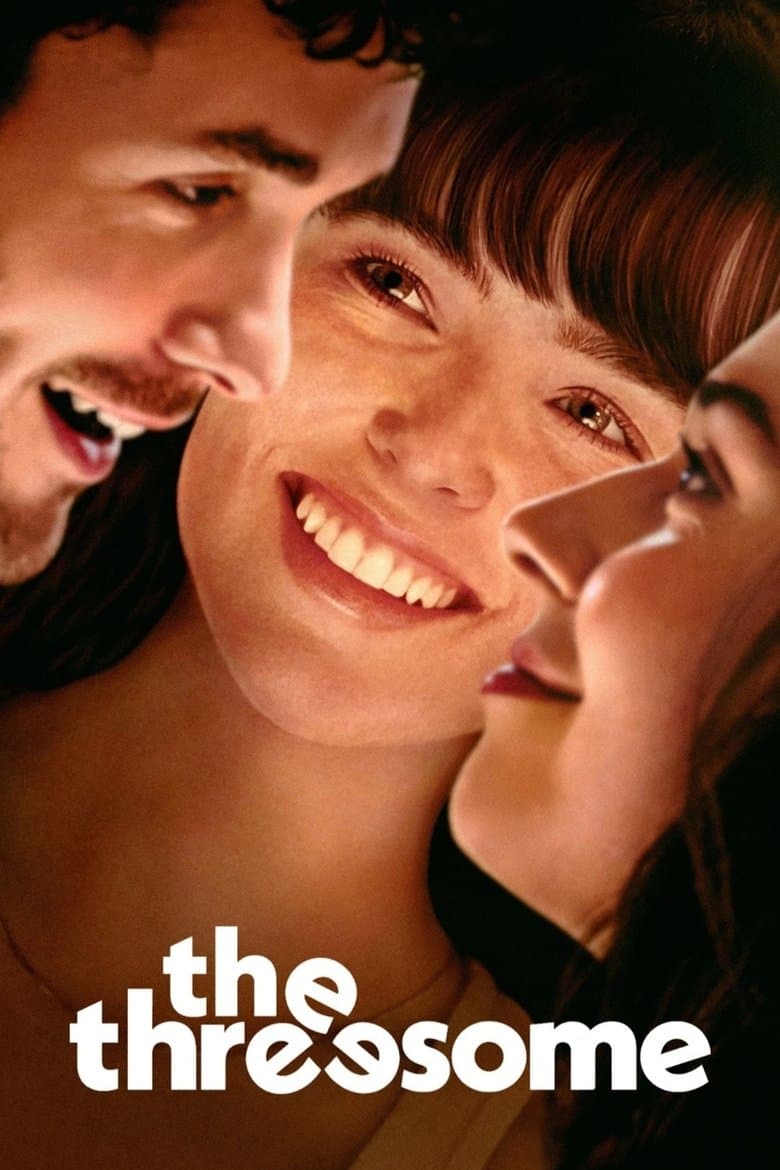
The Threesome follows Connor, a kind but unsure young man who works with music and still wants a real relationship with Olivia, his old crush. During a night out in modern-day America, Olivia and Connor meet Jenny, a stranger who joins them for a sexual experiment. Both women become pregnant, and Connor must face the fear, jealousy, and duties that follow. The movie mixes awkward jokes with serious scenes about love, sex, family, faith, and growing up.
The film makes the attraction between Olivia and Jenny part of the central event, rather than treating the woman-to-woman contact as a joke or a secret. The story shows both women as attracted to women, but it soon spends more time on pregnancy, abortion, fatherhood, and the couple Connor and Olivia try to build. Jenny keeps her pregnancy and hides parts of the truth from her strict Christian parents, while Olivia considers an abortion and later learns Connor may not be the father of her child. The ending favors a marriage between Connor and Olivia while leaving Connor tied to Jenny and their child, so the movie tests a traditional family shape without fully replacing it.
Community feedback
Was our 34% Woke rating accurate?
Breakdown
These are the editorial factors and ratings behind our score for The Threesome.
Woke representation / casting
Not present. The main trio and supporting roles fit a modern American setting. No diversity-first casting message or unusual cast pattern is reported.
0%
Woke political dialogue
Olivia discusses abortion after learning that Jenny is also pregnant. The clinic visit and talks about reproductive choices give the story a small political note. The film does not turn those scenes into speeches about laws, elections, or a wider campaign.
16%
Identity-driven story themes
Olivia and Jenny kiss and have sex with Connor, making attraction between the two women part of the central event. The film shows both women as attracted to women instead of treating the encounter as only a male fantasy. Jenny’s first experience with a woman connects to a personal awakening, but the story soon focuses on pregnancy, jealousy, and adult responsibility. The queer element drives the setup and returns through the characters’ choices, but it does not control the whole movie.
40%
Western institutional / cultural critique
Jenny’s strict Christian parents expect a usual partner, so Connor pretends to be the kind of person they want for her. Greg jokes about church rules, and the film treats the family pressure as awkward rather than wise. The parents still support Jenny, so the story does not attack Christianity or Western institutions as a whole. The main challenge is to a usual family model, not a broad system-wide critique.
22%
Woke character or canon changes
Not relevant. The film is an original story with no established characters, canon, or historical figures to change.
0%
Anti-woke backlash and complaints
One negative review objected to the film’s modern social view of dating, sex, relationships, and religion, and it complained about a conventional gay best-friend role. No anti-woke campaign, boycott, review-bomb push, or title-specific complaint appeared in the supplied X pass. The complaint is isolated and does not show broad public backlash.
8%
Creator track record context
Zoey Deutch has the strongest stored context, with a 40/100 score tied to Planned Parenthood and women’s-rights work. She also connected the abortion story to reproductive care. Chad Hartigan’s stored score is 19, while Ethan Ogilby is 0 and most producers score low. The overall creator signal is mild, with Deutch’s public activism as the main support.
24%
Production

Movie · 2016
A week in the life of Paterson, a poet bus driver, and his wife Laura, a very creative artist, who live in Paterson, New Jersey, hometown of many famous poets and artists.

Movie · 2023
The dramatic comedy is based on the true story of writer and pinball wizard Roger Sharpe, chronicling his journey to overturn New York City’s 35-year ban on pinball.

Movie · 2024
After discovering their significant others are siblings, two resentful exes must spend Christmas under one roof — while hiding their romantic history.

Movie · 2023
Michelle and Allen, who have reached the point in their relationship where they are considering next steps, decide to invite their parents to finally meet and to offer some…
Movie · 2023
A novelist's longstanding marriage is suddenly upended when she overhears her husband giving his honest reaction to her latest book.

Movie · 2021
Troubled teen Will Hawkins has a run-in with the law that puts him at an important crossroad: go to juvenile detention or attend a Christian summer camp.

Movie · 2016
The story of a young man who arrives in Hollywood during the 1930s hoping to work in the film industry, falls in love, and finds himself swept up in the vibrant café society that…

Movie · 2020
A teenager lives out the hilarious and often tragic consequences of being lethally attractive, until he meets a girl with a congenital defect.
