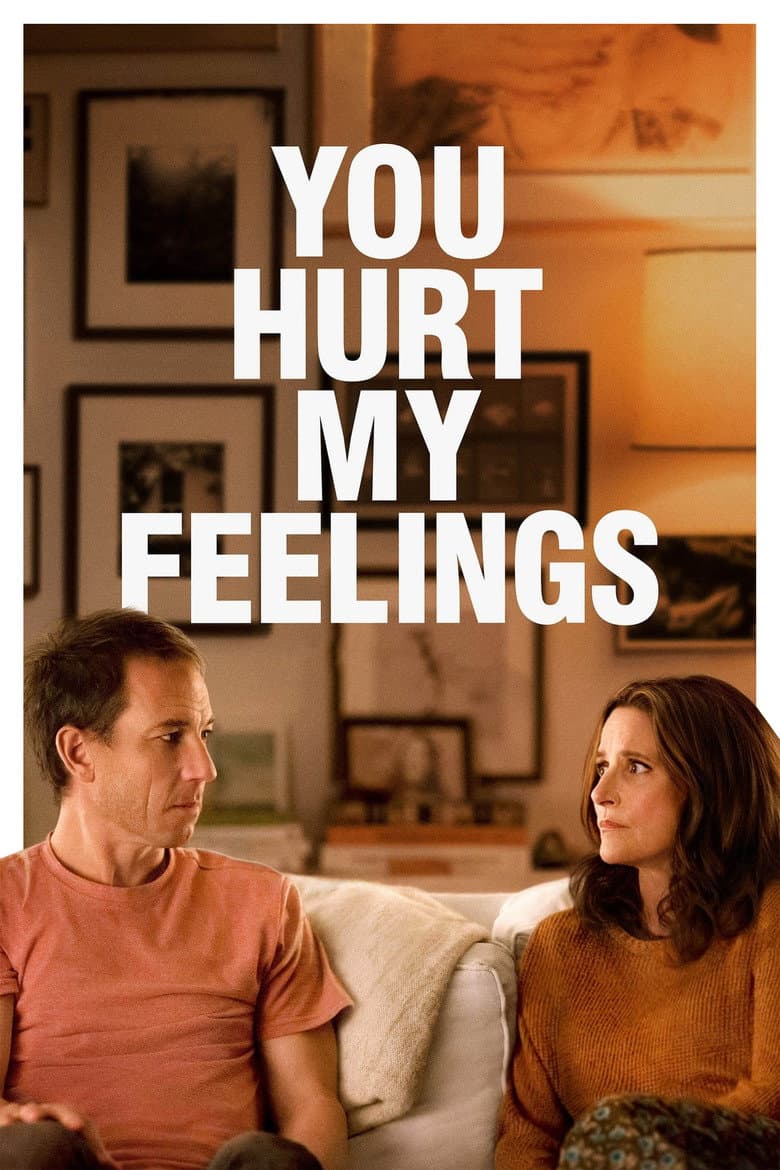
Beth is a New York novelist and writing teacher. She is happily married to Don, a therapist. For years he has praised her new book. One day she overhears him tell her sister’s husband that he does not like it. Her trust in him and in her own work falls apart. The movie is a gentle, talky comedy-drama about white lies, ego, aging, and marriage.
The film stays focused on honesty between partners and midlife pride. The main story is not about race politics, DEI, or activist causes. Viewers mainly see a woman writer who feels betrayed, a husband who lied to spare her feelings, and friends and family with their own small career worries. There is a short scene with a married lesbian couple in a bar and a gay patient in therapy; those moments are side notes, not the point of the plot. The cast includes some people of color in supporting roles that fit modern New York. A normal viewer would notice a woman’s creative life and marriage more than any social-justice message.
Community feedback
Was our 28% Woke rating accurate?
Breakdown
These are the editorial factors and ratings behind our score for You Hurt My Feelings.
Woke representation / casting
Leads are a white married couple. Supporting cast in modern NYC includes people of color (for example the book agent and the brother-in-law) and brief LGBTQ characters. That looks like city-setting casting more than a quota or “identity first” campaign. Diversity is visible but not sold as the film’s reason to exist.
20%
Woke political dialogue
Talk is about marriage, honesty, writing ego, aging, and small personal problems. Almost no race, DEI, or activist speeches. Mild lines about women and rich-people pettiness appear; they stay light and personal, not a lecture.
5%
Identity-driven story themes
Core theme is trust and white lies in a long marriage, told through a woman writer’s pride and hurt. Brief LGBTQ side bits (married lesbians at a bar; a gay patient) add weight under scoring rules but are not the main plot. Female creative-life focus is clear; modern identity-politics messaging is light.
28%
Western institutional / cultural critique
Gently teases well-off New York creatives and their small crises. Awkward charity scenes with people who need clothes add mild class comedy. Little attack on men as a group, Christianity, or core Western institutions; more “rich people are self-focused” than activist culture war.
18%
Woke character or canon changes
Not present in this title.
0%
Anti-woke backlash and complaints
No meaningful right-leaning or anti-woke campaign that this film pushes DEI or identity politics. Coverage stayed on craft, humor, and relationships.
0%
Creator track record context
Holofcener’s feminist-leaning but character-first indie record and Louis-Dreyfus’s progressive public profile raise the signal above zero. Other key producers and craft people are low. Overall mild creator context, not an activist project brand.
32%
Production
Movie · 2020
Lonely college freshman Alex has closed himself off from his peers, who all appear to have this whole "college thing" figured out.
Movie · 2016
The story of a young man who arrives in Hollywood during the 1930s hoping to work in the film industry, falls in love, and finds himself swept up in the vibrant café society that…
Movie · 2021
Resolving to achieve professional success without compromising her ethics, Lucy embarks on a ruthless game of one-upmanship against cold and efficient nemesis Joshua, a rivalry…
Movie · 2016
A week in the life of Paterson, a poet bus driver, and his wife Laura, a very creative artist, who live in Paterson, New Jersey, hometown of many famous poets and artists.
Movie · 2019
Charlie suffers from a serious disease that causes acute narcolepsy whenever he is happy. Although he develops a variety of techniques to deny himself pleasure and deal with his…

Movie · 2023
College freshman Abby tries to distance herself from her dark past while resisting her attraction to bad boy Travis.
Movie · 2023
Mira Ray, dealing with the loss of her fiancé, John, sends a series of romantic texts to his old cell phone number… not realizing the number was reassigned to Rob Burns' new work…

Movie · 2020
A terminally ill teen upsets her parents when she falls in love with a small-time drug dealer.
