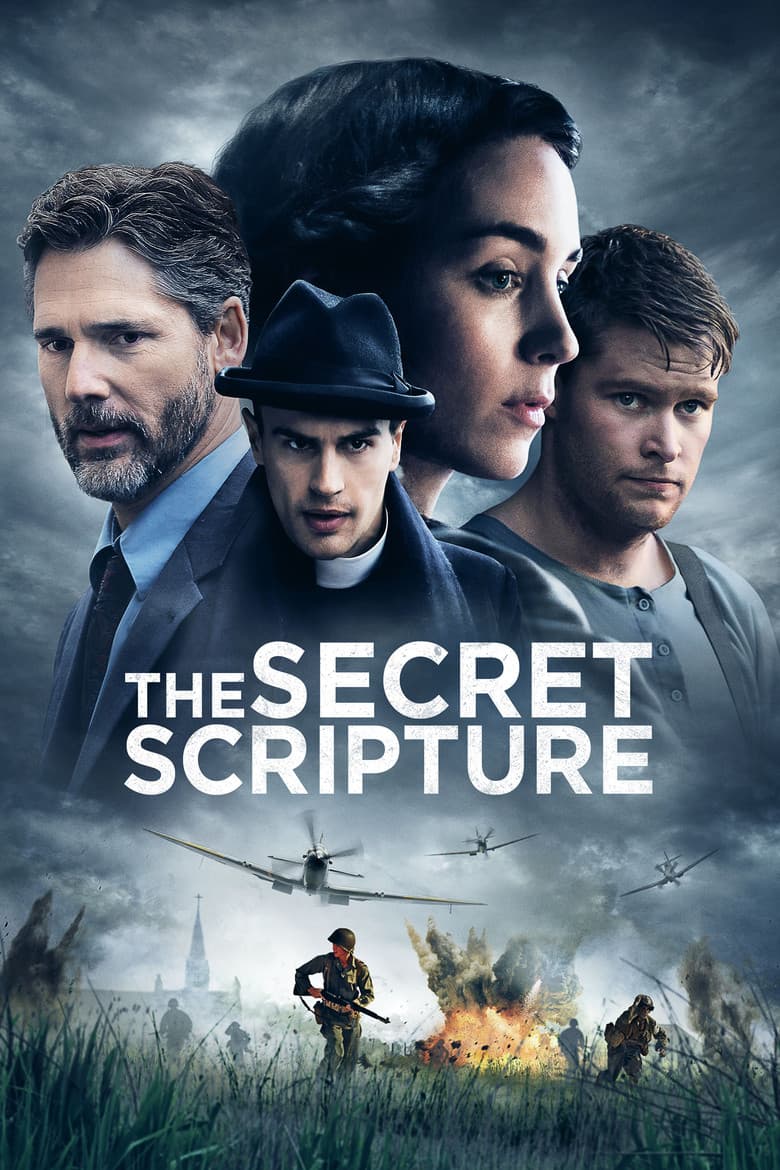
The Secret Scripture follows Rose McNulty, an old woman who has spent more than fifty years in an Irish mental hospital. A doctor reads the secret notes she wrote in a Bible and looks into the events that put her there. The story moves between the hospital and rural Sligo in the 1940s, where Rose falls in love during war and political unrest. The tone is sad, romantic, and full of mystery.
The film makes Rose’s treatment by men, the Church, and local leaders its main concern. Rose is judged for her beauty, Protestant faith, pregnancy, and refusal to fit the town’s rules. The story presents her loss of freedom as a serious injustice and treats her search for truth as a victory. These themes create a clear critique of religious power, male control, and old social rules.
Community feedback
Was our 46% Woke rating accurate?
Breakdown
These are the editorial factors and ratings behind our score for The Secret Scripture.
Woke representation / casting
Not present. The main cast is white and mostly Irish or European, which fits the film’s Irish period setting. Rose is a female lead because the story is about her life, not because the film builds a modern diversity showcase.
0%
Woke political dialogue
Not present. The film has period arguments about the Catholic Church, the IRA, religion, and women’s treatment. Those lines explain the historical conflict and do not push a modern identity or DEI program.
0%
Identity-driven story themes
Rose is judged for her sexuality, pregnancy, Protestant faith, and refusal to obey local rules. Men and church officials treat her independence as a danger and help take away her freedom. The story makes her voice and eventual freedom the main emotional victory. The film uses a past Irish setting, so the message is a historical critique rather than a direct current political campaign.
55%
Western institutional / cultural critique
The Catholic Church, the convent, the mental hospital, and the town’s leaders repeatedly control Rose. The priest uses religious authority and a false claim about her mind to punish her. The film also shows male jealousy and old gender rules as causes of lasting harm. The critique is strong and repeated, but it stays focused on 1940s Ireland rather than attacking every Western institution.
55%
Woke character or canon changes
Not relevant. The adaptation changes the plot and makes Father Gaunt younger, but no race, gender, sexuality, or identity swap is confirmed.
0%
Anti-woke backlash and complaints
Not present. The supplied X research found no anti-woke reaction or specific complaints. Other discussion focused on confusing plot, melodrama, church subject matter, and changes from the book, not on DEI or identity politics.
0%
Creator track record context
Jim Sheridan has a record of socially engaged Irish dramas, but his cached score is 18/100 and his public profile is mainly humanist. Sebastian Barry often writes about identity, exclusion, and people left out of official history, and his cached score is 48/100. The other listed creators have mostly low or no activist scores. This gives the film some supporting context, but it does not show a representation-first campaign.
24%
Production
Movie · 2016
Lou Clark, a directionless 26-year-old from the English countryside, takes a job at the local castle as a caregiver and companion to a wealthy young banker, Will Traynor.
Movie · 2023
Set in 1889 France, Dodin Bouffant is a chef living with his personal cook and lover Eugénie. They share a long history of gastronomy and love but Eugénie refuses to marry Dodin…

Movie · 2020
When illness strikes two people who are polar opposites, life and death bring them together in surprising ways.

Movie · 2016
Canadian folk artist Maud Lewis falls in love with a fishmonger while working for him as a live-in housekeeper.
Movie · 2023
After decades apart, childhood friends Nora and Hae Sung are reunited in New York for one fateful weekend as they confront notions of destiny, love, and the choices that make a…
Movie · 2020
It was a chance meeting started by one of Sol’s friends trying to chat up Jennifer. However, in the end, it was those two who hit it off.
Movie · 2020
When a young woman meets an aspiring saxophonist in her father’s record shop in 1950s Harlem, their love ignites a sweeping romance that transcends changing times, geography, and…

Movie · 2018
Katie, a 17-year-old, has been sheltered since childhood and confined to her house during the day by a rare disease that makes even the smallest amount of sunlight deadly.
