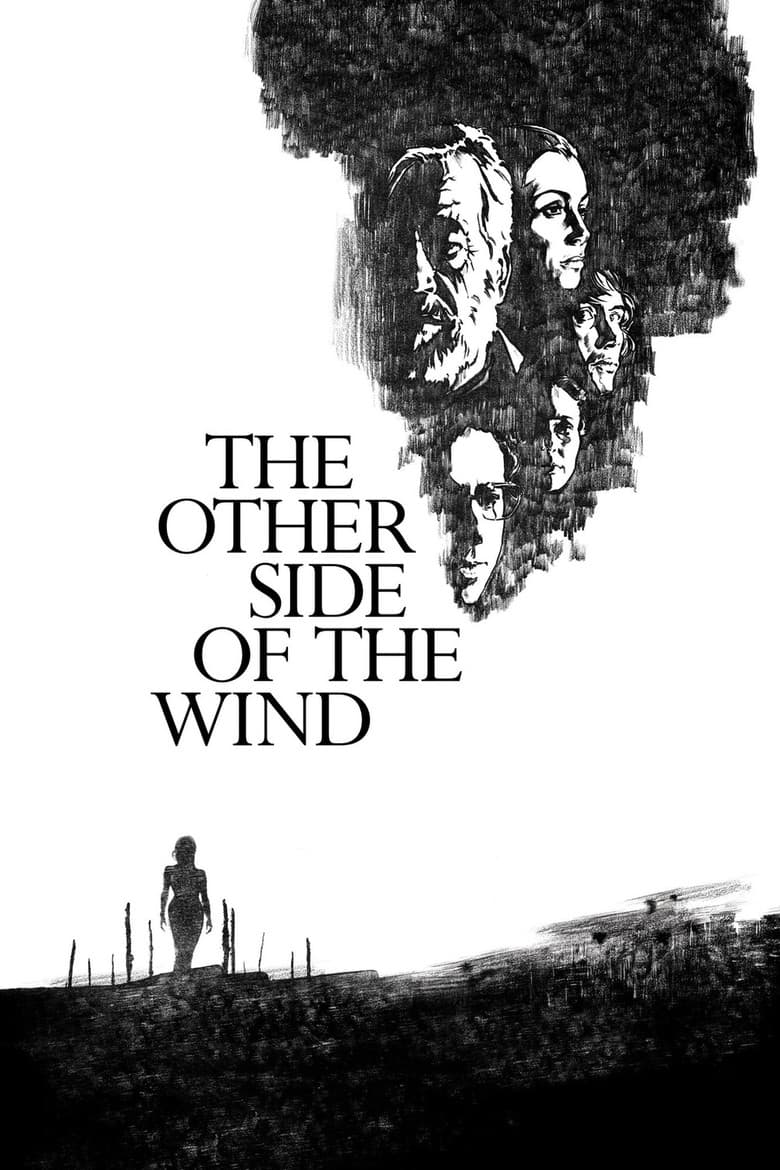
Jake Hannaford is a famous but aging Hollywood director who returns from Europe to make one last film. On his seventieth birthday, he shows rough scenes at a rich party filled with actors, reporters, critics, and younger filmmakers. Jake needs money, but his missing young star John Dale and his growing drinking problem make the project fall apart. The night turns into a tense, strange look at fame, jealousy, failure, and the fear of becoming unimportant.
The film gives strong attention to Jake’s hidden desire for young men, especially John Dale, while Jake keeps a hard, macho public image. Guests ask if he is gay, and the story links his treatment of male stars to his need to control their girlfriends. The movie inside the movie shows a nude man and woman in a strange sexual chase and gives the woman great power over the man. The film also presents a white European actress as a woman called native American without clearly explaining the choice. These ideas matter to the main conflict, but the movie is more about art, power, and a failed career than about a public cause.
Community feedback
Was our 57% Woke rating accurate?
Breakdown
These are the editorial factors and ratings behind our score for The Other Side of the Wind.
Woke representation / casting
The film within the film presents Oja Kodar as a woman called native American, Pocahontas, and Minnehaha. The movie never clearly explains whether she is native American or playing one. Most of the party cast are white older Hollywood figures, which fits the setting. The native American casting choice is noticeable, but it does not create a broad diversity pattern.
20%
Woke political dialogue
The dialogue repeatedly asks whether Jake is gay and connects his relationships with male actors to their girlfriends. Characters discuss young men looking feminine and use sexual labels and a homophobic slur. These lines are spread across the party scenes rather than appearing once. The film does not deliver a modern DEI speech, but sexuality is a regular topic.
40%
Identity-driven story themes
Jake’s fixation on young actor John Dale drives much of the conflict. The film suggests that Jake hides same-sex desire behind a macho public image. Jake uses women around his male stars as a way to reach or control the men. The film within the film gives both male and female bodies strong sexual focus. Sexual identity, repression, and male power are central themes, even though the story also covers art and career failure.
72%
Western institutional / cultural critique
The story presents Jake’s macho power as controlling and harmful. It shows older Hollywood as a male world built on ego, jealousy, and abuse. Jake treats women as tools and attacks a female critic who challenges him. The criticism stays focused on this film world and its aging director rather than modern anti-Western activism.
30%
Woke character or canon changes
Not relevant. The film uses fictional Hollywood figures and does not change established characters or real historical figures through identity swaps.
0%
Anti-woke backlash and complaints
Not present. The supplied X search found no anti-woke posts or complaints. Other audience and news discussion focused on film history, sexuality, and dated material rather than claims that the film pushes DEI or modern identity politics.
0%
Creator track record context
Orson Welles has a cached score of 18/100 and a record of progressive and anti-racist work. His films often attack power and corruption, but he was not known for a modern DEI campaign. Oja Kodar has a cached score of 3/100 and little public record of identity activism. Most producers have low cached scores, with only limited links to queer or social causes. This gives the title mild creator background context.
18%
Production
Movie · 2016
WWII American Army Medic Desmond T. Doss, who served during the Battle of Okinawa, refuses to kill people and becomes the first Conscientious Objector in American history to…
Movie · 2023
The story of J. Robert Oppenheimer's role in the development of the atomic bomb during World War II.
Movie · 2019
Richard Jewell thinks quick, works fast, and saves hundreds, perhaps thousands, of lives after a domestic terrorist plants several pipe bombs and they explode during a concert…
Movie · 2025
A logger leads a life of quiet grace as he experiences love and loss during an era of monumental change in early 20th-century America.
Movie · 2017
In 1950, amidst the ravages of the Korean War, Sergeant Süleyman stumbles upon a a half-frozen little girl, with no parents and no help in sight and he risks his own life to save…
Movie · 2017
Members of the Granite Mountain Hotshots battle deadly wildfires to save an Arizona town.
Movie · 2022
London, 1953. Mr. Williams, a veteran civil servant, is an important cog within the city's bureaucracy as it struggles to rebuild in the aftermath of World War II.
Movie · 2022
Based on a true tragedy, the emotionally triggering film sheds light on the plight of Kashmiri Pandits (Hindus), a religious minority in the 1990s Kashmir valley, who were…
