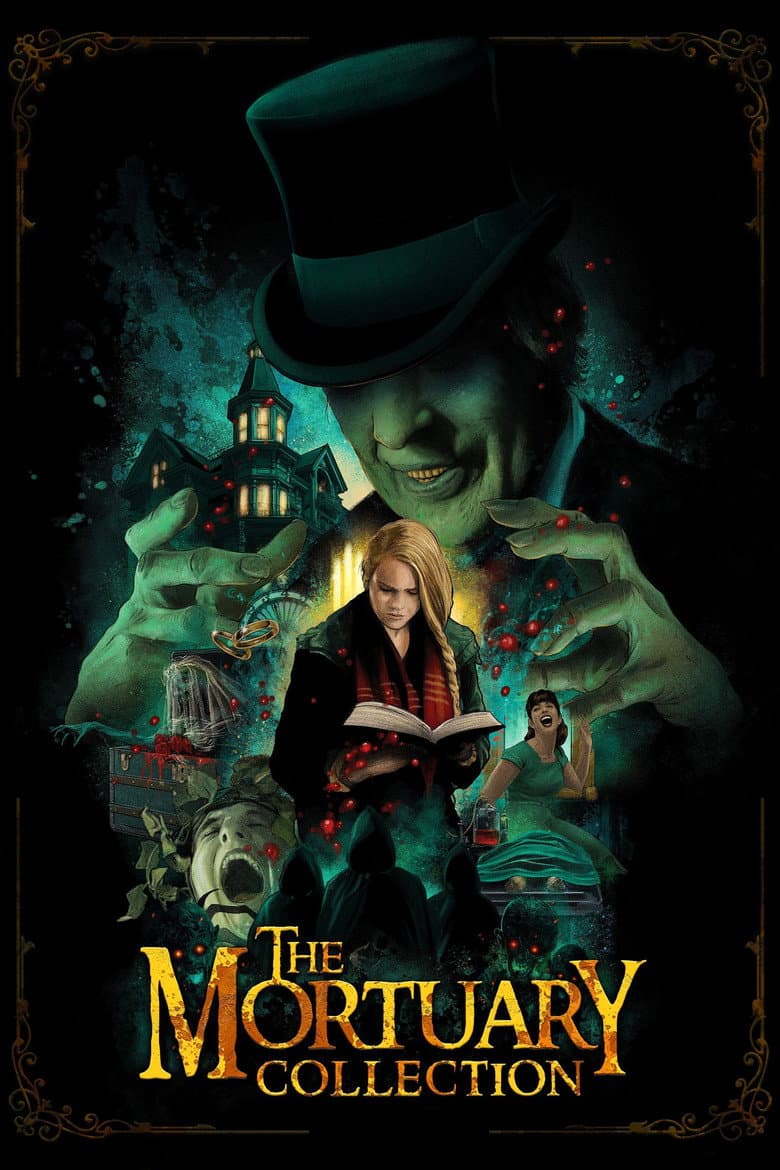
The Mortuary Collection follows Sam, a young drifter who asks for work at a strange funeral home in Raven's End. Montgomery Dark, the old mortician, shows her the building and tells stories about people who died in bizarre ways. The tales move through older decades and mix monsters, cruel jokes, sex, guilt, and sudden violence. Sam soon reveals that she has a reason for coming, and the final story changes who controls the mortuary.
The film repeatedly turns familiar horror roles around by making women thieves, survivors, and killers who control their own choices. One story targets a college man who pretends to support women's freedom while using that language to get sex. Other stories show men who hurt women or fail to understand them, while Sam argues with Montgomery and proves she can take his place. These ideas give the movie a clear female empowerment message, but the main focus stays on horror, gore, dark jokes, and punishment for bad choices.
Community feedback
Was our 39% Woke rating accurate?
Breakdown
These are the editorial factors and ratings behind our score for The Mortuary Collection.
Woke representation / casting
Not present. The main cast fits the small-town horror setting. The movie does not present its casting as a diversity or identity statement.
0%
Woke political dialogue
Jake presents himself as a feminist and uses language about women's freedom to win sex. Sam says she values the story's social point before its twist. This material fills one major segment and does not become regular political talk across the film.
31%
Identity-driven story themes
The movie repeatedly turns familiar horror roles around for women. Emma steals from men, Sandra resists a man who uses fake support for women, and Sam survives and takes control of the mortuary. These ideas appear in several sections, but the main focus remains horror, gore, and punishment.
47%
Western institutional / cultural critique
The second story shows a college man using fake support for women's freedom to trick women into sex. The story treats his behavior as wrong and gives him a grotesque punishment. The other tales do not attack religion, capitalism, family life, or major Western institutions.
30%
Woke character or canon changes
Not relevant. The film is an original anthology and does not change an established character, source, or historical figure for identity reasons.
0%
Anti-woke backlash and complaints
Not present. The separate X pass found no anti-woke reaction, and other public discussions mostly praised the horror. Some reviews called the social commentary blunt, but they did not describe the movie as woke, DEI, or activist propaganda.
0%
Creator track record context
Ryan Spindell has a stored creator score of 25/100 and has discussed gender dynamics and equality in past interviews. His title interviews focus on short horror, classic genre films, and storytelling rather than DEI or political aims. The other listed creators have low stored scores and no clear pattern of identity activism.
15%
Production
Movie · 2016
A determined young woman and a damaged occultist risk their lives and souls to perform a dangerous ritual that will grant them what they want.
Movie · 2018
The Shadow Mountains, 1983. Red and Mandy lead a loving and peaceful existence; but when their pine-scented haven is savagely destroyed, Red is catapulted into a phantasmagoric…
Movie · 2021
Cristina, a journalist of Mexican origin, travels to her ancestral home in Veracruz to investigate a story of sorcery and healing.
Movie · 2024
A gothic tale of obsession between a haunted young woman and the terrifying vampire infatuated with her, causing untold horror in its wake.
Movie · 2017
A supernatural love story that centers on two parents whose life together falls apart after their son dies. The man, now a successful lawyer, and the woman, now married and an…
Movie · 2026
After breaking the mysterious "One Wish Willow" to win his crush's heart, a hopeless romantic finds himself getting exactly what he asked for but soon discovers that some desires…
Movie · 2025
Following the death of their father, a brother and sister are sent to live with a foster mother, only to learn that she is hiding a terrifying secret.
Movie · 2022
Known as America’s Poet, Henry Wadsworth Longfellow leads an idyllic life – until the day his world is shattered by tragedy.
