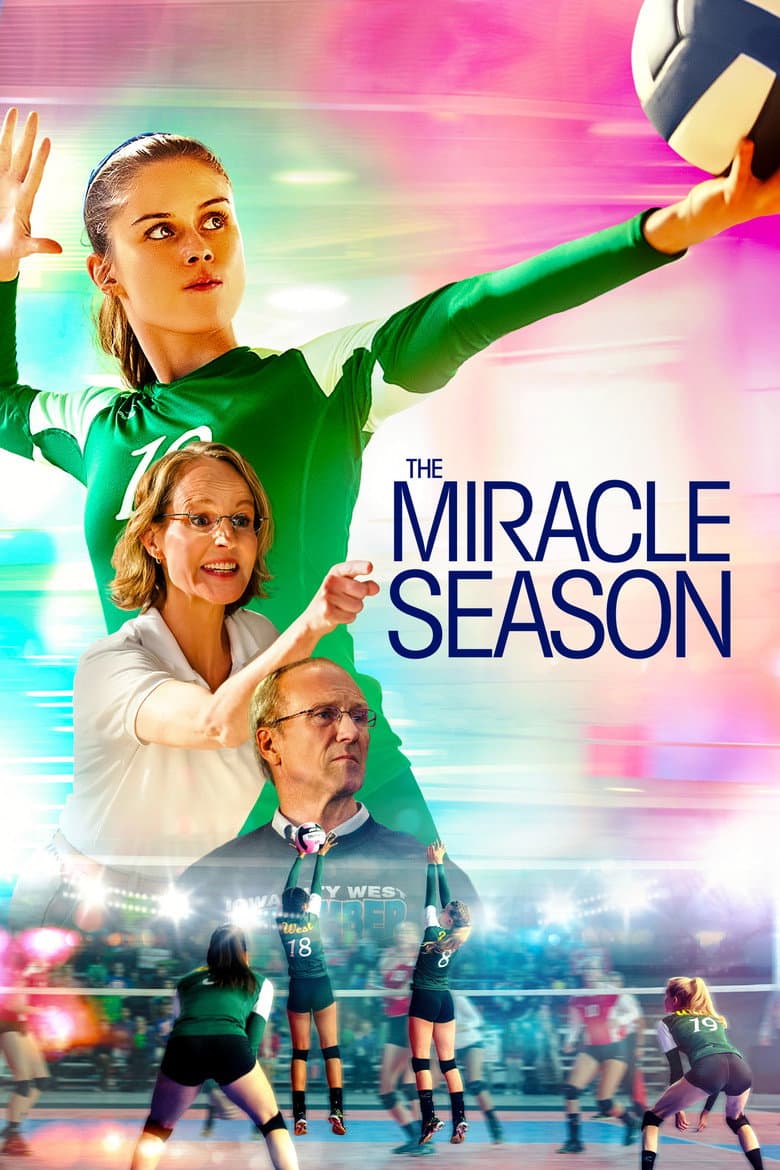
The Miracle Season follows Kelley Fliehler, a high school volleyball player in Iowa City in 2011. Her best friend and team captain, Caroline “Line” Found, dies in a moped crash just as the West High team begins its season. Kelley and Coach Kathy Bresnahan must help the grieving players return to practice and chase another state title. The movie is sad, hopeful, and built like an inspirational sports drama.
The movie keeps girls and women at the center of nearly every important choice. Kelley grows into a captain, Coach Bresnahan leads the team, and the players win through teamwork and close friendship. The story presents female strength and women working together as a repeated lesson. The message stays tied to sports, grief, friendship, and faith.
Community feedback
Was our 30% Woke rating accurate?
Breakdown
These are the editorial factors and ratings behind our score for The Miracle Season.
Woke representation / casting
The film places a girls’ volleyball team and a woman coach at the center. Those choices fit the real Iowa team and do not create a clear setting mismatch. The movie’s main identity signal is the repeated focus on female athletes in leading and skilled roles. It stays a small signal because the cast is not presented as a broad race, sexuality, or diversity program.
18%
Woke political dialogue
Not present. The spoken lines focus on volleyball, grief, friendship, family, and faith. The film does not use modern lines about DEI, race, sexuality, or activism.
0%
Identity-driven story themes
The story follows girls who carry the team after Caroline dies. Kelley grows into a captain, and Coach Bresnahan remains the main adult leader. The movie repeatedly praises female strength, sisterhood, and women working together to reach a goal. The message is tied to a real sports team and does not turn into a broad attack on men or family life.
46%
Western institutional / cultural critique
Not present. The movie does not attack men, fathers, family, faith, or Western institutions. The coach’s tough style is about training and grief, not toxic masculinity or modern political blame.
0%
Woke character or canon changes
Not relevant. The film changes the timing of the death, some names, and a few story details from the real events. Those changes do not alter a character’s race, gender, sexuality, or identity.
0%
Anti-woke backlash and complaints
Not present. The available reaction discusses sadness, faith, predictability, and melodrama. No verified complaint says the film pushes woke, DEI, or identity politics.
0%
Creator track record context
Sean McNamara has no known activist or identity-driven pattern. Elissa Matsueda has one immigrant-focused sports film, Spare Parts, among mainly mainstream family and sports work. David Aaron Cohen and the listed producers and casting directors have no clear record of identity-politics activism. The creative background therefore adds only a small supporting signal.
10%
Production
Movie · 2023
Hirayama is content with his life as a toilet cleaner in Tokyo. Outside of his structured routine, he cherishes music on cassette tapes, books, and taking photos of trees.
Movie · 2023
British stockbroker Nicholas Winton visits Czechoslovakia in the 1930s and forms plans to assist in the rescue of Jewish children before the onset of World War II, in an operation…
Movie · 2018
A father and daughter live a perfect but mysterious existence in Forest Park, a beautiful nature reserve near Portland, Oregon, rarely making contact with the world.
Movie · 2024
Inspired by the incredible true story of a hairdresser who single-handedly rallies an entire community to help a widowed father save the life of his critically ill young daughter.

Movie · 2016
Based on the life story of Mahendra Singh Dhoni, and his journey to being the world cup winning captain of the Indian cricket team.

Movie · 2019
A look at the Apollo 11 mission to land on the moon led by commander Neil Armstrong and pilot Buzz Aldrin.
Movie · 2021
The enthralling, against-all-odds story that transfixed the world in 2018: the daring rescue of twelve boys and their coach from deep inside a flooded cave in Northern Thailand.
Movie · 2016
High schoolers Mitsuha and Taki are complete strangers living separate lives. But one night, they suddenly switch places. Mitsuha wakes up in Taki’s body, and he in hers.
