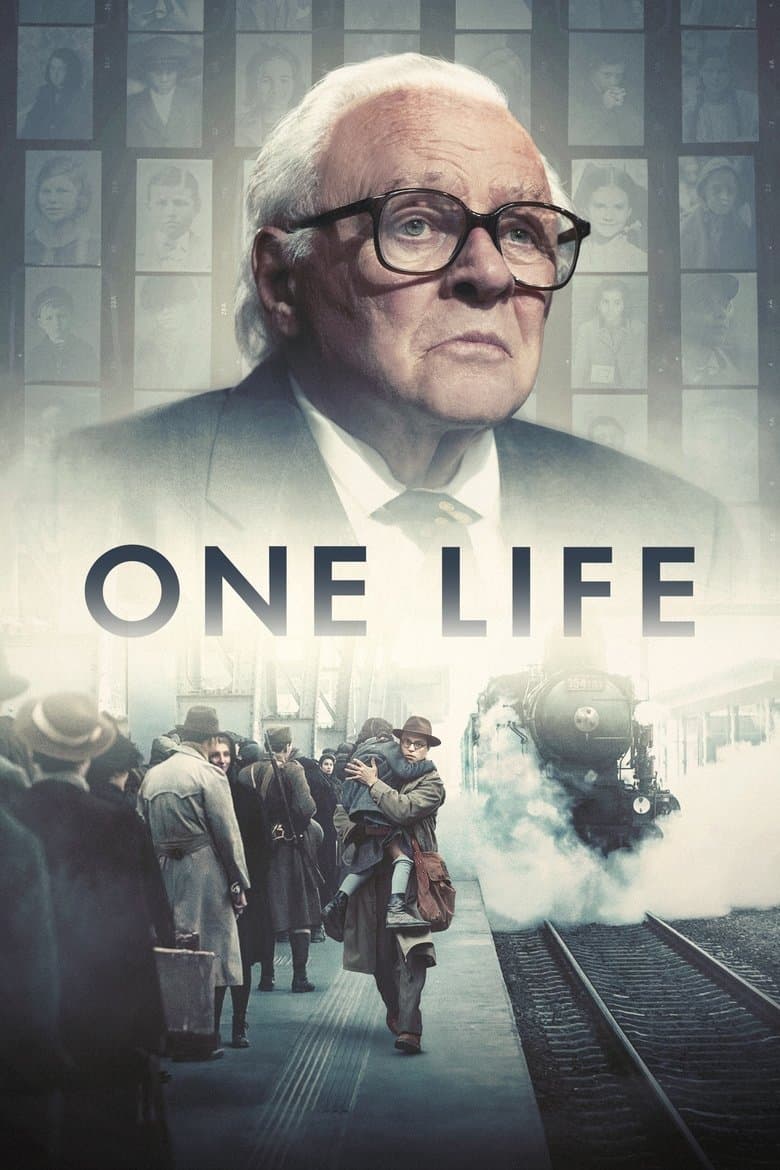
One Life follows Nicholas Winton, a young British stockbroker who travels to Prague in 1938. He sees Jewish and other refugee families facing hunger, danger, and the coming Nazi takeover. He returns to Britain and works with his mother, Doreen Warriner, Trevor Chadwick, and other helpers to arrange visas, foster homes, and trains for children. Fifty years later, an older Winton faces guilt over the children he could not save when a BBC show brings him together with survivors. The film is serious, sad, and warmly hopeful.
The film includes one clear but brief political note when Winton calls himself a socialist and an agnostic. His Jewish family background helps explain why he understands the refugees, while his actions reach children of different faiths. British officials slow the rescue, but the story treats that delay as part of the period crisis. The main message comes through courage, grief, family support, and the value of saving even one life. Doreen and Babi handle important work as real members of the rescue team.
Community feedback
Was our 8% Woke rating accurate?
Breakdown
These are the editorial factors and ratings behind our score for One Life.
Woke representation / casting
Not present in this title.
0%
Woke political dialogue
Winton calls himself a socialist and an agnostic. He also says he is helping children of all faiths and none. The film uses these lines to explain his beliefs and humanitarian choice, not to deliver a modern activist speech.
8%
Identity-driven story themes
Not present. Story follows documented facts of rescuing Jewish children from Nazi persecution and one man’s later atonement; it presents straightforward humanitarian history without reframing through current identity politics or social justice angles.
0%
Western institutional / cultural critique
Not present in this title.
0%
Woke character or canon changes
Not relevant. the film sticks closely to verified events and the daughter’s biography with no ideological updates to real people or history.
0%
Anti-woke backlash and complaints
Not present. No meaningful public criticism from conservative or right-leaning voices accusing the film of pushing DEI, identity politics, or left-wing messaging; available reactions treat it as a clean historical tribute.
0%
Creator track record context
Lucinda Coxon’s earlier film The Danish Girl centers on gender identity. The other key creatives have low or neutral public political records. One Life itself focuses on Winton’s rescue work and does not carry that earlier subject into its story.
20%
Production
Movie · 2024
Inspired by the incredible true story of a hairdresser who single-handedly rallies an entire community to help a widowed father save the life of his critically ill young daughter.

Movie · 2018
A father and daughter live a perfect but mysterious existence in Forest Park, a beautiful nature reserve near Portland, Oregon, rarely making contact with the world.

Movie · 2023
Hirayama is content with his life as a toilet cleaner in Tokyo. Outside of his structured routine, he cherishes music on cassette tapes, books, and taking photos of trees.

Movie · 2016
Based on the life story of Mahendra Singh Dhoni, and his journey to being the world cup winning captain of the Indian cricket team.

Movie · 2021
The enthralling, against-all-odds story that transfixed the world in 2018: the daring rescue of twelve boys and their coach from deep inside a flooded cave in Northern Thailand.

Movie · 2025
From the songs of his mother’s heart to the whispers of a faithful God, David’s story begins in quiet devotion.

Movie · 2019
A look at the Apollo 11 mission to land on the moon led by commander Neil Armstrong and pilot Buzz Aldrin.

Movie · 2016
High schoolers Mitsuha and Taki are complete strangers living separate lives. But one night, they suddenly switch places. Mitsuha wakes up in Taki’s body, and he in hers.
