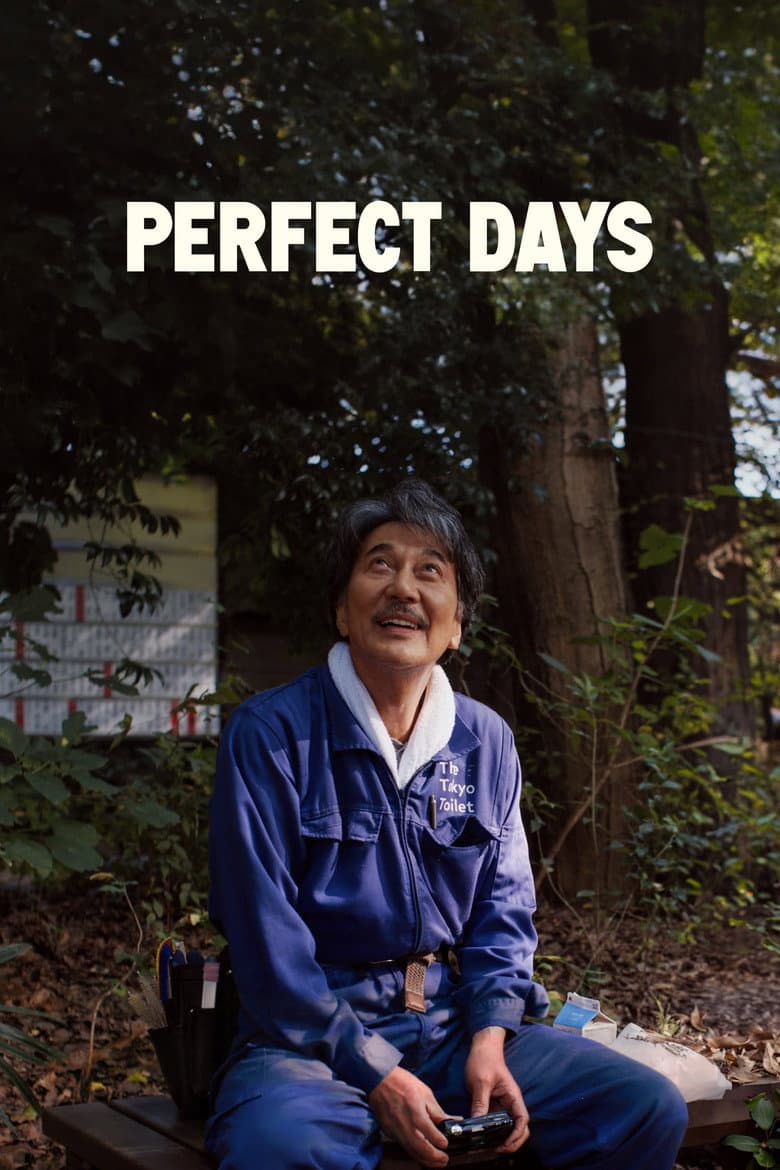
Perfect Days follows Hirayama, a quiet middle-aged man who cleans public toilets in Tokyo. He lives in a small apartment and keeps a strict daily pattern of work, coffee, cassette music, books, plants, and tree photos. His calm life is shaken by a careless young coworker, a niece who leaves home, his rich sister, and a painful meeting linked to the restaurant he visits. The film moves slowly and gently, but sadness sits under Hirayama’s peaceful smile.
The film puts its attention on simple living, careful work, and small moments that most people overlook. Hirayama treats toilet cleaning as useful service, while his family shows the gap between his chosen life and their richer world. The story also shows kindness toward a homeless man, a dying stranger, and people who pass through Hirayama’s day. The film keeps its message personal and spiritual, and it asks whether a peaceful routine can heal old pain.
Community feedback
Was our 3% Woke rating accurate?
Breakdown
These are the editorial factors and ratings behind our score for Perfect Days.
Woke representation / casting
Not present. The Japanese cast matches the Tokyo setting and the story does not present casting as a diversity message.
0%
Woke political dialogue
Not present. The dialogue handles work, family, music, and daily life. It does not include modern identity, DEI, or activist lines.
0%
Identity-driven story themes
Not present. The story follows one man’s routine, family strain, and search for peace. It does not build its main conflict around race, gender, sexuality, or identity politics.
0%
Western institutional / cultural critique
Not present. The film shows class distance between Hirayama and his sister, but it does not turn that family conflict into a broad attack on Western institutions, capitalism, religion, men, or traditional social norms.
0%
Woke character or canon changes
Not relevant. The film is an original story about Hirayama and does not change an established identity or historical figure.
0%
Anti-woke backlash and complaints
Not present. Public debate was mostly positive or focused on the slow pace and publicity origins. No clear anti-woke complaints about the film appeared.
0%
Creator track record context
Wim Wenders has humanist, anti-war, refugee, and inequality-related work. Takuma Takasaki has shown interest in environmental questions and dignity for ordinary workers. Koji Yakusho and the other cached creators do not have a strong DEI or identity-politics record. The context is mildly progressive but mainly humanist.
13%
Production
Movie · 2024
Inspired by the incredible true story of a hairdresser who single-handedly rallies an entire community to help a widowed father save the life of his critically ill young daughter.

Movie · 2016
Based on the life story of Mahendra Singh Dhoni, and his journey to being the world cup winning captain of the Indian cricket team.
Movie · 2018
A father and daughter live a perfect but mysterious existence in Forest Park, a beautiful nature reserve near Portland, Oregon, rarely making contact with the world.
Movie · 2023
British stockbroker Nicholas Winton visits Czechoslovakia in the 1930s and forms plans to assist in the rescue of Jewish children before the onset of World War II, in an operation…

Movie · 2019
A look at the Apollo 11 mission to land on the moon led by commander Neil Armstrong and pilot Buzz Aldrin.
Movie · 2021
The enthralling, against-all-odds story that transfixed the world in 2018: the daring rescue of twelve boys and their coach from deep inside a flooded cave in Northern Thailand.

Movie · 2016
High schoolers Mitsuha and Taki are complete strangers living separate lives. But one night, they suddenly switch places. Mitsuha wakes up in Taki’s body, and he in hers.
Movie · 2024
19 year old Isaiah Wright lives for basketball and video games. A year out of high school, he has no job, no plans, and no idea how to be a man.
