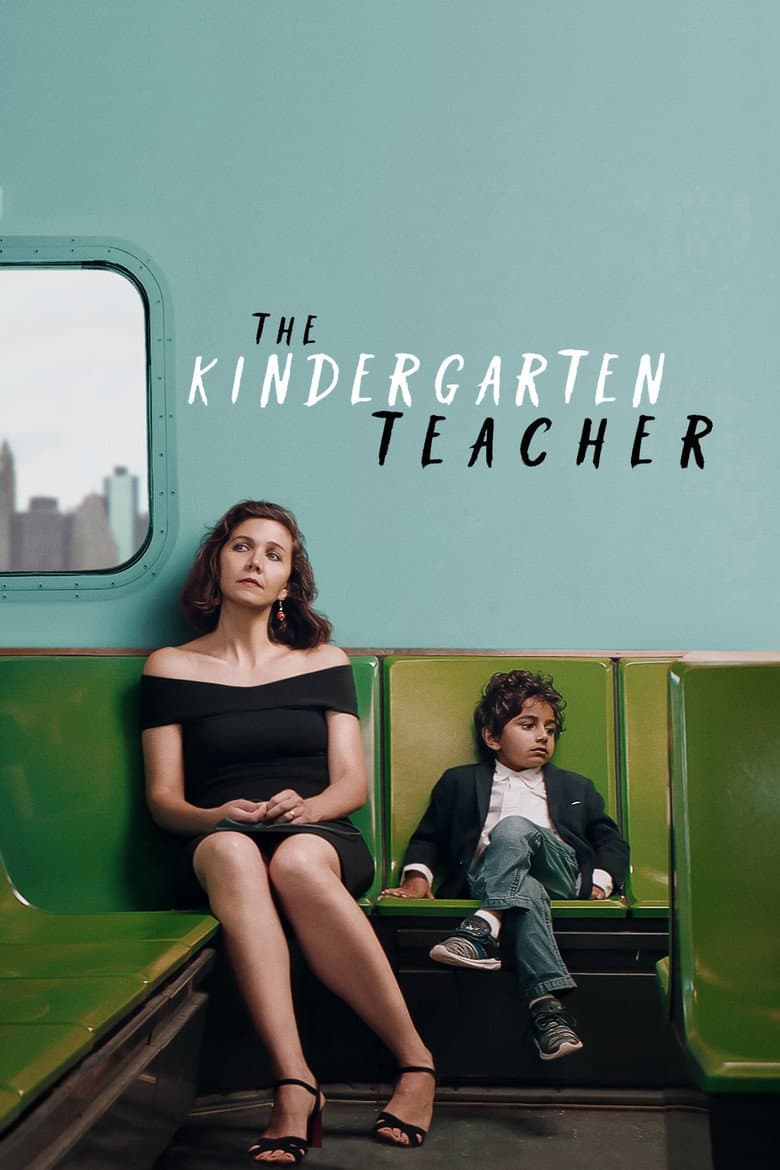
Lisa Spinelli is a Staten Island kindergarten teacher who feels bored and shut out from the creative life she wants. She takes a poetry class in Manhattan while her marriage, children, and daily work seem safe but empty to her. Lisa hears five-year-old Jimmy Roy recite strange and beautiful poems, and she decides that only she can protect his gift. The quiet drama turns into a tense story about obsession, stolen credit, and a child who cannot fully understand the danger around him.
The film gives most of its attention to a woman’s hunger to be seen as an artist, and Lisa’s private anger about marriage, motherhood, and school work shapes the whole plot. It presents her as both a wounded woman and the person who uses a child for her own goals, so the story does not offer simple female empowerment. Lisa also attacks a materialistic culture and a rigid school routine that she believes crush curiosity and art. A short exchange asks Lisa if she likes women, and her answer suggests a queer side that the movie does not explore.
Community feedback
Was our 44% Woke rating accurate?
Breakdown
These are the editorial factors and ratings behind our score for The Kindergarten Teacher.
Woke representation / casting
Not present. The class includes children from different backgrounds, and Jimmy is South Asian American. The film uses this as part of a New York school setting, not as a diversity message or a repeated identity pattern.
0%
Woke political dialogue
Lisa says she occasionally likes women when Simon asks about it. The brief exchange suggests that she may be attracted to women as well as men, but the film does not explain it or return to it. Most dialogue concerns poetry, school, family, and Lisa’s growing obsession.
22%
Identity-driven story themes
Lisa’s wish to be seen as an artist drives the story. The film shows her marriage, motherhood, and teaching job as pressures that leave her feeling unseen. It gives her a large female-centered role and lets her be ambitious, selfish, and frightening instead of simply likable. The brief queer element is present but not central.
45%
Western institutional / cultural critique
Lisa says modern culture is materialistic and leaves no room for art or careful thought. She also rejects a rigid school routine and says the core curriculum gets in the way of play and poetry. These complaints help explain why she thinks she must rescue Jimmy’s talent. The film does not turn them into a broad attack on capitalism, religion, or a political party.
30%
Woke character or canon changes
Not relevant. The film is an American remake with a new setting and added family details. It keeps the central female teacher and child poet, and it does not change a character’s race, gender, sexuality, or hero role.
0%
Anti-woke backlash and complaints
Not present. No anti-woke complaints were found. Online and review debate focused on Lisa’s boundary violations, the kidnapping, and whether the film handled the white teacher and South Asian child well.
0%
Creator track record context
Colangelo’s work often centers marginalized people and complicated women. Lapid’s films question nationalism, identity, and state power. Gyllenhaal supports feminist causes and often chooses stories about women’s freedom and difficult family roles. Other producers have links to socially engaged independent films, but the movie itself is less political than this background.
56%
Production
Movie · 2023
The story of J. Robert Oppenheimer's role in the development of the atomic bomb during World War II.
Movie · 2024
On the brink of the Second World War, a young Norwegian man's drive to resist the Nazis sets a new course for his future – and the future of his country.

Movie · 2023
The true story of the inseparable Von Erich brothers, who made history in the intensely competitive world of professional wrestling in the early 1980s.

Movie · 2016
After his older brother passes away, Lee Chandler is forced to return home to care for his 16-year-old nephew.
Movie · 2016
On 15 January 2009, the world witnessed the 'Miracle on the Hudson' when Captain 'Sully' Sullenberger glided his disabled plane onto the Hudson River, saving the lives of all 155…
Movie · 2025
Diagnosed with Tourette Syndrome at 15, John Davidson navigates his way against the odds through troubled teenage years and into adulthood, finding inspiration in the kindness of…
Movie · 2016
WWII American Army Medic Desmond T. Doss, who served during the Battle of Okinawa, refuses to kill people and becomes the first Conscientious Objector in American history to…
Movie · 2025
A logger leads a life of quiet grace as he experiences love and loss during an era of monumental change in early 20th-century America.
