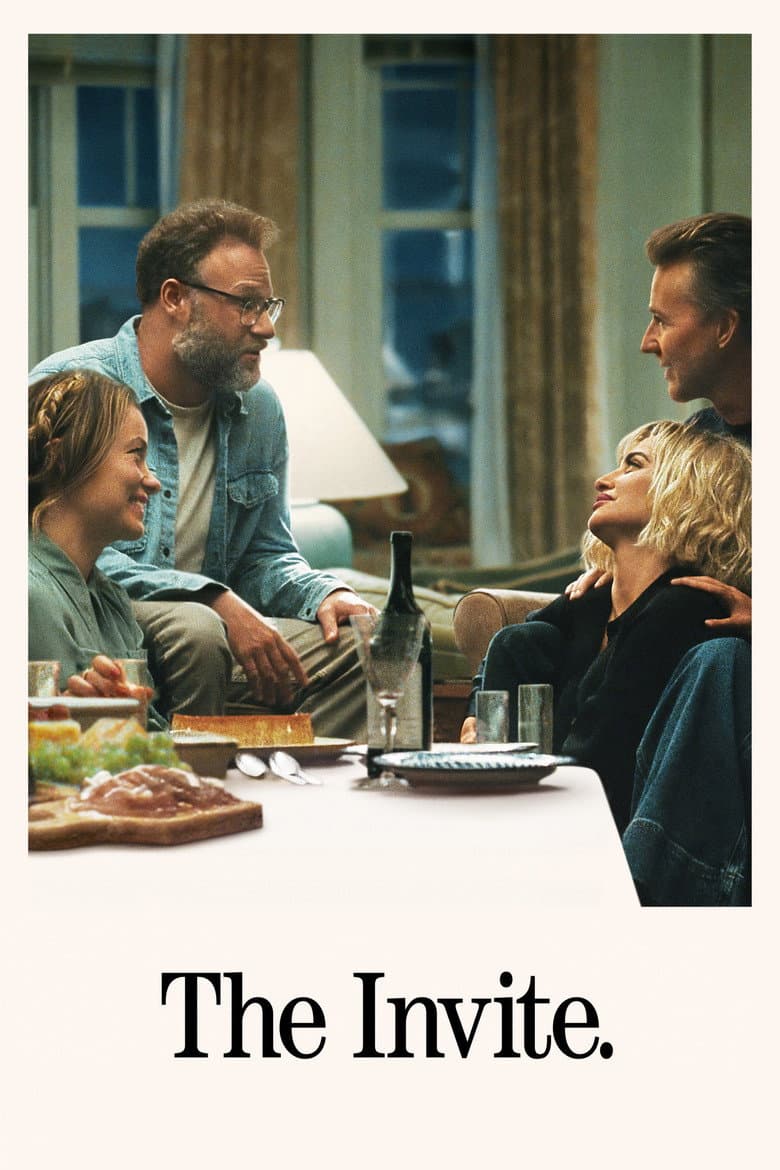
Joe and Angela are a San Francisco couple whose marriage is on the rocks. They host their loud upstairs neighbors, sexologist Pina and widower Hawk, for a last minute dinner. Awkward host anxiety becomes a night of partner swap propositions, group sex admissions, and a harsh look at their marriage. The ending stays ambiguous about whether the couple restarts or walks away. The film is an English language remake of Cesc Gay's Spanish film The People Upstairs, shot as a chamber piece.
Viewers hear progressive relationship talk from Pina in her role as a sexologist. The neighbors model freer non monogamy and put pressure on monogamy and traditional marriage. Angela and Pina share an improvised same sex kiss on screen. Progressive outlets framed that kiss and the film as a challenge to heteronormativity. The queer beat is real on screen and stays secondary to a heterosexual marital sex farce. The story also questions American puritanism around pleasure and the idea of staying together for the kids.
Community feedback
Was our 51% Woke rating accurate?
Breakdown
These are the editorial factors and ratings behind our score for The Invite.
Woke representation / casting
The four leads are Seth Rogen, Olivia Wilde, Penélope Cruz, and Edward Norton. The casting fits a modern San Francisco dinner party comedy of the prestige type. The finished film does not center racial representation casting. Tessa Thompson was attached earlier in development. The ensemble does not read as an engineered one of each identity lineup.
5%
Woke political dialogue
The dialogue covers resentment, dead bedrooms, and whether to stay together for their daughter. The couple also talks about how to reframe a spent marriage. Pina speaks as a sexologist and uses progressive relationship language. The film does not use race slogans or campaign style monologues. The talk sounds like modern liberal couple speech and is not built as an activist speech film.
20%
Identity-driven story themes
The core premise pressures monogamy and traditional marriage. The neighbors run group sex parties and propose partner swapping. They model freer non monogamy against a neurotic and sexless marriage. Angela and Pina share an improvised same sex kiss on screen. Progressive outlets such as Salon and Them framed the film as probing heteronormativity and read the women's kiss as a bright queer hope. The queer element is real on screen and stays secondary to a heterosexual marital sex farce.
52%
Western institutional / cultural critique
The story pushes against American puritanism around pleasure, especially women's pleasure. The story questions the idea of sticking it out for the kids. The story questions the ideal of lifelong monogamous inertia. Traditional marriage and family norms take the hit. The film does not stage a broad systemic attack on capitalism, whiteness, or Western governance.
44%
Woke character or canon changes
Not relevant. The film is an ordinary English remake of Gay's play and film premise. A fighting couple faces upstairs neighbors who favor swingers and group sex. There are no reported race or gender rewrites of source characters. There are no reported rewrites of historical figures.
0%
Anti-woke backlash and complaints
Not present. No meaningful right leaning campaign treats the film as DEI propaganda. Critical and festival reception has been strongly positive. Discourse centers on performances, farce craft, and marriage comedy. The film did not face a culture war pile on.
0%
Creator track record context
Director Olivia Wilde has a public feminist profile and prior films that include Booksmart and Don't Worry Darling. Writers Rashida Jones and Will McCormack have spoken about diversity and creative opportunity in Hollywood. Producers include David Permut, who has a strong LGBTQ media track record, and Ben Browning, who produced Promising Young Woman. Original writer Cesc Gay is low on activist politics. The creative team sits in a progressive orbit, and this title was sold as adult marital comedy.
52%
Production

Movie · 2023
College freshman Abby tries to distance herself from her dark past while resisting her attraction to bad boy Travis.
Movie · 2021
The story of Gary Valentine and Alana Kane growing up, running around and going through the treacherous navigation of first love in the San Fernando Valley, 1973.
Movie · 2016
A week in the life of Paterson, a poet bus driver, and his wife Laura, a very creative artist, who live in Paterson, New Jersey, hometown of many famous poets and artists.

Movie · 2020
A teenager lives out the hilarious and often tragic consequences of being lethally attractive, until he meets a girl with a congenital defect.

Movie · 2016
Maggie's plan to have a baby on her own with a sperm donor is derailed when she falls in love with John, an older married professor, destroying his volatile marriage to the…
Movie · 2023
Two romantic burnouts, Jane and Will, are immediately drawn to each other at a mutual friend’s wedding. After a disastrous hookup in the coatroom, the two spend the next 24 hours…
Movie · 2020
Lonely college freshman Alex has closed himself off from his peers, who all appear to have this whole "college thing" figured out.
Movie · 2018
At a picturesque lakeside estate, a love triangle unfolds between the legendary diva Irina, her lover Boris, and the ingénue Nina.
