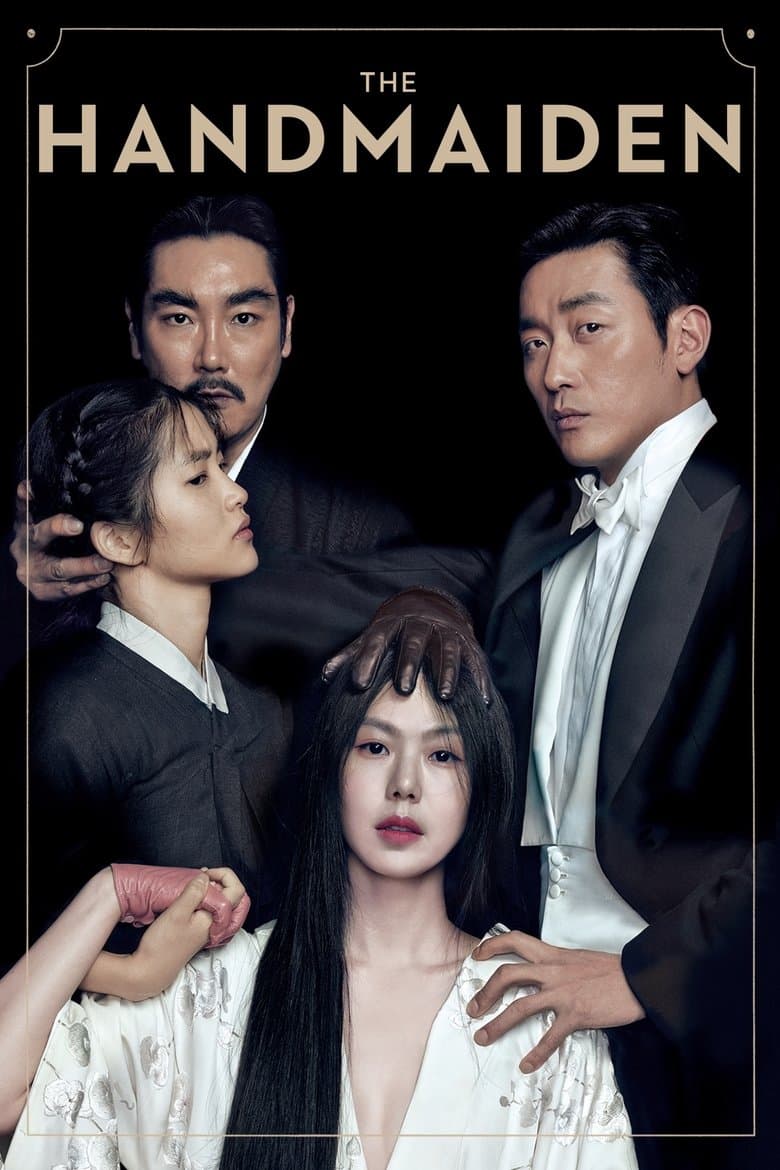
In 1930s Korea under Japanese rule, Sook-hee becomes a maid for Hideko, a rich Japanese heiress kept under the control of her uncle. Sook-hee is secretly a thief helping a fake count marry Hideko and steal her money. The plan turns into a chain of lies, betrayal, and escape as the two women learn what the men around them have done. The film has a dark, tense, sexual, and sometimes funny tone, with new facts revealed through three parts.
The film makes a lesbian romance the center of its story, and the relationship is shown through several explicit sex scenes. Sook-hee and Hideko join together against men who use marriage, money, dirty books, and forced confinement to control them. The women outsmart the main male villains and reach freedom, while most major men are shown as cruel, greedy, weak, or foolish. The story treats female desire, female friendship, and escape from male control as its main form of liberation.
Community feedback
Was our 89% Woke rating accurate?
Breakdown
These are the editorial factors and ratings behind our score for The Handmaiden.
Woke representation / casting
The main characters are Korean or Japanese, which fits the colonial setting. The film puts two women at the center and gives their relationship the main romantic focus. Park described the film as a celebration of female characters and called Sook-hee an empowered woman. The identity focus is clear, but the casting does not show a broad diversity pattern beyond the story.
25%
Woke political dialogue
Not present. The film has no modern DEI speech, activist slogan, or repeated political talk. Its discussions of Japan, Korea, marriage, and sex belong to the period story.
0%
Identity-driven story themes
The story centers on a lesbian romance between Sook-hee and Hideko. The women escape forced marriage, sexual abuse, and men who treat them as property. Their love gives Hideko the courage to choose freedom, and the pair defeat every major male threat. The film presents female desire and women working together as the main path to liberation.
94%
Western institutional / cultural critique
The film repeatedly presents marriage, male sexual power, and control of women's bodies as tools of oppression. The uncle forces Hideko to read dirty stories for men, while the Count treats women as property and an asylum as a weapon. The two women defeat these men and leave together, so the story rejects traditional male authority. The colonial and class elements are tied to the period setting rather than a broad attack on modern Western institutions.
61%
Woke character or canon changes
The source novel places the story in Victorian Britain with British characters. The film moves it to Japanese-occupied Korea and makes the maid Korean and the heiress Japanese. That change adds colonial history, language, and national identity to the central romance. The same-sex relationship remains part of the source story, so the main identity change is the setting and national identities.
42%
Anti-woke backlash and complaints
Movieguide called the film a radical feminist and leftist attack on men and traditional society. A small number of Reddit and Letterboxd users use similar anti-male, lesbian, or anti-traditional language. Most wider coverage praised the film or argued about the male gaze and explicit sex from a feminist or queer viewpoint. The anti-woke backlash is real but limited and scattered.
28%
Creator track record context
Park's cached context shows a sustained focus on strong female characters, and his interviews describe this film as his most feminist work. Chung's cached context shows a long pattern of women with agency, while Waters's fiction is strongly tied to lesbian and queer stories. Miky Lee adds a smaller recent focus on underrepresented voices, while the other producers are mostly business or story focused. The main creative voices strongly match the film's identity-driven themes.
75%
Production

Movie · 2018
A man and a woman meet in the ruins of post-war Poland. With vastly different backgrounds and temperaments, they are fatally mismatched and yet drawn to each other.

Movie · 2024
Remi and Barnes, two very different teenagers, meet by chance in the winter of their senior year, then spend four days together over the course of a year that will change their…

Movie · 2018
While James More is held captive by terrorists in Somalia, thousands of miles away on the Greenland Sea, his lover Danny Flinders prepares to dive herself in a submersible into…

Movie · 2023
Noah must leave her city, boyfriend, and friends to move into William Leister's mansion, the flashy and wealthy husband of her mother Rafaela.

Movie · 2017
A brilliant but impulsive young surgeon spirals into self-destruction after a painful breakup, struggling to cope with love, loss, and the consequences of his own temper.
Movie · 2017
In 1950s London, a renowned dressmaker's meticulous lifestyle begins drastically changing as his relationship with his young muse intensifies.

Movie · 2020
Young musician Zach Sobiech discovers his cancer has spread, leaving him just a few months to live. With limited time, he follows his dream and makes an album, unaware that it…

Movie · 2016
Canadian folk artist Maud Lewis falls in love with a fishmonger while working for him as a live-in housekeeper.
