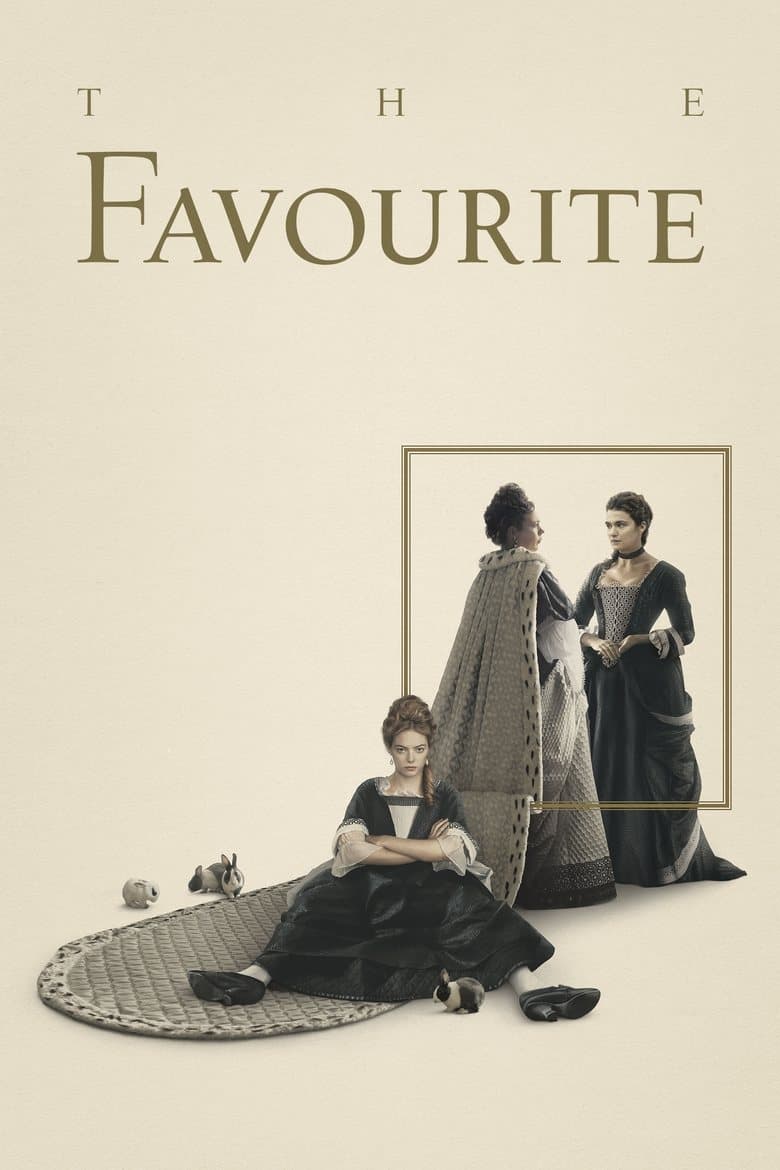
Early 18th century Britain is the setting. Sickly Queen Anne is controlled by her close friend and lover Sarah Churchill. Cousin Abigail Hill then arrives as a servant and climbs into the queen's bed and into political favor. The film is a dark and absurdist court satire about jealousy, sex used as leverage, and power. A three-way female rivalry sits at the center and also shapes war and influence in parliament.
Same-sex intimacy is shown clearly and sits at the center of the plot. Sex scenes between Anne and Sarah and between Anne and Abigail, plus jealousy and blackmail over private letters, drive the rivalry. Favor is traded through intimacy, and female control of the realm is the spine of the story. Men appear mostly as comic side pieces. Queer desire is not hidden. It shapes both the personal fights and the politics on screen.
Community feedback
Was our 74% Woke rating accurate?
Breakdown
These are the editorial factors and ratings behind our score for The Favourite.
Woke representation / casting
The leads and main court roles are white actors who fit early Georgian England. There are no race swaps or a forced multiracial cast. The film and press still stress a timely three-woman power triangle. Men are dressed and staged as decorative foils. The identity focus is female-led casting rather than racial diversity.
34%
Woke political dialogue
The talk is sharp court scheming, odd jokes, and personal cruelty. It does not use modern activist slogans about privilege or identity politics. Contemporary progressive causes are not preached through the dialogue.
8%
Identity-driven story themes
The core story is an open lesbian love and power triangle. Anne's sex with Sarah and Abigail, jealousy, blackmail, and favor traded through intimacy drive the plot. Women control the realm as the spine of the film. Queer desire is not subtext. It structures both the rivalry and the politics.
78%
Western institutional / cultural critique
The film mocks monarchy, favoritism, and corrupt court politics. It also flips period drama gender norms by putting women center stage and men in powdered, secondary roles. That reads more as gender inversion than a modern lecture on race, empire, or capitalism.
30%
Woke character or canon changes
The court rivalry has some historical bones, but the film invents clear sexual ties among Anne, Sarah, and Abigail that most historians call unproven. Prince George is left out so the triangle can dominate. Sex is treated as normal inside the film's world. That is an identity-forward rewrite of real figures, not simple compression.
64%
Anti-woke backlash and complaints
There was no large organized anti-woke campaign. Some people objected to historical accuracy, especially the lesbian framing. A few isolated harsh reactions to the sex content appeared. Awards praise still defined how the film was received.
12%
Creator track record context
The main creatives score low to moderate on the cached track record. Lanthimos is 31, McNamara is 30, Davis is 14, and producers sit in the mid teens. Casting director Dixie Chassay is higher at 47 for diversity-focused casting talk. That talk does not dominate this film's on-screen demographics. The overall record is moderate, not activist branded.
28%
Production

Movie · 2018
Thirteen-year-old Kayla endures the tidal wave of contemporary suburban adolescence as she makes her way through the last week of middle school — the end of her thus far…

Movie · 2025
Tenderly captures a year in the life of a family as the parents navigate their separation. Through both playful and heartfelt moments, the film portrays the bittersweet essence of…
Movie · 2017
When dictator Joseph Stalin dies, his parasitic cronies square off in a frantic power struggle to become the next Soviet leader.

Movie · 2024
Mismatched cousins David and Benji reunite for a tour through Poland to honor their beloved grandmother. The adventure takes a turn when the pair's old tensions resurface against…

Movie · 2016
Mia, an aspiring actress, serves lattes to movie stars in between auditions and Sebastian, a jazz musician, scrapes by playing cocktail party gigs in dingy bars, but as success…

Movie · 2016
Having suffered a tragedy, Ben becomes a caregiver to earn money. His first client, Trevor, is a hilarious 18-year-old with muscular dystrophy.

Movie · 2025
1984; Michael Larson, an unemployed ice-cream truck driver from Ohio, steps onto the game show "Press Your Luck" harboring a secret: the key to endless amounts of money.

Movie · 2024
In 2008, during the last month of summer before high school begins, an impressionable 13-year-old Taiwanese American boy learns what his family can't teach him: how to skate, how…
