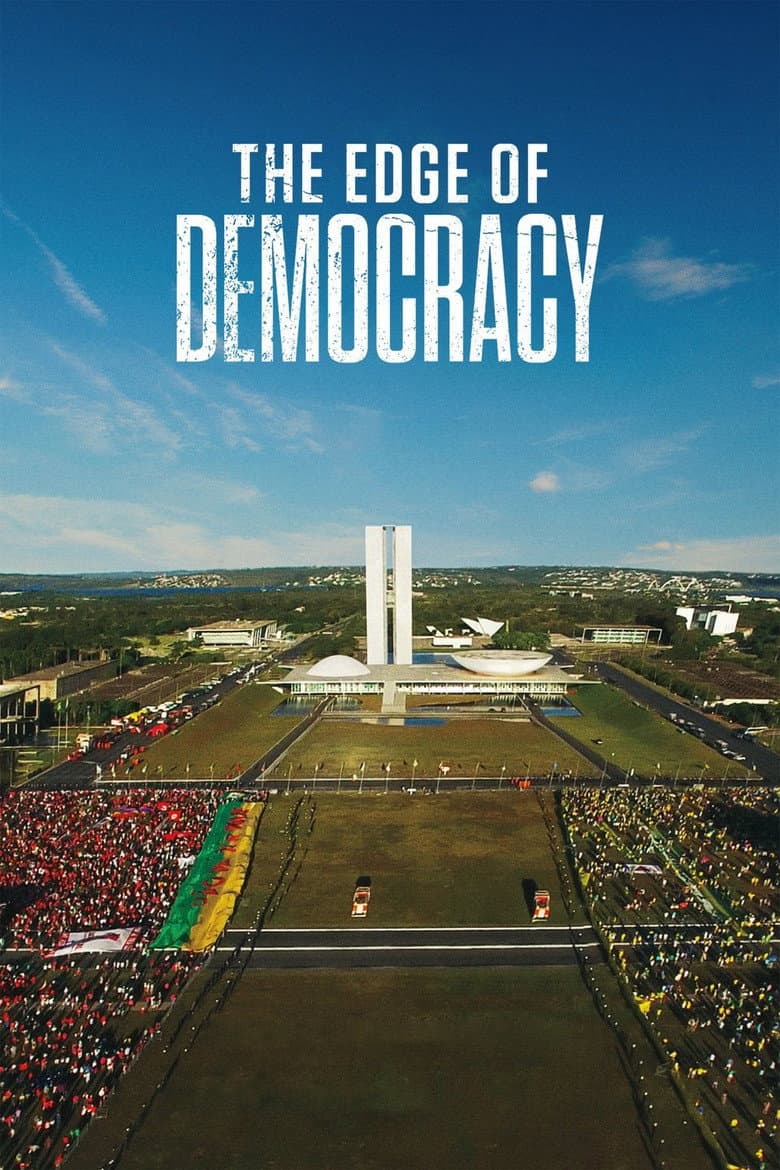
Petra Costa narrates Brazil's recent political crisis through her own family history. She follows former presidents Luiz Inácio Lula da Silva and Dilma Rousseff from the return of civilian rule to Lula's prison sentence, Dilma's impeachment, and Jair Bolsonaro's election. The film moves between Brasília, street protests, government halls, family memories, and old news footage. Its mood is sad, tense, and personal. The film treats the Workers' Party and its leaders with clear sympathy, while it presents the impeachment and Lula's imprisonment as events that helped open the way for the far right. Costa links political power to wealthy families, big business, campaign money, media control, and social class. The story also highlights Dilma as Brazil's first female president and shows political claims about homophobia and “gender ideology” during the wider crisis. Its main message is that democracy can fail when institutions, facts, and public trust are weakened.
Community feedback
Was our 76% Woke rating accurate?
Breakdown
These are the editorial factors and ratings behind our score for The Edge of Democracy.
Woke representation / casting
Not present. This is a documentary built from real politicians, reporters, crowds, and family footage. Dilma's status as Brazil's first female president is a historical fact, not a casting choice.
0%
Woke political dialogue
Costa's narration repeatedly supports worker representation and criticizes the power of bankers, wealthy families, and large businesses. The film presents the impeachment and Lula's prison sentence as attacks on democratic choice. Costa frames Bolsonaro's rise as a warning about fascism, authoritarianism, and misinformation. Brief clips mention homophobia and “gender ideology,” but identity politics is not the main subject.
46%
Identity-driven story themes
The film gives Dilma's gender and history as a tortured former militant clear attention. Costa also shows her mother identifying with Dilma as a woman from the same region and a former political prisoner. A brief impeachment clip mentions homophobia, changing children's gender, and sex education. The main story remains democracy, class, corruption, and the rise of the right.
31%
Western institutional / cultural critique
Costa repeatedly blames wealthy families, business money, media power, courts, and lawmakers for weakening Brazil's institutions. The film treats the impeachment, Lula's prison sentence, and Bolsonaro's election as signs that democracy is being hollowed out. It presents Bolsonaro and the political right as a danger linked to authoritarian rule, hate speech, and military nostalgia. The narration also uses class conflict and a critique of capitalism, so this institutional message is central.
68%
Woke character or canon changes
Not relevant. The film does not adapt fictional characters or alter established identities. It presents real people and events through Costa's chosen point of view.
0%
Anti-woke backlash and complaints
Brazilian President Jair Bolsonaro called the film fiction, and his communications office called Costa an anti-Brazil activist who spread fake news. Right-wing critics said the film hid facts and favored Lula and Dilma. The hashtag #PetraCostaLiar trended after Costa's Oscar-season interview, and a Jovem Pan attack video passed one million views. X reaction was much weaker, with only a few small accounts calling the film Marxist or PT propaganda.
64%
Creator track record context
Petra Costa has a sustained progressive and feminist record, and her work often joins private lives to political and social causes. Moara Passoni has a strong feminist and identity-aware record, while Joanna Natasegara often works on human rights and social change. Carol Pires, David Barker, and Tiago Pavan show more limited or mixed political signals, while Shane Boris mainly works on science, nature, and human stories. The title's focus on democracy, class, and the left fits the strongest creator patterns.
65%
Production
Movie · 2018
A documentary about World War I with never-before-seen footage to commemorate the centennial of Armistice Day, and the end of the war.

Movie · 2023
A short kid from a Canadian army base becomes the international pop culture darling of the 1980s—only to find the course of his life altered by a stunning diagnosis.
Movie · 2021
This documentary offers a deeply intimate look at extraordinary teenager Billie Eilish. Award-winning filmmaker R.J.
Movie · 2020
With this inventive portrait, director Kirsten Johnson seeks a way to keep her 86-year-old father alive forever.
Movie · 2020
This documentary examines unidentified aerial phenomenon. With testimony from high-ranking government officials and NASA Astronauts, Senator Harry Reid says it "makes the…
Movie · 2016
The Beatles stormed through Europe's music scene in 1963, and, in 1964, they conquered America. Their groundbreaking world tours changed global youth culture forever and…

Movie · 2025
Vulgar, taunting texts blow up the phones of a teen and her boyfriend. Who's sending them — and why? This twisty documentary reveals the shocking answer.
Movie · 2019
An Iraqi journalist joins an army of uneasy allies and unforgettable characters in the epic battle to liberate the city of Mosul from the Islamic State.
