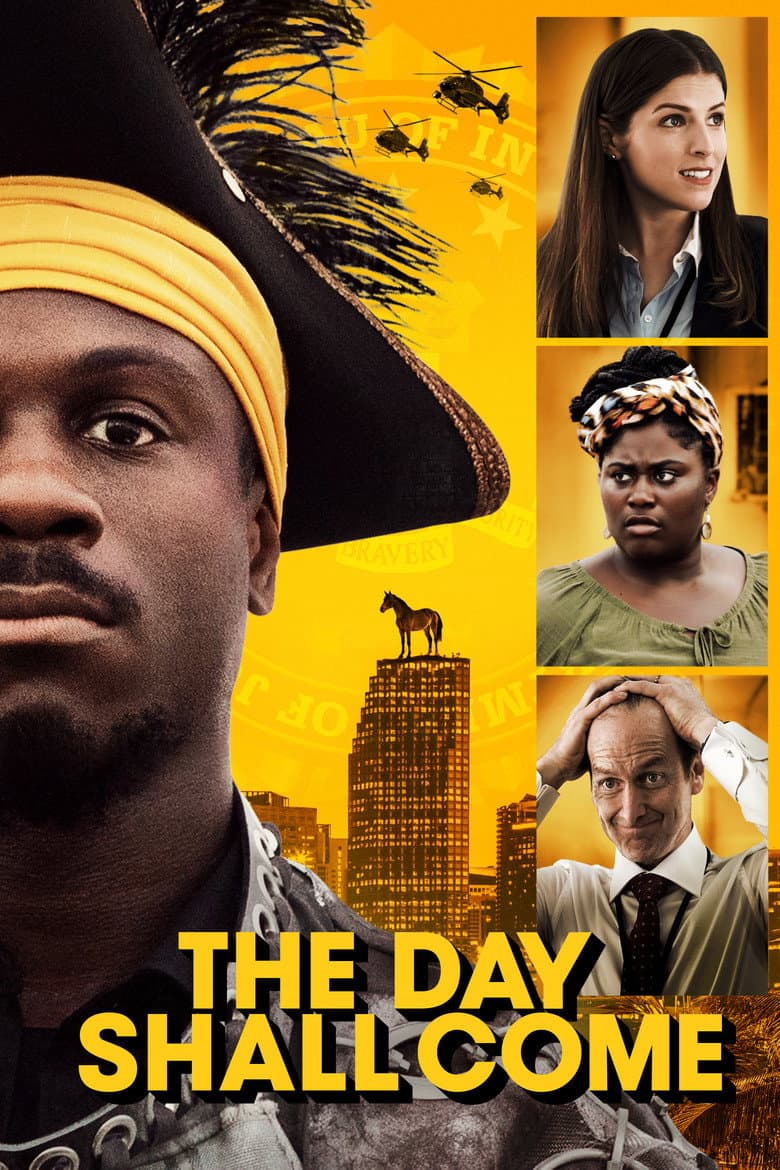
Moses Al Shabaz leads a tiny religious group on a poor farm in Miami. He needs money to stop his family from losing its home, while the FBI tries to turn his strange ideas into a terror case. Moses preaches peace, but he also talks about a future revolt against white control and believes that animals and strange holy figures guide him. The film uses fast jokes, wild plans, and a sad final turn to tell a dark story about power and fear.
Race is a major part of the story. Moses and his mostly Black group speak about ending white control, Black power, and a peaceful race-based uprising. The FBI treats those words as proof of danger and pushes a poor black man toward crimes he did not plan, so the story attacks both racial suspicion and government abuse. These ideas return through the sermons, the agents' plans, the group's fears, and the ending, but the film presents them through strange comedy instead of a simple speech.
Community feedback
Was our 67% Woke rating accurate?
Breakdown
These are the editorial factors and ratings behind our score for The Day Shall Come.
Woke representation / casting
The main group is black, including Moses, his wife, his daughter, and his followers. That casting fits the Miami community and the real case behind the story, so it does not look like a made-up diversity mix. In an interview, Marchánt Davis described Black power as black people holding positions of authority and said the film empowers Moses. That identity framing adds a mild score, but the film is not sold as a diversity-first project.
24%
Woke political dialogue
Moses repeatedly preaches that the white race's dominance will end and uses the phrase Black jihad. His sermons describe a race-based uprising and the fall of government power. The FBI agents repeat and twist this language while trying to build a case against him. The film makes Moses's ideas strange and comic, but the race and identity language remains a clear part of the spoken dialogue.
50%
Identity-driven story themes
Race and racial power drive the main conflict. Moses is a poor black preacher whose words are used to make him look like a terrorist, and his group waits for black people to gain justice. The story links that conflict with poverty, new building projects that push people out, and mental health problems. The film treats Moses as a foolish but mostly harmless person and presents the government trap as the greater danger.
62%
Western institutional / cultural critique
The FBI is shown as a broken institution that invents danger to claim career victories. Agents use informants, fake weapons, and false plans to push poor people into crimes. The story also attacks the war on terror, racial suspicion, and new building projects that push poor residents out. These complaints return through the FBI plot and the final punishment, so the critique is central rather than a brief joke.
64%
Woke character or canon changes
Not relevant. The film is an original fictional story inspired by real cases. It does not change an established character or historical figure's race, sex, or role.
0%
Anti-woke backlash and complaints
Movieguide called the film an identity-politics story and objected to its talk of overthrowing the white race and its picture of the FBI as racist. The separate X research pass found no anti-woke posts or named complaints. Other audience posts mostly discussed the film's humor, confusing plot, or sad ending. The anti-woke reaction therefore looks limited to a small conservative review rather than a broad campaign.
15%
Creator track record context
Chris Morris has a repeated record of attacking official power, media fear, and the war on terror. Jesse Armstrong has a record of political satire about power, populism, media, and extreme wealth. Those patterns support the film's anti-authority and social-critique focus. The cached producer context is mostly low and shows little personal DEI or identity activism, so the overall creator signal is moderate rather than dominant.
37%
Production
Movie · 2022
Exploring every facet of ‘Weird Al’ Yankovic’s life, from his meteoric rise to fame with early hits like ‘Eat It’ and ‘Like a Surgeon’ to his torrid celebrity love affairs and…
Movie · 2016
A comedy that follows a group of friends as they navigate their way through the freedoms and responsibilities of unsupervised adulthood.

Movie · 2024
Inseparable best friends AJ and Moose decide to run the local pool's snack shack after their plan to sell home-brewed beer goes down the drain.
Movie · 2023
From his onstage tackle to the slap heard round the world, Dave Chappelle lets loose in this freewheeling and unfiltered stand-up comedy special.
Movie · 2016
Two teenage boys from inner-city Cork steal bicycles and ride off on a 160km quest to find an unrecovered bale of cocaine worth 7,000,000 euros.
Movie · 2018
Adam Sandler takes his comical musical musings back out on the road, from comedy clubs to concert halls to one very unsuspecting subway station.
Movie · 2017
When dictator Joseph Stalin dies, his parasitic cronies square off in a frantic power struggle to become the next Soviet leader.

Movie · 2023
After it's discovered that a teacher at South Park Elementary has an OnlyFans page, Randy is compelled to take a closer look at the seedy underbelly of the world of online…
