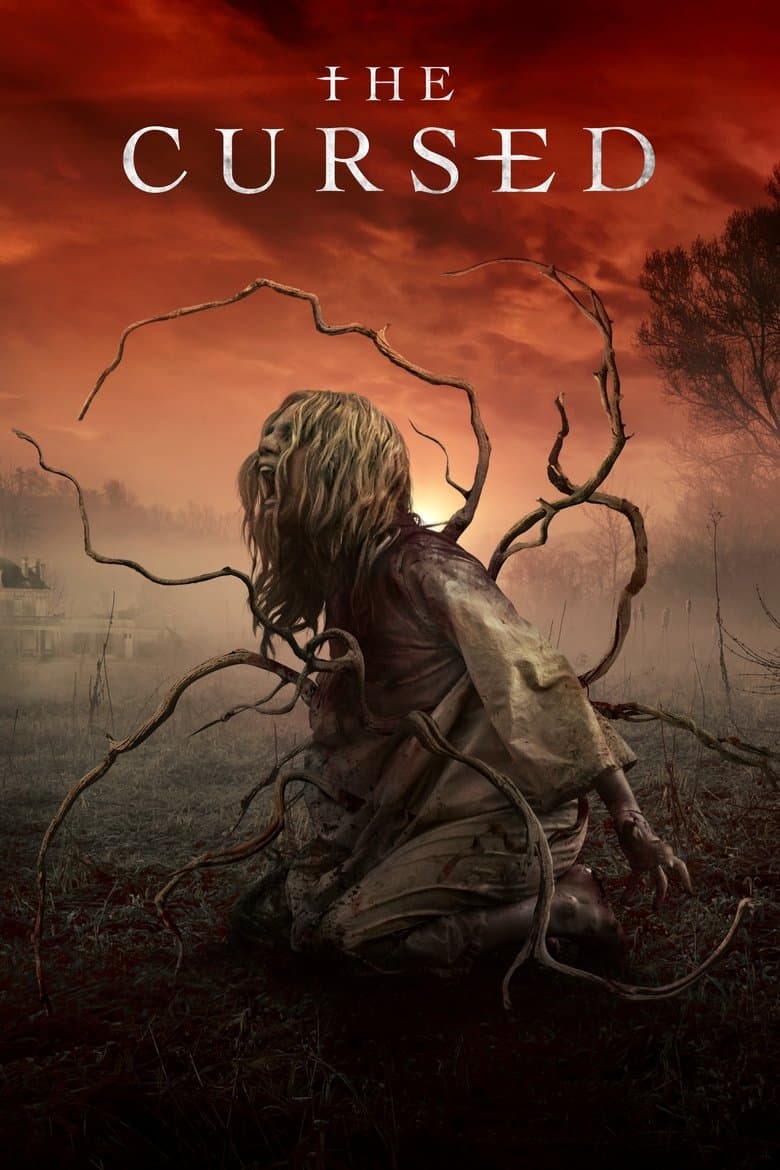
John McBride is a traveling doctor who studies dead bodies, and he reaches a remote village in late 19th-century France. A wealthy landowner orders the killing of a Roma clan so he can take disputed land. The killings awaken a curse that brings nightmares, missing children, and a savage creature into the village. McBride studies the bodies and old clues while the landowner’s family tries to survive. The film has a dark, slow, and bloody horror tone.
The film makes the Roma massacre the clear cause of the horror, and the curse acts as revenge against the people who carried out the attack. The story makes the children of the guilty family suffer for crimes they did not commit, which adds a message about guilt passed down to the next generation. The village elders, a priest, and the landowner use local power to remove the Roma clan and seize its land. The film treats the massacre as a warning about what happens when powerful people drive a group from its home. These themes shape the setup and return through the film, even though the main action becomes a fight against the creature.
Community feedback
Was our 30% Woke rating accurate?
Breakdown
These are the editorial factors and ratings behind our score for The Cursed.
Woke representation / casting
Not present. The main cast is largely white European, and the Roma clan appears because its land dispute and massacre drive the story. The film does not frame its casting as a diversity goal or use identity swaps.
0%
Woke political dialogue
Not present. The characters talk about land, murder, religion, medicine, and the curse. They do not give modern activist speeches about identity or politics.
0%
Identity-driven story themes
The film makes a Roma clan’s massacre and forced removal the cause of the curse. The monster then punishes the landowner’s family and village, so revenge for the group remains tied to the main plot. The children of the attackers suffer for their parents’ crimes, which creates a clear message about guilt passing through generations. Ellis also said the story was meant to reflect today’s refugee crisis, adding a modern displacement frame.
45%
Western institutional / cultural critique
The film shows a land baron, village elders, and a priest using local power to remove a Roma clan and take its land. The story blames this ruling group and makes the curse a punishment for their abuse. The film does not build a repeated modern attack on Christianity, capitalism, men, or Western society.
20%
Woke character or canon changes
Not relevant. The film is an original horror story, not an adaptation of established characters or real historical figures. Its werewolf lore and main characters were created for this movie.
0%
Anti-woke backlash and complaints
Not present. Public discussion focused on pacing, gore, the creature, the ending, and how the Roma characters were handled. The supplied X search found no relevant anti-woke posts, and broader coverage showed no clear complaints that the film pushed DEI or identity politics.
0%
Creator track record context
Sean Ellis has a craft-focused public profile and no clear activist pattern. Mickey Liddell, Pete Shilaimon, and Alison Semenza have low supplied scores and no clear activist record. Jacob Yakob has a higher supplied score because of a queer film credit, but the team has no strong shared record of identity-driven work.
12%
Production
Movie · 2017
In a small town in Maine, seven children known as The Losers Club come face to face with life problems, bullies and a monster that takes the shape of a clown called Pennywise.
Movie · 2023
On the day of his scheduled execution, a convicted serial killer gets a psychiatric evaluation during which he claims he is a demon, and further claims that before their time is…
Movie · 2018
A teenager's quest to launch Norwegian Black Metal in Oslo in the 1990s results in a very violent outcome.

Movie · 2020
When an outbreak hits, Aidan barricades himself inside his apartment and starts rationing food. His complex is overrun by infected Screamers, and with the world falling apart into…
Movie · 2018
A thief makes a disturbing discovery in the house where he breaks in. Later, when he returns to the same house with his partner in crime, things are no longer how he expected.

Movie · 2024
In 1930s Oklahoma amid the region's horrific dust storms, a woman is convinced that a sinister presence is threatening her family.
Movie · 2021
While exploring the neighboring woods, 13-year-old John discovers an unfinished bunker — a deep hole in the ground.
Movie · 2020
A couple on a road trip through America encounter a terrifying dark force older than the country itself. An evil that transforms loved ones into someone terrifying, the entity has…
