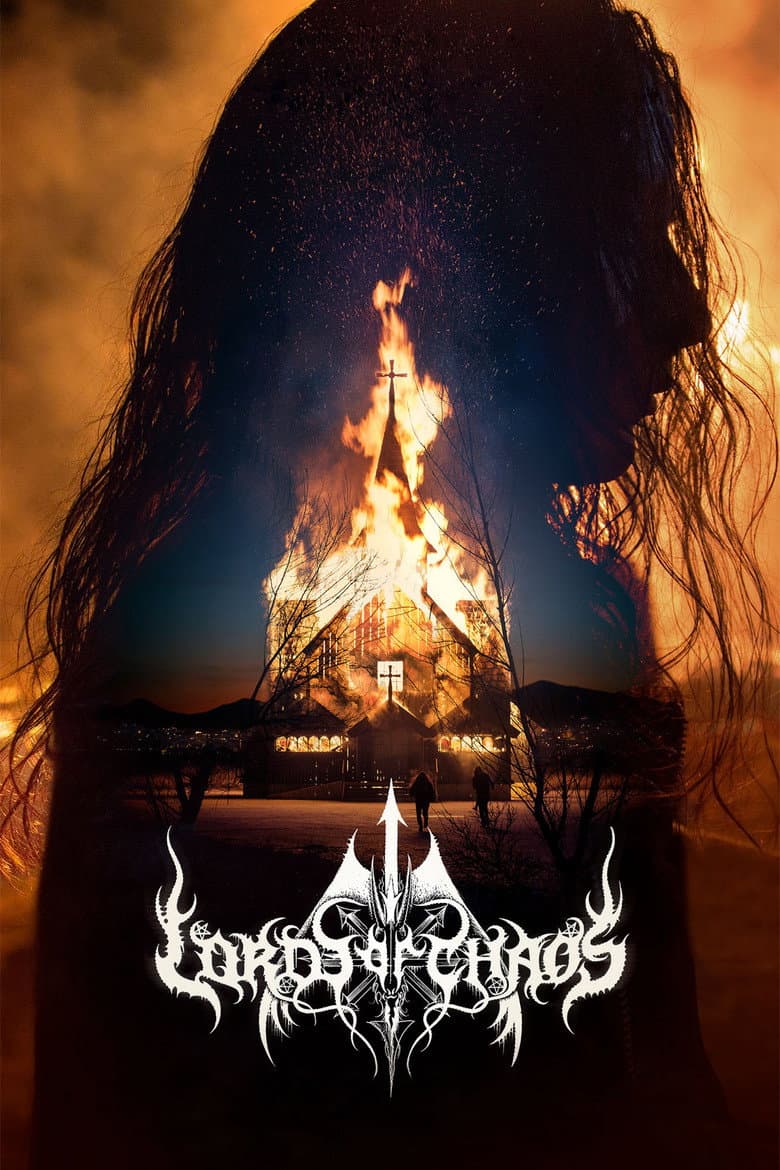
Set in Oslo from 1987 to 1993, the film follows Øystein Aarseth, who calls himself Euronymous and wants Mayhem to create “true” Norwegian black metal. He builds a record shop and a small circle around the band, but his fight for fame grows dangerous when Kristian Vikernes joins him as Varg. Dead’s suicide, church fires, and a murder turn the music scene into a real crime story. The tone moves between dark comedy, music drama, and graphic horror.
The film repeatedly shows young men proving their manhood through threats, sex, cruelty, and extreme beliefs. The story shows that male pride and the need to look powerful help push the group toward violence, but it does not turn this into a modern gender campaign. The film also adds Ann-Marit, a fictional girlfriend who questions Euronymous and helps him imagine a normal life. A gay man is murdered in a brief hate-crime scene, while Satanism, paganism, anti-Christian talk, and Nazi imagery stay tied to the characters’ underground world. The main story remains about music, fame, rivalry, and the damage caused when a public image becomes real.
Community feedback
Was our 20% Woke rating accurate?
Breakdown
These are the editorial factors and ratings behind our score for Lords of Chaos.
Woke representation / casting
Not present. The film uses mostly white male characters in a 1990s Norwegian music scene. Ann-Marit is a supporting fictional girlfriend, not a diversity or empowerment lead.
0%
Woke political dialogue
Not present. The characters talk about Satanism, paganism, church burning, Nazi ideas, and music status. Those lines show the characters’ extreme beliefs, not modern identity or DEI politics.
0%
Identity-driven story themes
Not present. The story centers on music rivalry, fame, dark beliefs, suicide, and murder. The film does not make race, gender, sexuality, or a modern identity cause the main conflict.
0%
Western institutional / cultural critique
The film repeatedly shows male posturing, sexual cruelty, and the need to look tough leading to suicide, arson, and murder. The story treats this behavior as childish and destructive rather than heroic. The characters also call Norway a dictatorship and Christianity a force that controls people, while churches are burned. These ideas belong to the characters’ extreme 1990s beliefs, so the modern Western institutional / cultural critique stays mild.
24%
Woke character or canon changes
Not relevant. The film changes some facts and adds Ann-Marit, a fictional girlfriend. Those changes do not turn a known person's race, gender, sexuality, or hero role into an identity message.
0%
Anti-woke backlash and complaints
A very small far-right X account called the film enemy propaganda and later said it mocked the scene. A Counter-Currents review attacked the film’s VICE-style message about consumption and objected to its treatment of right-wing figures as foolish. Most other fan complaints focused on factual errors, English dialogue, and sensationalism instead of woke politics. The anti-woke backlash is real but small and mixed.
23%
Creator track record context
The VICE and Michael Moore links add anti-war, civil-rights, and social-issue background. Other writers and producers have little DEI or representation-first history, while Michael Moynihan’s record points in the opposite political direction. Åkerlund’s title-related comments use humanizing language and mention white privilege and toxic masculinity. The overall creator context is mild, not a strong woke pattern.
15%
Production
Movie · 2018
A disgraced children's puppeteer returns to his childhood home and is forced to confront his wicked stepfather and the secrets that have tortured him his entire life.

Movie · 2020
When an outbreak hits, Aidan barricades himself inside his apartment and starts rationing food. His complex is overrun by infected Screamers, and with the world falling apart into…
Movie · 2016
A struggling painter is possessed by satanic forces after he and his young family move into their dream home in rural Texas.
Movie · 2020
After a tragic turn of events at the new home he's fixing up, Daniel hears a ghostly plea for help, spurring him to seek out a famous paranormal expert.
Movie · 2018
A thief makes a disturbing discovery in the house where he breaks in. Later, when he returns to the same house with his partner in crime, things are no longer how he expected.
Movie · 2017
Liam wakes from a car crash with no memory of who he is. As he makes his way into town to look for help, he finds only dead bodies, all with strange pale eyes.
Movie · 2016
Paralyzed by his fear of dying, Miles Grissom takes out an advert offering $30,000 in reward money to the first person who can show him evidence of an angel, a demon, or prove…
Movie · 2019
After a mysterious woman saves her daughter from a deadly snakebite, a single mother must repay the debt by killing a stranger before sundown.
