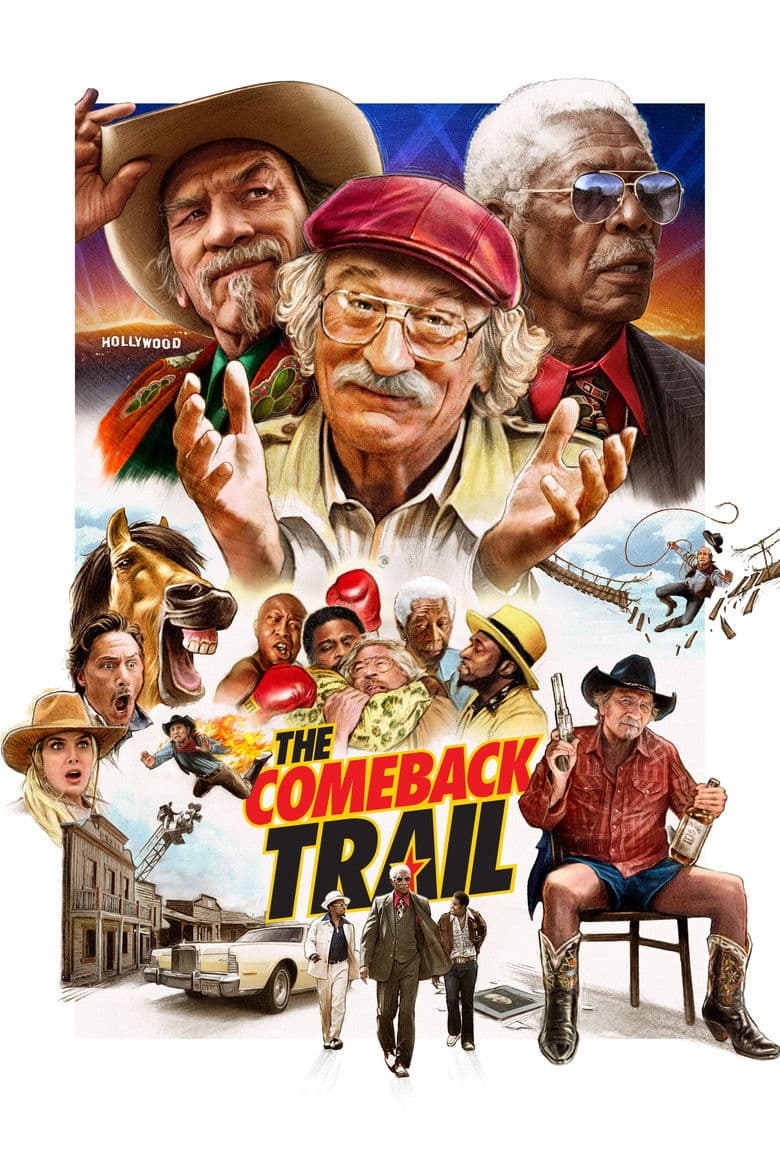
In 1974 Hollywood, broke producer Max Barber owes money to mobster Reggie Fontaine. Max and his nephew Walter make a fake Western with aging cowboy Duke Montana, hoping Duke will die in a stunt so they can collect insurance money. Duke keeps surviving, and the reckless scam slowly becomes a real movie that gives him a reason to live. The tone mixes dark jokes, mob danger, broad slapstick, and love for old movies.
The movie has clear but limited woke material in the fake Western and in its treatment of women in Hollywood. Duke’s role says that a white cowboy discovers native roots, fights an imperialist government, and once lost a black girlfriend because he chose fame. A female director is nearly rejected because the Western is called a guy’s movie, then she is praised as one of very few female directors and says she hopes to inspire more women. These ideas are easy to notice, but the main plot remains a crime comedy about greed, cheating, aging, and the joy of making movies.
Community feedback
Was our 49% Woke rating accurate?
Breakdown
These are the editorial factors and ratings behind our score for The Comeback Trail.
Woke representation / casting
The film gives Megan Albert a prominent job as the director of the Western. The men question her because they call the project a guy’s movie. The ending calls her one of Hollywood’s few female directors and has her say she hopes to inspire more women. The rest of the main cast is mostly older men, so the identity focus stays limited.
30%
Woke political dialogue
The fake Western uses direct language about oppression by white power. The pitch says Duke will embrace his Native roots and take over an imperialist government machine. The ending praises Megan as one of very few female directors and has her speak about inspiring women. These lines are clear and repeated around the movie within the movie, but they do not control most scenes.
42%
Identity-driven story themes
The movie within the movie centers on a white cowboy who learns he has Native roots and fights developers and government power. Duke’s backstory says he lost a black girlfriend when he chose a movie career. The story treats those identity and race ideas as the heart of his fake Western and as part of his sadness. The main crime plot still centers on insurance fraud, mob debt, and an aging star’s return.
44%
Western institutional / cultural critique
The fake Western calls native people oppressed by white power and attacks an imperialist government machine. The movie also shows Hollywood producers treating actors and art as tools for money. The Hollywood satire is mostly a crime joke about greed, so it does not become a broad attack on every Western institution. The activist-style criticism stays in the fake Western and a few lines around its production.
32%
Woke character or canon changes
The 1982 film centers on two producers trying to make an old cowboy star die for insurance money. The remake adds a fake Western about Native roots, oppression, and resistance to developers. This version also gives Duke a past black girlfriend and adds Megan as a female director. Those changes bring identity and gender themes into the remake, but the insurance scam remains the main story.
35%
Anti-woke backlash and complaints
Not present. Searches and the supplied X pass found no title-specific anti-woke or right-leaning backlash. Public discussion focused on the cast, comedy, pacing, and weak script.
0%
Creator track record context
George Gallo and Josh Posner have no clear activist or DEI record. The casting directors and most producers are known mainly for ordinary film work. Producer Joel Michaely has publicly supported LGBTQ actors getting roles. That single signal is mild because the film itself is not queer-centered.
10%
Production
Movie · 2017
Desperate to pay the bills and come through for their loved ones, three lifelong pals risk it all by embarking on a daring bid to knock off the very bank that absconded with their…
Movie · 2019
Istanbul Police Department homicide detectives encounter a murder nothing like they’ve seen before.Commissioners Emin, Salih, Asuman and deputy Alaattin begin investigating.But…
Movie · 2022
The Accident Man is back, and this time he must best the top assassins in the world to protect the ungrateful son of a mafia boss, save the life of his only friend and rekindle…
Movie · 2024
The eclectic residents of a small, picturesque island town must navigate a sensational murder and the discovery of a million dollars, leading to a series of increasingly bad…
Movie · 2018
Lulu Danger's unsatisfying marriage takes a turn for the worse when a mysterious man from her past comes to town to perform an event called "An Evening with Beverly Luff Linn: For…
Movie · 2026
To save his career, a 40-year-old ad exec joins a crew of twentysomethings for a wild Miami bachelor party after they mistakenly add him to a group chat.
Movie · 2022
The roguishly charming and endlessly troublesome Fletch becomes the prime suspect in a murder case while searching for a stolen art collection.
Movie · 2024
Hired to cover up a high-profile crime, a fixer soon finds his night spiralling out of control when he's forced to work with an unexpected counterpart.
