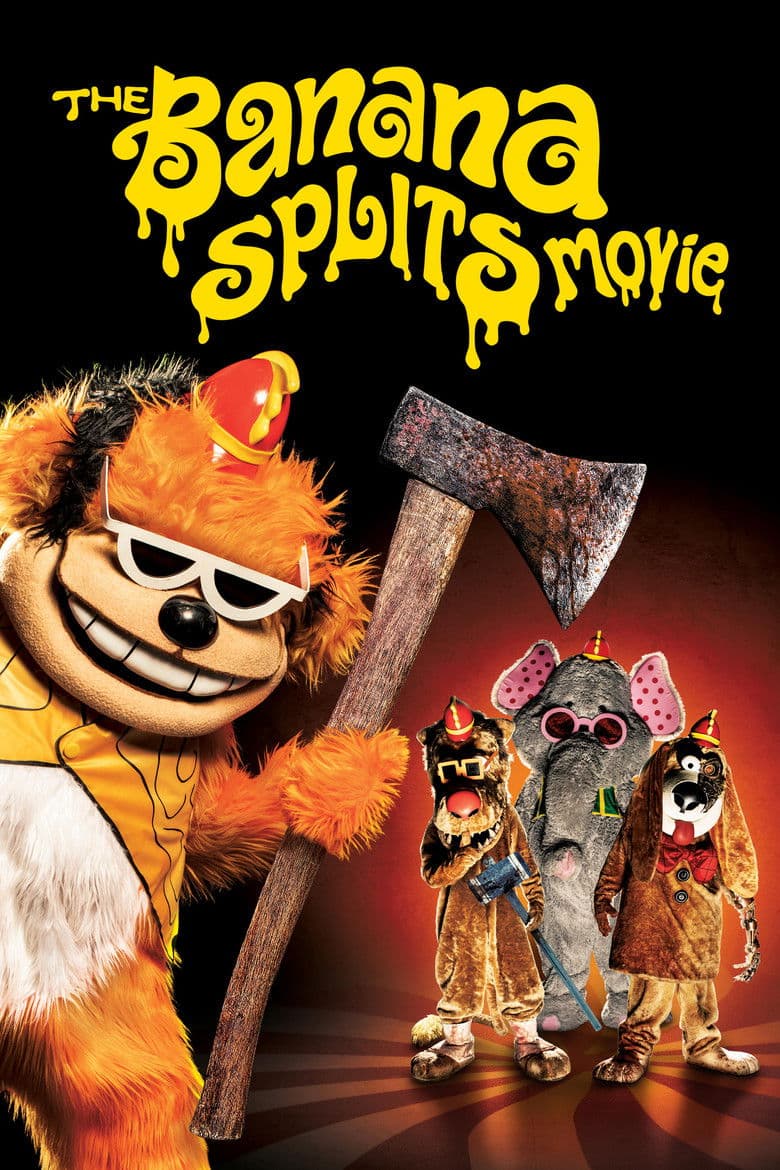
Harley Williams is a young boy who loves The Banana Splits and wants a special birthday at the television studio. His mother Beth, his brother Austin, and his classmate Zoe join him for a live taping. The show’s four animal stars are secretly killer machines, and they attack the staff and audience after the network cancels the show. The family and the other children must cross the studio and escape while the film mixes bloody horror with silly dark humor.
Beth becomes the main adult fighter after she learns that her husband Mitch has been cheating and then faces the machines. The story also presents Harley as a dreamy boy who does not fit common ideas about boys, while Zoe is a tough girl who does not act as people expect. Several women help lead the escape, while many men are weak, selfish, or quickly killed. These ideas appear through the family and survival plot, but the movie mainly stays focused on violent jokes, strange robots, and a fight to get the children out.
Community feedback
Was our 39% Woke rating accurate?
Breakdown
These are the editorial factors and ratings behind our score for The Banana Splits Movie.
Woke representation / casting
The film gives Beth the main adult survival role and places Rebecca and Paige in producer and host jobs. Beth leads the fight, while several men are mainly helpers, cheaters, or victims. This creates a noticeable female-lead pattern, but the film does not present the wider casting as a diversity campaign. No clear racial or religious identity message shapes the cast.
27%
Woke political dialogue
Not present. The characters argue about cheating, family problems, and the canceled show. No spoken line pushes modern identity, DEI, or activist ideas.
0%
Identity-driven story themes
Beth starts as a careful mother and becomes the strongest adult fighter in the group. The film presents Harley as a dreamy boy and Zoe as a tough girl who do not fit common gender expectations. Men are often shown as cheaters, bullies, weak helpers, or victims while Beth and other women take charge during the escape. These ideas run through the family and survival plot, although the movie remains mainly a bloody slasher.
52%
Western institutional / cultural critique
Not present. The film mocks a network executive who cancels an old show, but it does not attack Western institutions, religion, capitalism, or traditional social rules. The business satire stays tied to the horror plot.
0%
Woke character or canon changes
Not relevant. The Banana Splits stay the same animal characters from the source show, and Harley and Zoe are new movie characters. The film does not change an established character or the original show’s canon.
0%
Anti-woke backlash and complaints
Not present. The X research found no anti-woke reaction, and public discussion elsewhere centered on gore, the R-rated use of a children’s show, and comparisons to Five Nights at Freddy’s. No meaningful complaint said the film pushed DEI, identity politics, or activist ideas.
0%
Creator track record context
The director has a feminist, women-centered record and has spoken about gender politics. The writers have some representation-positive youth television work but no clear activist public record. The producers and casting staff have little identity-driven public record, so the overall creator context is moderate.
32%
Production
Movie · 2023
Jess, a newly separated mother and nurse, moves into her old family farmhouse with Tyler, her teenage daughter, and Owen, her eight-year-old son.
Movie · 2021
A young couple is pushed to the limits of sanity as they attempt to be reunited amid the chaos of a pandemic outbreak.
Movie · 2016
A deaf woman is stalked by a psychotic killer in her secluded home.
Movie · 2026
College student Lucy and her friends spend their vacation at her family's home in Hawaii, which includes her pet chimpanzee, Ben.
Movie · 2024
When an American family is invited to spend the weekend at the idyllic country estate of a charming British family they befriended on vacation, what begins as a dream holiday soon…
Movie · 2025
A collection of Halloween-themed videotapes unleashes a series of twisted, blood-soaked tales, turning trick-or-treat into a struggle for survival.
Movie · 2016
An evening of drunken prank calls becomes a nightmare for a pair of teenagers when a mysterious stranger turns their own game against them.
Movie · 2016
Ronnie runs a Disco walking tour with his son, Brayden. When a sexy woman takes the tour, it begins a competition between father and son for her love.
