Movie review
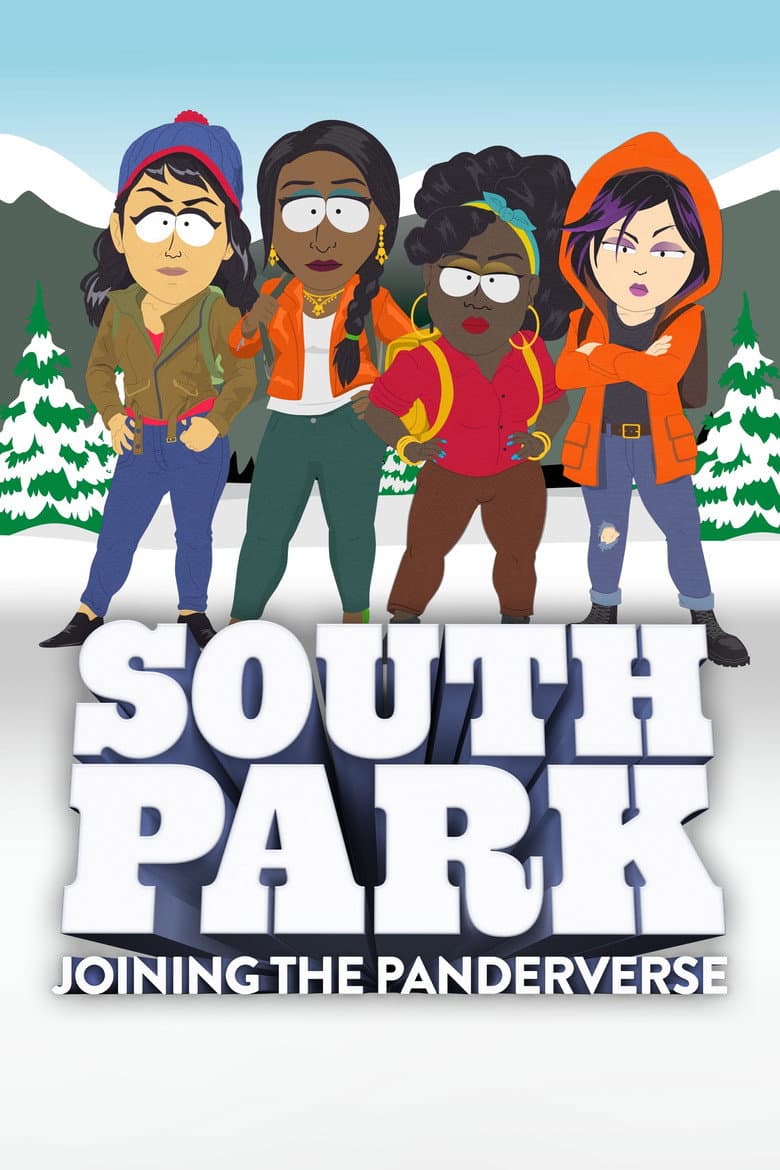
Eric Cartman is a fourth-grade boy in the small town of South Park, Colorado. He starts having nightmares that he and his friends have been replaced by women of color from another universe. The fear becomes real when a portal swaps Cartman with a black woman who has his name and personality. The special uses rude jokes, science fiction, and fast attacks on Disney, AI, college, and lazy adults.
Race and gender changes drive the main story, because the alternate South Park is filled with women of color who talk about the patriarchy. The special repeats jokes about diverse casting, racism, white culture, female exclusion, and making female characters gay. The school and Disney scenes mock people who treat identity changes as proof of racism or sexism, while Cartman attacks the same changes as lazy pandering. The story ends by blaming both angry fan letters and forced diversity for feeding each other, so the woke material is central but mostly used as satire.
Community feedback
Was our 75% Woke rating accurate?
Breakdown
These are the editorial factors and ratings behind our score for South Park: Joining the Panderverse.
Woke representation / casting
The special shows Cartman, Stan, Kyle, Kenny, and many other South Park residents as women of color in an alternate universe. The change is made on purpose to discuss diversity casting in Hollywood. The story treats the swaps as a joke and says that a new character with a real story is different from simply changing an old character’s race or gender. The pattern covers the main boys and many background roles, so it is a strong audience-visible identity choice even though the joke is not an endorsement.
58%
Woke political dialogue
The characters repeatedly talk about the patriarchy, female exclusion, racism, white culture, and diversity casting. PC Principal calls the boys racist and sexist when they question a black female Cartman. Disney executives repeatedly demand more diverse or gay female characters as a running joke. The ending also says that attacking woke ideas all the time is lazy, so the dialogue targets both sides of the argument.
48%
Identity-driven story themes
Race and gender changes form the main conflict of the special. The alternate town turns the boys and many other residents into women of color who are tied to complaints about the patriarchy. The story compares original characters with their own history to old characters changed only for identity reasons. The ending presents forced diversity and angry fan attacks as a cycle, so identity politics stays central even though the special mocks it.
52%
Western institutional / cultural critique
The alternate school treats doubt about a black female Cartman as proof of racism and sexism. The special also uses the words male patriarchy, white culture, and female exclusion to frame the conflict. The Randy plot attacks college, AI dependence, and billionaire power, but those points are mostly about debt, laziness, and wealth. The Western institutional / cultural critique is clear in the identity scenes but it is not the whole story.
33%
Woke character or canon changes
The special changes the established South Park boys from white males into women of color in another universe. Cartman becomes a black woman with the same name and core personality. Stan, Kyle, Kenny, Butters, and many other familiar residents also receive altered versions. The episode makes these identity changes the cause of the portal crisis, even though the original cast returns by the end.
70%
Anti-woke backlash and complaints
The supplied X pass found repeated anti-woke posts that focused on the swapped children as DEI changes, including a high-reach End Wokeness post and an Elon Musk reply. Right-leaning sites and videos also spread the view that the special was about Hollywood pandering, including coverage from The Blaze, The Federalist, OutKick, Geeks+Gamers, and Ben Shapiro. Most of that reaction praised South Park for mocking woke Hollywood instead of calling the special itself woke. No organized boycott or review bombing was found.
32%
Creator track record context
The cached context describes Trey Parker and Matt Stone as libertarian-leaning satirists who mock both political sides and political correctness. Their stored scores are 5 and 6, and the other listed producers are also mostly in the low range. Jenny Shin has a small representation link through work with the Reel Asian Film Festival. The special’s two-sided attack fits the creators’ usual style more than an activist campaign.
7%
Production
Movie · 2023
After it's discovered that a teacher at South Park Elementary has an OnlyFans page, Randy is compelled to take a closer look at the seedy underbelly of the world of online…
Movie · 2023
A lonely dog's friendship with his robot companion takes a sad turn when an unexpected malfunction forces him to abandon Robot at the beach. Will Dog ever meet Robot again?
Movie · 2022
In 1998, Beavis and Butt-Head are sentenced to Space Camp by a “creative” judge. Their obsession with a docking simulator (huh huh) leads to a trip on the Space Shuttle, with…
Movie · 2024
In 1985, the murder of a government-sponsored superhero draws his outlawed colleagues out of retirement and into a mystery that threatens to upend their personal lives and the…
Movie · 2026
When their plan to book a show at the Rivoli goes horribly wrong, Matt and Jay accidentally travel back to the year 2008.
Movie · 2024
A listless Wade Wilson toils away in civilian life with his days as the morally flexible mercenary, Deadpool, behind him.
Movie · 2018
In the future, an outbreak of canine flu leads the mayor of a Japanese city to banish all dogs to an island used as a garbage dump.
Movie · 2022
The Red Ribbon Army, an evil organization that was once destroyed by Goku in the past, has been reformed by a group of people who have created new and mightier Androids, Gamma 1…
