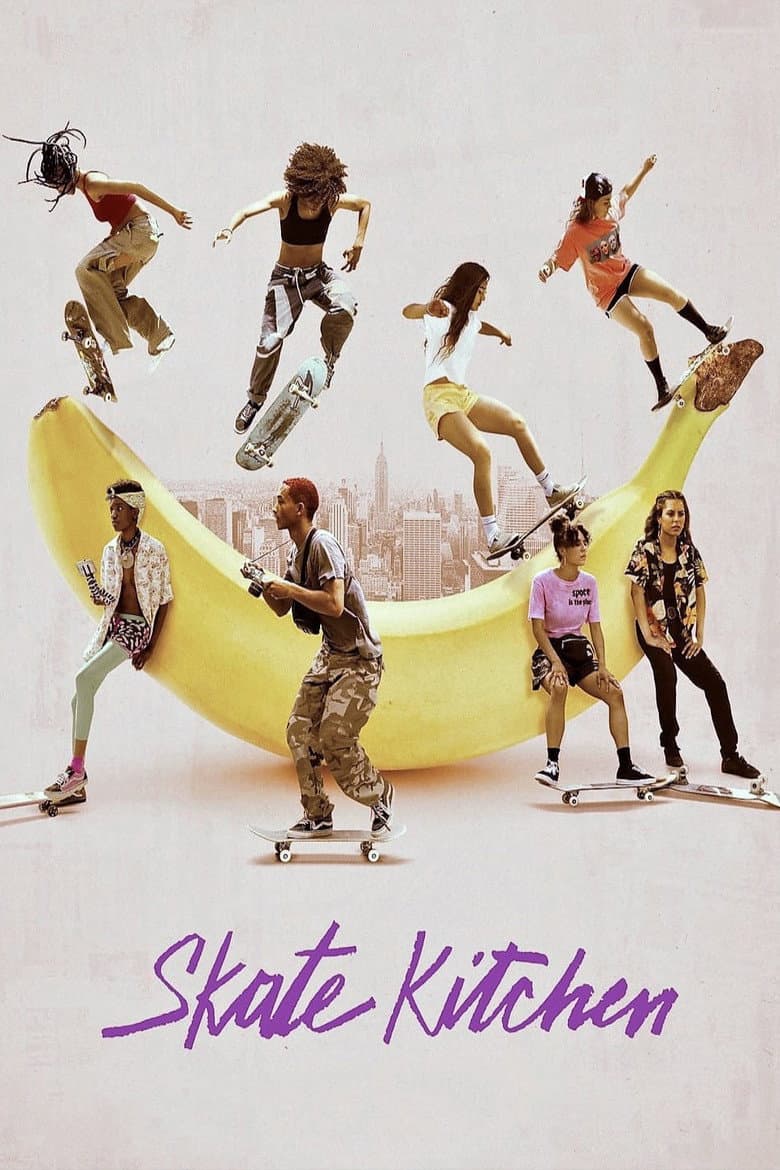
Camille is a shy 18-year-old who lives with her mother on Long Island. After her mother tells her to stop skating, Camille secretly travels into New York City and joins the all-girl Skate Kitchen crew. Her new friendships, a crush on Devon, and a fight with Janay pull her between the group and the home she left. The film has a loose, street-level tone that mixes skating, jokes, romance, and family drama.
The story puts young women at the center of a sport shown as mostly male, and it celebrates their skill, freedom, and friendship. The girls talk openly about periods, bodies, sex, and the pressure they face from male skaters. Kurt is a lesbian, and the crew is shown as a mixed group of girls from different racial backgrounds. The film often treats the girls' space as more open and supportive than Camille's strict home and the rude boys' world. These ideas shape the main conflict and the ending, but the movie stays focused on growing up instead of long political speeches.
Community feedback
Was our 65% Woke rating accurate?
Breakdown
These are the editorial factors and ratings behind our score for Skate Kitchen.
Woke representation / casting
The central cast is the real all-girl Skate Kitchen crew, so the female and mixed-race casting fits the group shown in the film. The cast is also presented as a visible statement about women entering a male-dominated sport. Interviews and coverage stress visibility for girls and girls of different races. The casting is identity-focused, but it is not a clear artificial swap or one-of-each lineup.
43%
Woke political dialogue
The girls have several short talks about periods, body worries, and how girls are treated at skate parks. One exchange contrasts boys who act without thinking with girls who think too much. Kurt calls a friend's body “valid” during a joking health talk. These moments are clear but casual, and the film has no long political speeches.
33%
Identity-driven story themes
Camille's main journey is from a lonely girl under her mother's control to a young woman who chooses her own friends and skating life. The film makes young women the skilled center of a sport shown as male-run and often hostile to them. Female friendship, freedom, and room to explore sexuality drive the plot and the ending. A lesbian member and the mixed-race group add identity themes, but queer life is not the main subject.
65%
Western institutional / cultural critique
Male skaters mock, pressure, and intimidate the girls, and one male group acts crude and entitled. Camille's mother treats skating as something she must quit and represents strict home control. New York and the Skate Kitchen group are shown as freer and more open than the mother's home and the boys' scene. The criticism targets gender roles and male behavior, not churches, capitalism, or a broad political system.
42%
Woke character or canon changes
Not relevant. The movie is an original story inspired by a real skate crew. It does not rewrite a known character, canon, or historical event.
0%
Anti-woke backlash and complaints
Not present. The separate X research found no anti-woke posts, boycotts, or review-bombing. Other coverage and audience comments focused on praise or ordinary complaints about the loose story, not claims that the film pushed woke politics.
0%
Creator track record context
Director Crystal Moselle often centers outsiders, young women, and people making their own space. Writer Aslıhan Ünaldı has worked with gender freedom, social pressure, and human-rights subjects. Writer Jen Silverman has a strong queer and feminist body of work. The other listed producers have mostly low or limited public activist records, so the strongest context comes from the director and writers.
60%
Production

Movie · 2016
Two high school girls are best friends until one dates the other's older brother, who is totally his sister's nemesis.
Movie · 2023
A curmudgeonly instructor at a New England prep school is forced to remain on campus during Christmas break to babysit the handful of students with nowhere to go.

Movie · 2017
Ingrid becomes obsessed with a social network star named Taylor Sloane who seemingly has a perfect life. But when Ingrid decides to drop everything and move west to be Taylor's…

Movie · 2023
Single mom Flora is at a loss about what to do with her rebellious teenage son, Max. Her efforts to keep him out of trouble lead to a beat-up acoustic guitar, a washed-up LA…
Movie · 2023
Allison's life falls apart following her involvement in a fatal accident. The unlikely relationship she forms with her would-be father-in-law helps her live a life worth living.

Movie · 2024
When a construction worker unexpectedly joins a local theater's production of Romeo and Juliet alongside his estranged teenage daughter, the drama onstage starts to mirror his own…

Movie · 2018
Vignettes weaving together the stories of six individuals in the old West at the end of the Civil War. Following the tales of a sharp-shooting songster, a wannabe bank robber, two…

Movie · 2017
An aspiring actor in Hollywood meets an enigmatic stranger by the name of Tommy Wiseau, the meeting leads the actor down a path nobody could have predicted; creating the worst…
