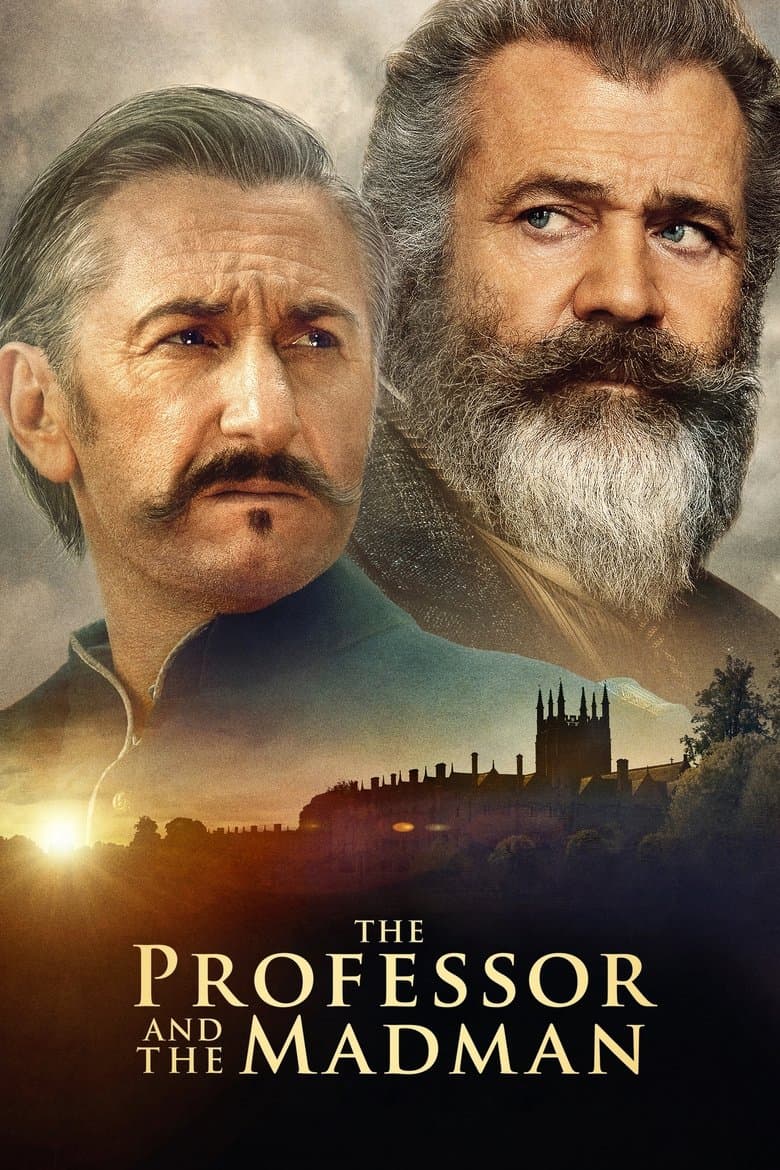
Professor James Murray takes charge of a huge project in Victorian England. He wants to build the first Oxford English Dictionary by asking people to send in words and examples. Dr. William Minor, an American army surgeon held in Broadmoor after killing a man during a delusion, becomes his most useful helper. The film is a serious, grim period drama about work, guilt, madness, friendship, and forgiveness.
The film follows two troubled men as they build a friendship through letters and shared work. It also follows Eliza Merrett, the widow of Minor’s victim, as she moves from anger to pity and forgiveness. The story treats mental illness, harsh asylum care, guilt, and redemption as human problems. A made-up love story between Minor and Eliza shifts part of the focus away from the dictionary and toward personal forgiveness.
Community feedback
Was our 2% Woke rating accurate?
Breakdown
These are the editorial factors and ratings behind our score for The Professor and the Madman.
Woke representation / casting
Not present. The main cast is made up mostly of white British and American characters who fit the Victorian English and American setting. Women have supporting roles such as Ada Murray and Eliza Merrett, while the central work and friendship remain led by men.
0%
Woke political dialogue
Not present. The dialogue focuses on dictionary work, mental illness, guilt, forgiveness, and treatment in an old asylum. The film has no recurring modern political speeches about race, sex, gender, class, or identity.
0%
Identity-driven story themes
Not present. The story follows a murderer with severe mental illness, a widow, and a dictionary project. Its main themes are guilt, mercy, friendship, work, and second chances, not modern identity politics or group activism.
0%
Western institutional / cultural critique
Not present. The film shows harsh asylum treatment and Oxford leaders who resist Murray’s plan. It treats these as problems inside the nineteenth-century story, not as a repeated modern attack on Western culture, family life, Christianity, or men.
0%
Woke character or canon changes
Not relevant. The film changes some historical details and adds a love story between Minor and Eliza. Those changes serve the forgiveness plot and do not turn a character or historical event into an identity or DEI statement.
0%
Anti-woke backlash and complaints
Not present. News reports focus on the legal fight over the final cut and the film’s weak release. Audience comments focus on the acting, history, and forgiveness story, with no clear anti-woke or anti-DEI campaign found.
0%
Creator track record context
John Boorman has a public socialist and anti-consumer-capitalist record, along with environmental and anti-war work. Dan Hubbard has expressed interest in casting performers from varied backgrounds, but his profile shows no deeper activist record. Todd Komarnicki, Farhad Safinia, Simon Winchester, Mel Gibson, Bruce Davey, and Gastón Pavlovich have no strong DEI or identity-politics record in the available summaries. These background signals stay mild and do not shape the movie’s story.
10%
Production
Movie · 2017
Barcelona, Spain. Adrián Doria, a young and successful businessman accused of murder, meets one night with Virginia Goodman, an expert interrogation lawyer, in order to devise a…
Movie · 2017
Paul is a down-on-his-luck screenwriter who picks up a drifter and offers him a place to stay. However, when the deranged stranger takes Paul hostage and forces him to write…
Movie · 2021
A truffle hunter who lives alone in the Oregon wilderness must visit Portland to find the mysterious person who stole his beloved foraging pig.
Movie · 2022
7 years after the case related to Vijay Salgaonkar and his family was closed, a series of unexpected events bring truth to light that threatens to change everything for the…
Movie · 2020
A professional cellist has an encounter with a stranger on the subway which has unexpected and far-reaching ramifications on his life.
Movie · 2016
Porter Wren is a Manhattan tabloid writer with an appetite for scandal. On the beat he sells murder, tragedy, and anything that passes for the truth.
Movie · 2016
In 1967, four undercover CIA agents were sent to NASA posing as a documentary film crew. What they discovered led to one of the biggest conspiracies in American history.
Movie · 2022
A well-to-do husband who allows his wife to have affairs in order to avoid a divorce becomes a prime suspect in the disappearance of her lovers.
