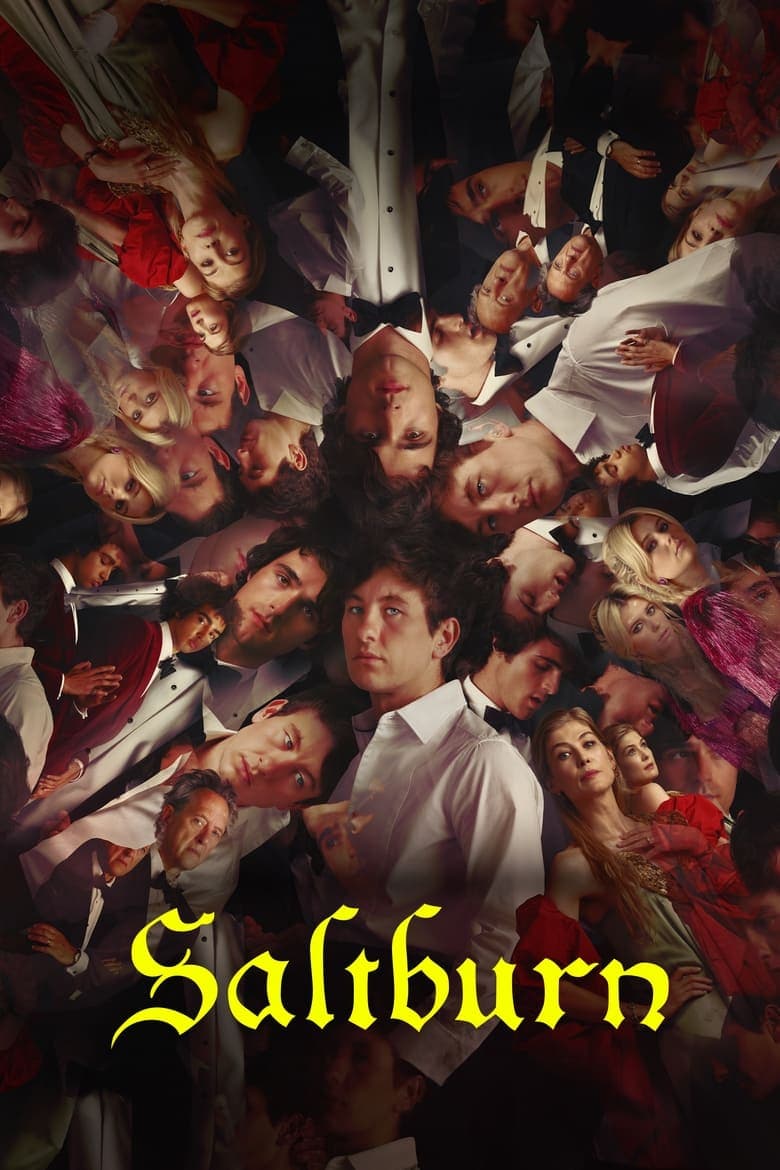
Oliver Quick is a lonely Oxford student who latches onto Felix Catton, a rich and popular classmate. Felix invites him to spend the summer at Saltburn, his family’s huge country house. What starts as friendship turns into dark obsession, lies, sex, and murder. The tone is glossy, sexy, and often shocking.
The main story is about wanting wealth, beauty, and belonging, not about modern protest speeches. Viewers will clearly notice heavy queer desire: Oliver’s crush on Felix, gay sex with Felix’s cousin Farleigh, and fluid attraction used as power. Director Emerald Fennell has said the film is a queer thriller and that queer desire is part of its fabric. Class satire of spoiled rich people is strong, but it plays more like a twisted thriller than a DEI lecture. Race casting is light beside the leads. Shock scenes drove most online talk more than “too woke” fights.
Community feedback
Was our 58% Woke rating accurate?
Breakdown
These are the editorial factors and ratings behind our score for Saltburn.
Woke representation / casting
Leads are largely white Oxford/aristocracy types (Oliver, Felix, Elspeth, James, Venetia). Mixed-race Archie Madekwe as cousin Farleigh is a clear supporting outsider, and Lolly Adefope has a small role. Noticeable but not a lead-driven diversity campaign or quota-style “brilliant minority hero” pattern. Race is background flavor next to class and desire.
22%
Woke political dialogue
Talk is mostly rich-people snobbery, manners, and sharp jokes. Casual lines (like a past “lesbian phase”) exist, but the film is not full of activist speeches about race, gender systems, or modern social-justice causes.
10%
Identity-driven story themes
Queer desire is hard to miss and creator-confirmed: Oliver’s erotic fixation on Felix, sex with gay/bi-coded Farleigh, fluid attraction used for power, and marketing as a queer thriller. Class hunger and murder still drive the plot, so this is not only a “queer rights” story—but the LGBTQ thread is central and aggressive for scoring.
72%
Western institutional / cultural critique
Mocks empty rich aristocrats and status games. That is classic class satire, not a modern lecture on whiteness, patriarchy, or colonial guilt. Some critics even called the ending more protective of elite walls than radical. Mild institutional edge, not activist framing.
26%
Woke character or canon changes
Not present in this title.
0%
Anti-woke backlash and complaints
Almost no sustained mainstream anti-woke claim that Saltburn is DEI or left identity propaganda. Outrage centered on sex, shock, and whether the satire is shallow. Only fringe or thin “woke” labeling; score stays near zero under the strict anti-woke-only rule.
5%
Creator track record context
Key force is Fennell (60) plus LuckyChap’s female-story slate (Robbie, Ackerley, McNamara in the 40s). Pattern is feminist-leaning, women-centered prestige work more than hard DEI activism. Fits a mid-range creator context, not a pure activist brand.
50%
Production

Movie · 2017
When a depressed woman is burglarized, she finds a new sense of purpose by tracking down the thieves alongside her obnoxious neighbor.
Movie · 2019
Los Angeles, 1969. TV star Rick Dalton, a struggling actor specializing in westerns, and stuntman Cliff Booth, his best friend, try to survive in a constantly changing movie…

Movie · 2016
A financial schemer finds himself in the middle of an international scandal after he becomes a political adviser to the new Prime Minister of Israel.

Movie · 2017
A disgraced former cop, fresh off a six-year prison sentence for attempted murder, returns home looking for redemption but winds up trapped in the mess he left behind.

Movie · 2017
Lynn, a brilliant student, after helping her friends to get the grades they need, develops the idea of starting a much bigger exam-cheating business.
Movie · 2020
Markus returns home to care for his daughter when his wife dies in a tragic train accident. However, when a survivor of the wreck surfaces and claims foul play, Markus suspects…
Movie · 2016
In 1967, four undercover CIA agents were sent to NASA posing as a documentary film crew. What they discovered led to one of the biggest conspiracies in American history.
Movie · 2025
A former teenage getaway driver gets dragged back into her unsavory past when a former employer offers her a chance to save the life of her chronically unreliable ex-boyfriend.
