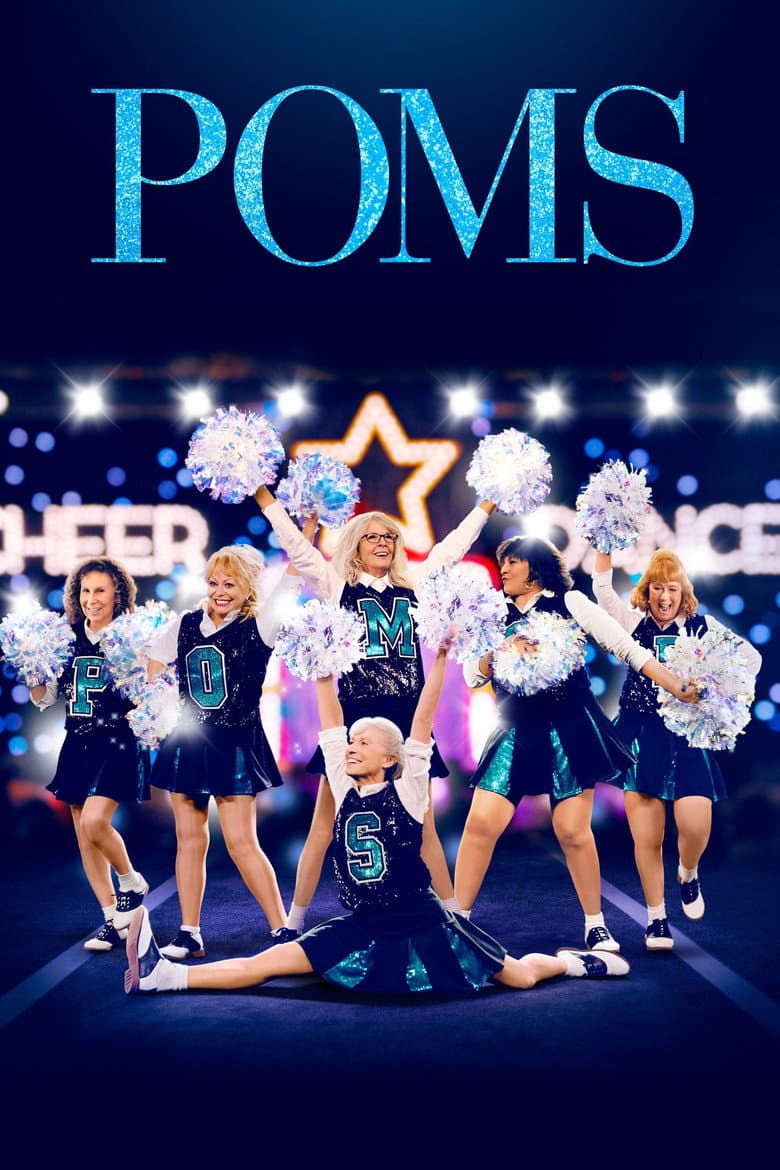
Martha is a lonely New Yorker who moves to Sun Springs, a retirement community in Georgia, after doctors tell her that her cancer is terminal. She plans to spend her final days alone, but her loud and playful neighbor Sheryl pulls her into friendship. Martha then revives her old dream of cheerleading and starts a club with other residents. The women face strict community rules, mocking high school cheerleaders, and family members who try to control them.
The story puts older women at the center and gives them a racially mixed cheer squad. Martha says the women will cheer for themselves, and the group keeps going after people call them too old, too weak, or improper. The movie presents female friendship, personal choice, and freedom from age rules as good things. Those ideas guide the club, the main conflict, and the final performance, while the cancer story gives the comedy a sad edge.
Community feedback
Was our 58% Woke rating accurate?
Breakdown
These are the editorial factors and ratings behind our score for Poms.
Woke representation / casting
The lead squad is made up of older women, including Diane Keaton, Pam Grier, and Rhea Perlman. The group also has a visible mix of black and white women, and the official marketing calls it a diverse group. The casting fits the story because a retirement community can include women from different backgrounds. Interviews still frame the female-led cast as a statement about women taking center stage instead of serving as side characters for men.
42%
Woke political dialogue
Martha says the team will cheer for “ourselves” when asked who they support. Alice repeats that her husband calls older cheerleaders sluts and whores, and Martha calls his view caveman-like. The security chief later uses age discrimination language when the team is blocked. These lines appear in several scenes, but the movie keeps them inside jokes and arguments instead of giving a long political speech.
38%
Identity-driven story themes
The story makes older women’s freedom and self-worth its main subject. Martha turns a lost cheerleading dream into a team, and the women keep choosing their own goals after age rules, illness, mockery, and controlling relatives block them. The movie praises sisterhood, body acceptance, and the idea that age should not decide what women can do. The message shapes the club, the conflict, and the final competition.
58%
Western institutional / cultural critique
The retirement community treats the women as a liability and tries to keep their club from competing. Alice’s husband calls cheerleading immoral, and Helen’s son controls her money and keeps her from leaving home. The women answer these family and community limits with open defiance, while a guard invokes age discrimination to help them. The movie attacks ageism and controlling gender roles, but it does not make a broad attack on capitalism, religion, or Western society.
40%
Woke character or canon changes
Not relevant. The film is an original fictional story inspired by real senior cheer groups. It does not change an established character, franchise, or named historical figure.
0%
Anti-woke backlash and complaints
One Christian movie site user called the film anti-Christian and hostile to men. The reviewer objected to Martha’s nonreligious view of death and to the women-first treatment of men. No large boycott, review-bombing wave, or right-leaning campaign was found in the wider coverage. X research found no anti-woke complaints.
6%
Creator track record context
Hayes has a repeated record of stories about women, gender equality, and female empowerment. Hayes also described Poms as a feminist take on cheerleading and said the senior team should challenge limits placed on women and disabled people. Atkinson has no stored activist pattern, and most other key crew members have low or mixed context. The overall signal is moderate and led mainly by Hayes.
39%
Production

Movie · 2023
The true story of how Dave Fishwick, a working class man and self-made millionaire, fought to set up a community bank so that he could help the local businesses of Burnley not…

Movie · 2016
Aspiring New York City artist John Hollar returns to his Middle America hometown on the eve of his mother’s brain surgery.

Movie · 2019
A down-on-his-luck crab fisherman embarks on a journey to get a young man with Down syndrome to a professional wrestling school in rural North Carolina and away from the…

Movie · 2016
The feel-good story of Michael 'Eddie' Edwards, an unlikely but courageous British ski-jumper who never stopped believing in himself—even as an entire nation was counting him out.

Movie · 2018
An American hypochondriac who is working as a baggage handler is forced to confront his fears when a British teenager with a terminal illness enlists him to help her carry out her…

Movie · 2025
Lily Trevino unexpectedly befriends an online stranger who shares her self-centered father’s name. This new Bob Trevino’s support could transform her life.

Movie · 2018
Tony Lip, a bouncer in 1962, is hired to drive pianist Don Shirley on a tour through the Deep South in the days when African Americans, forced to find alternate accommodations and…

Movie · 2017
Brigsby Bear Adventures is a children's TV show produced for an audience of one: James. When the show abruptly ends, James's life changes forever, and he sets out to finish the…
