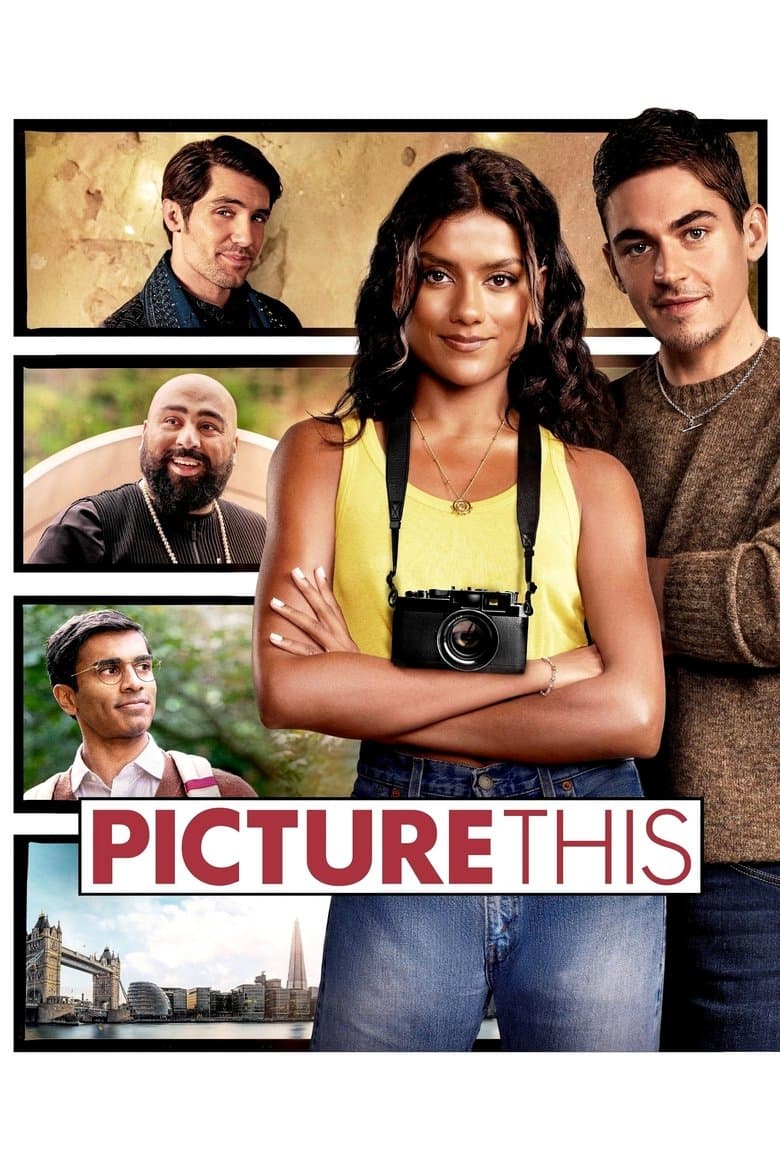
Pia Jaswani is a talented but broke photographer who runs a small portrait studio in London with her gay best friend, Jay. Her sister Sonal is preparing for a large family wedding while Pia faces debt, pressure to marry, and old feelings for Charlie, the man she once loved. A spiritual guru says Pia will meet her future partner within her next five dates, so her family arranges a string of awkward meetings. The film uses bright wedding scenes, rude jokes, romance, and family arguments to tell a light and messy story about love and growing up.
The film gives a clear place to Pia's wish to build a career instead of treating marriage and children as the only good future for her. Her mother first links family jewelry to marriage, but later gives Pia the jewelry to invest in her photography and accepts that marriage is not for everyone. The British Indian family, wedding customs, and matchmaking are central to the film, while Jay's coming-out story and queer icons add a smaller LGBTQ+ thread. Pia still chooses a man at the end, but the film says she should choose love on her own terms.
Community feedback
Was our 57% Woke rating accurate?
Breakdown
These are the editorial factors and ratings behind our score for Picture This.
Woke representation / casting
The film centers a British Indian woman and gives her a mostly South Asian family and friend group. That mix fits the London Indian setting, so the casting is not a story-world mismatch. The director and promotion still describe the film as intentional representation for South Asian women and audiences. Representation is therefore a visible part of the film's presentation, but it does not replace the dating plot.
30%
Woke political dialogue
Pia says she does not need a man, marriage, or children to feel complete. Jay supports that view when he tells her that women do not need men to feel whole. Pia's mother later accepts that marriage is not for everyone and helps her fund the studio. These ideas recur in family scenes but do not become a wider party or policy message.
26%
Identity-driven story themes
Pia's main struggle joins romance to her identity as a British Indian woman and to pressure from her family. The wedding, family customs, matchmaking, and fear of public shame fill much of the story. Pia chooses her own career and rejects the idea that marriage is required for a woman's future. Jay's coming-out story and his queer icons add a clear but smaller LGBTQ+ thread.
46%
Western institutional / cultural critique
The film treats pressure to marry as a problem that limits Pia's choices. The story mocks a rich man who expects a wife to act as his public accessory. It also presents family photos and marriage as ways to hide pain and keep up appearances. The film does not attack Western institutions or show a broad system of oppression, so this cultural critique stays limited.
23%
Woke character or canon changes
The film is a remake of the Australian movie Five Blind Dates. It changes that story's Chinese Australian setting to a British Indian family in London, with new names, customs, and cultural jokes. The director and writer Nikita Lalwani describe the change as a way to give Indian characters a more authentic and visible place in the rom-com. The change shapes the film's world, while the main dating plot stays familiar.
32%
Anti-woke backlash and complaints
Not present. The supplied X pass found no anti-woke posts, boycott, or review-bomb effort. Online complaints focused on the comedy, romance, and Indian cultural jokes instead of claims that the film pushed woke or DEI ideas.
0%
Creator track record context
The director has spoken about centering diverse women and stories about minority lives. Nathan Ramos-Park often centers queer Asian representation, while Shuang Hu promotes women's empowerment and positive roles for Asian women. Simone Ashley has spoken about onscreen visibility for brown and dark-skinned women, and she helped produce this film. This background matches the film's clear focus on representation and personal choice.
68%
Production
Movie · 2026
A happily engaged couple is put to the test when an unexpected turn sends their wedding week off the rails.
Movie · 2020
An on-the-lam punk rocker and a young woman obsessed with a local band go on an unexpected and epic journey together through the decaying suburbs of the American Midwest.
Movie · 2024
Ana is an ambitious intern dreaming of a career in the art world while trying to impress her demanding boss Claire.
Movie · 2022
Peter and Emma thought they were on the precipice of life’s biggest moments – marriage, kids, and houses in the suburbs – until their respective partners dumped them.
Movie · 2024
In the summer of 1986, three sixteen year old friends spend their Saturdays sneaking into movies at the local multiplex.
Movie · 2022
Two strangers believe in love but never seem to be able to find its true meaning. In a wild twist of events, fate puts each in the other's path on one stormy New Year's Eve.
Movie · 2019
Oh, Ramona! seeks the transformation of Andrew from a teenager into an adult who lives candidly and selflessly his first love story, innocent and uninvolved, alternating with the…

Movie · 2016
A week in the life of Paterson, a poet bus driver, and his wife Laura, a very creative artist, who live in Paterson, New Jersey, hometown of many famous poets and artists.
