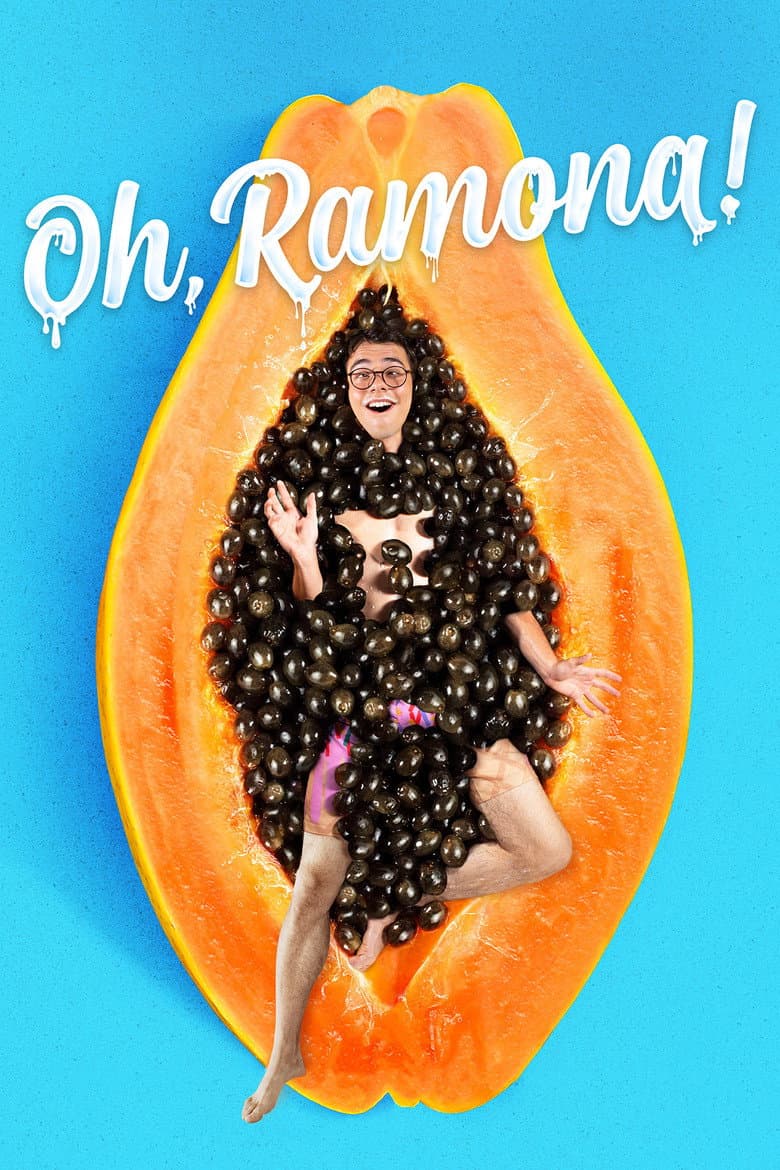
Oh, Ramona! follows Andrei, a shy 16-year-old boy in Romania who wants his first real love. He has chased Ramona at school for years, but he later meets Anemona during a beach holiday and falls for her too. Andrei must choose between the girl he dreamed about and the girl who returns his feelings. The movie uses bright scenes, direct narration, cartoon images, sex jokes, and rough humor as it follows his move into adulthood.
The story treats school status, virginity, sex, jealousy, cheating, and body size as parts of a loud teen comedy. Andrei begins as an awkward outsider, gains confidence after sexual experiences, and still makes selfish choices. Ramona and Anemona are mostly shown through his desire, fear, and confusion, so their inner lives receive less space. The film ends as a messy lesson about growing up, trust, and the cost of trying to keep two romances alive.
Community feedback
Was our 5% Woke rating accurate?
Breakdown
These are the editorial factors and ratings behind our score for Oh, Ramona!.
Woke representation / casting
The movie is a Romanian teen story, but several foreign actors appear in visible supporting and love-interest roles. Cristina Jacob said the English-language choice allowed actors from around the world. The casting looks mainly like a commercial international choice, and it is not framed as a diversity campaign.
10%
Woke political dialogue
Not present. The dialogue centers on dating, sex, school status, jealousy, and jokes. It does not present modern DEI, activist, or identity-politics ideas.
0%
Identity-driven story themes
Not present. The story follows a teenage boy’s love triangle and his messy move into adulthood. It does not build its plot around race, gender identity, queer life, or activist causes.
0%
Western institutional / cultural critique
Not present. The film mocks school status, sex rules, body size, and dating mistakes. It does not make a modern activist critique of institutions, men, family, religion, or Western society.
0%
Woke character or canon changes
Not relevant. The film adapts Andrei Ciobanu’s autobiographical novel. Reported changes concern fitting a long book into a shorter film, not race, gender, sexuality, or identity.
0%
Anti-woke backlash and complaints
Not present. X research found no anti-woke posts. Other public discussion attacked the film’s quality, sexual jokes, sexism, and use of “gay” as an insult, but it did not say the film pushed woke or DEI ideas.
0%
Creator track record context
Not present. The director, writers, and producers have no documented pattern of DEI or identity activism. The casting directors also have no public record of making identity politics a main part of their work.
0%
Production
Movie · 2019
Two young people arrive in New York to spend a weekend, but once they arrive they're met with bad weather and a series of adventures.
Movie · 2023
After a disastrous first date, wild-child Nicole and socially-anxious Max vow to lose each other’s numbers until they learn that their dogs found a love match, and now puppies are…
Movie · 2017
When their plane is rerouted due to a hurricane warning, two single female best friends find themselves competing for the same guy during an extended layover in St. Louis.
Movie · 2020
Lonely college freshman Alex has closed himself off from his peers, who all appear to have this whole "college thing" figured out.
Movie · 2025
Dawn thinks she's joining a dating show in Paris, France, only to land in Paris, Texas. She has an exit plan — until sparks fly with the cowboy bachelor.
Movie · 2023
The dramatic comedy is based on the true story of writer and pinball wizard Roger Sharpe, chronicling his journey to overturn New York City’s 35-year ban on pinball.
Movie · 2020
A teenager lives out the hilarious and often tragic consequences of being lethally attractive, until he meets a girl with a congenital defect.
Movie · 2016
A girl falls for the "perfect" guy, who happens to have a very fatal flaw: he's a hitman on the run from the crime cartels who employ him.
