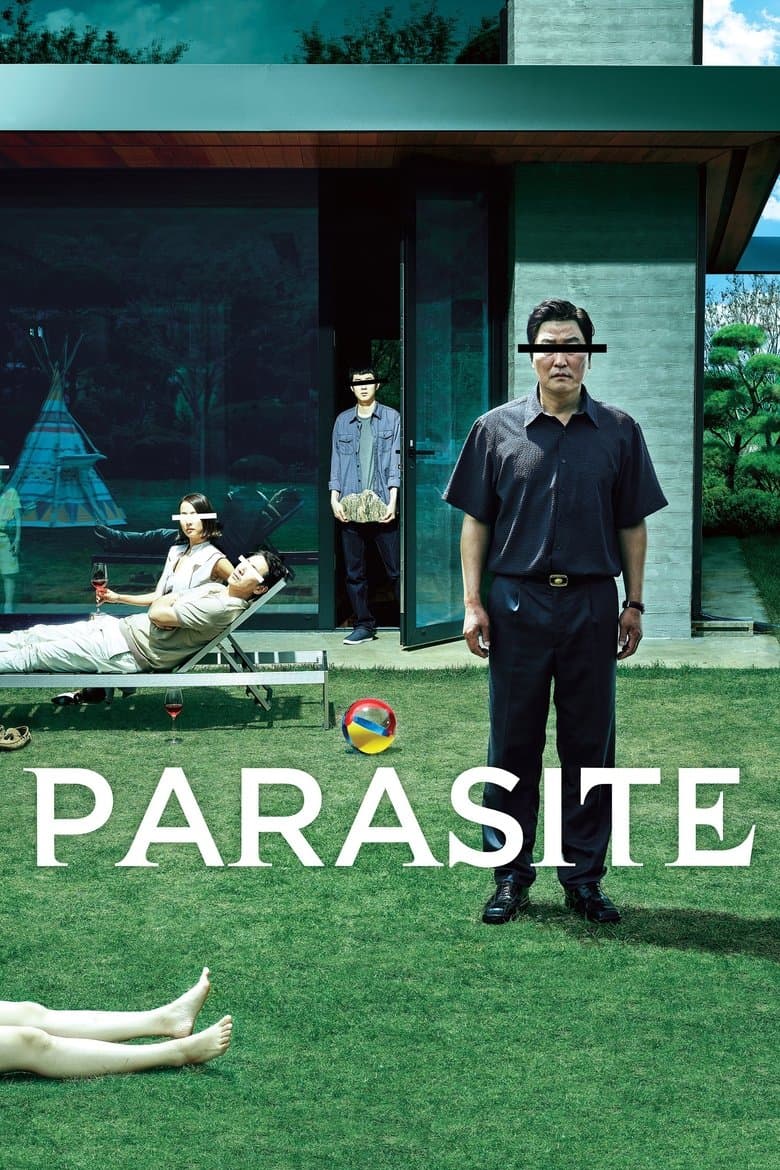
Parasite follows Ki-taek, an unemployed father in Seoul who lives with his wife, daughter, and son in a cramped semi-basement. When his son gets a tutoring job with the wealthy Park family, the Kims slowly place themselves in every paid job inside the Park home. Their plan seems clever until a hidden secret under the house turns their scam into a dangerous fight for survival. The film shifts from funny family crime story to tense thriller and then to bleak tragedy.
The strongest audience-visible woke element is the film’s repeated attack on class inequality and the way money shapes work, housing, manners, and safety. The Kims and the Parks are not shown as simple heroes and villains, but the story treats the gap between rich and poor as a deep social trap. Lines about smell, clean clothes, and the rich family’s right to comfort make class shame part of the conflict. The all-Korean cast fits the modern South Korean setting, and the film does not build its story around race, gender, queer identity, or a diversity message.
Community feedback
Was our 45% Woke rating accurate?
Breakdown
These are the editorial factors and ratings behind our score for Parasite.
Woke representation / casting
Not present. The film uses an all-Korean cast in a modern South Korean story. The main roles fit the place and are not presented as a diversity campaign.
0%
Woke political dialogue
The film uses a few short lines about rich people, poor people, money, smell, and social rank. The Kim family and the Parks return to these differences at key points. The dialogue does not give a modern identity speech or name a political movement.
25%
Identity-driven story themes
The film makes the gap between rich and poor the main engine of the story. The Kim family and the Park family are trapped in a system where money controls housing, work, comfort, and respect. The story treats class shame and economic inequality as causes of the violence that follows. The theme is strong and repeated, but it is about class more than race, gender, or queer identity.
48%
Western institutional / cultural critique
The film criticizes a modern capitalist class system by showing how wealth shapes housing, work, and social respect. The story places that critique in South Korea rather than in a Western institution. The film does not target Christianity, traditional family life, or men as a group. Its criticism stays focused on money, status, and the class system in Seoul.
18%
Woke character or canon changes
Not relevant. The film is an original story about fictional families. It does not change a known character, book, historical figure, or real event.
0%
Anti-woke backlash and complaints
Some South Korean conservative politicians called the film a “commie movie” in response to its class and capitalism criticism. News coverage linked the complaint to the film’s left-leaning message. Most public reaction was praise, awards excitement, and discussion of class rather than a large anti-woke campaign. The backlash was real but limited.
24%
Creator track record context
Director Bong Joon Ho has a repeated record of stories about class, power, and social exploitation. Writer Han Jin-won is also tied to class-focused work, but public summaries show no strong record of activism or identity politics. Producer Miky Lee has recent business efforts to support underrepresented Asian creators. The wider production team has no clear public activist pattern.
35%
Production

Movie · 2017
Lynn, a brilliant student, after helping her friends to get the grades they need, develops the idea of starting a much bigger exam-cheating business.

Movie · 2016
In 1967, four undercover CIA agents were sent to NASA posing as a documentary film crew. What they discovered led to one of the biggest conspiracies in American history.
Movie · 2019
Los Angeles, 1969. TV star Rick Dalton, a struggling actor specializing in westerns, and stuntman Cliff Booth, his best friend, try to survive in a constantly changing movie…
Movie · 2020
Markus returns home to care for his daughter when his wife dies in a tragic train accident. However, when a survivor of the wreck surfaces and claims foul play, Markus suspects…

Movie · 2016
A financial schemer finds himself in the middle of an international scandal after he becomes a political adviser to the new Prime Minister of Israel.

Movie · 2017
When a depressed woman is burglarized, she finds a new sense of purpose by tracking down the thieves alongside her obnoxious neighbor.

Movie · 2017
A disgraced former cop, fresh off a six-year prison sentence for attempted murder, returns home looking for redemption but winds up trapped in the mess he left behind.

Movie · 2025
A former teenage getaway driver gets dragged back into her unsavory past when a former employer offers her a chance to save the life of her chronically unreliable ex-boyfriend.
