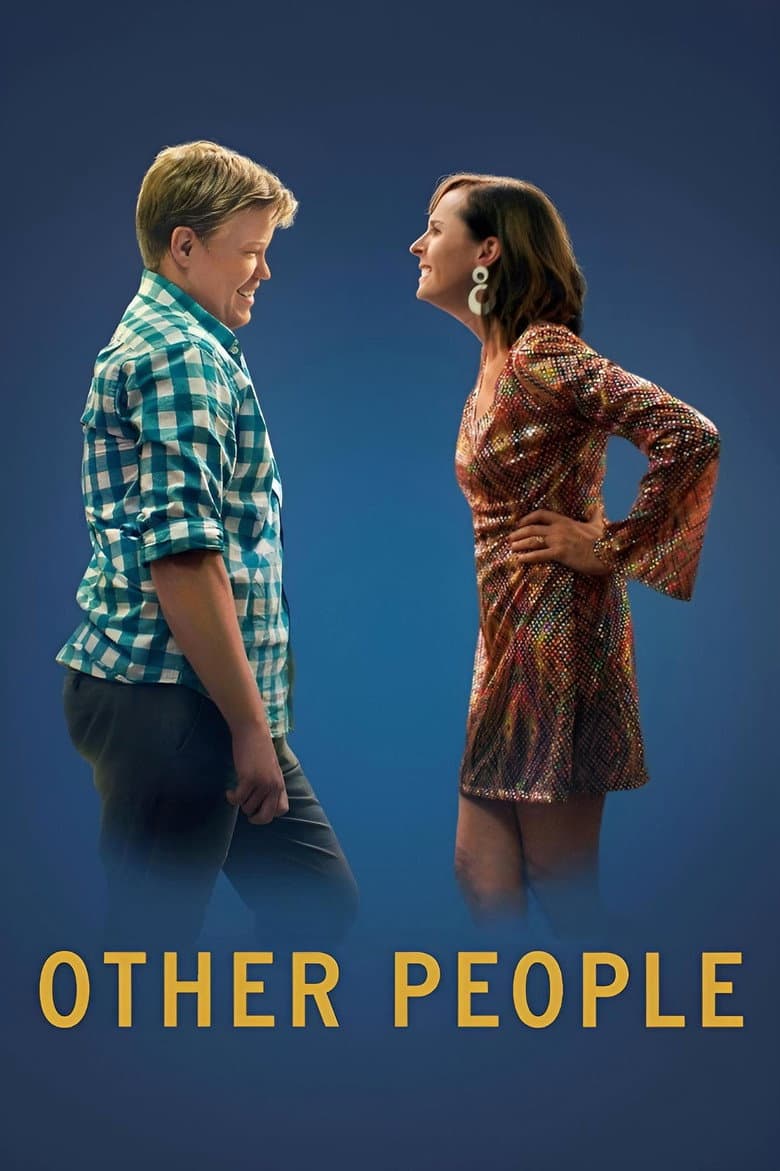
David is a struggling comedy writer who leaves New York after a breakup and returns to Sacramento. He moves into his childhood home to help care for his mother Joanne, who has advanced cancer. David lives with his more traditional father and two younger sisters, but he feels like a stranger there. The film mixes painful family scenes with dry jokes, awkward talks, and the slow loss caused by illness.
David's gay identity is a major part of the family conflict, not a side detail. His father still avoids talking about David's boyfriends, while David hides his breakup and worries that his family will never fully accept him. The story also follows David's gay friend, a male former partner, and a confident younger boy who performs in drag. These scenes favor acceptance of gay people and boys who do not follow common gender roles, but the main story remains David's grief, family duty, and struggle to keep living after his mother dies.
Community feedback
Was our 76% Woke rating accurate?
Breakdown
These are the editorial factors and ratings behind our score for Other People.
Woke representation / casting
The film places a gay man at the center and gives his boyfriend and gay friend visible roles. The film also gives a confident younger boy a long drag performance that becomes a major comic scene. The mostly white family does not form a one-of-each diversity group, and the roles fit the personal story. The film was openly presented as a gay-led story in festival and interview coverage, so its representation focus is easy to notice.
72%
Woke political dialogue
David repeatedly talks about being gay, his male ex, and his father's refusal to discuss his relationships. David tells his father that his sexuality is not a debate, and the argument becomes one of the film's main confrontations. The characters joke about gay bars, dating men, church, and a drag performance. The dialogue stays personal and family-focused instead of becoming a broad political speech.
44%
Identity-driven story themes
David's gay identity shapes his return home, his breakup, and his anger toward his father. His father avoids David's boyfriend and still struggles with his sexuality ten years after David came out. David also meets a younger boy who is openly feminine and confident, which makes David face his own fear and shame. The story treats openness and acceptance as better than silence, while the cancer and family grief remain the main plot.
76%
Western institutional / cultural critique
The film shows David's more traditional father as unable to speak openly about his son's boyfriend or sexuality. David's family home and church setting become places where older social rules make him feel shut out. The story treats those rules as a source of pain, but it does not build a wider attack on Christianity, capitalism, or Western institutions. The critique stays inside one family and a few awkward conversations.
39%
Woke character or canon changes
Not relevant. The film is an original story based partly on the director's life. It does not change a known character, franchise, historical figure, or real event.
0%
Anti-woke backlash and complaints
Not present. Searchable reporting and audience posts did not show anti-woke or right-leaning complaints about the film. Some Sundance viewers reportedly left during the male-male sex scene, but the reports give no political reason.
0%
Creator track record context
Chris Kelly's creator record includes openly gay work and the queer comedy The Other Two. Several producers have worked on films about queer life, social inequality, or representation. Other producers and crew members have low or mainstream liberal records, with no strong activist campaign tied to this film. This group gives the title a moderate creator track record context, not an activist one.
47%
Production
Movie · 2023
Allison's life falls apart following her involvement in a fatal accident. The unlikely relationship she forms with her would-be father-in-law helps her live a life worth living.

Movie · 2022
The remarkable true story of how retiree Jerry Selbee discovers a mathematical loophole in the Massachusetts lottery and, with the help of his wife, Marge, wins $27 million…
Movie · 2017
When dictator Joseph Stalin dies, his parasitic cronies square off in a frantic power struggle to become the next Soviet leader.
Movie · 2018
Tony Lip, a bouncer in 1962, is hired to drive pianist Don Shirley on a tour through the Deep South in the days when African Americans, forced to find alternate accommodations and…

Movie · 2017
The true story of pilot Barry Seal, who transported contraband for the CIA and the Medellin cartel in the 1980s.

Movie · 2019
A young Scottish singer, Rose-Lynn Harlan, dreams of making it as a country artist in Nashville after being released from prison.
Movie · 2016
The story of Florence Foster Jenkins, a New York heiress, who dreamed of becoming an opera singer, despite having a terrible singing voice.
Movie · 2017
Ingrid becomes obsessed with a social network star named Taylor Sloane who seemingly has a perfect life. But when Ingrid decides to drop everything and move west to be Taylor's…
