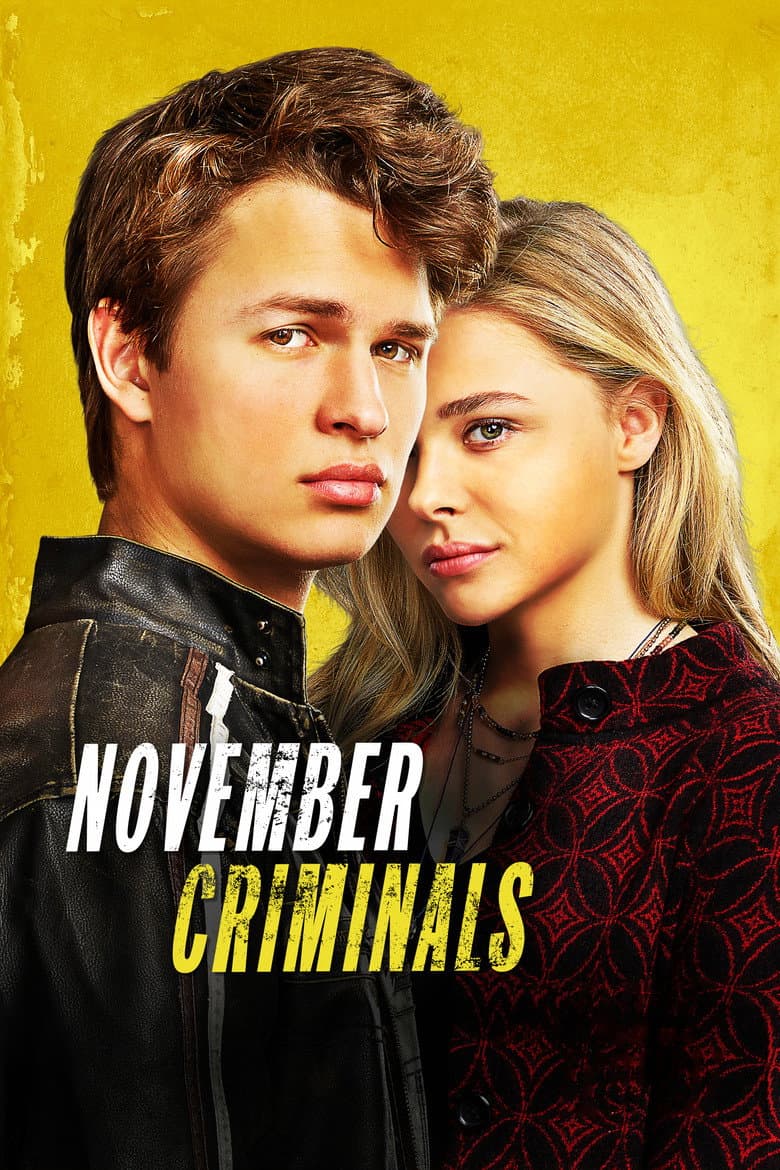
Movie review
November 7, 2017 · 86 min · PG-13 · Crime · Mystery · Thriller · Drama
Addison Schacht is a clever but troubled high school senior in Washington, D.C. He is still grieving after his mother dies suddenly when his friend Kevin is shot at a coffee shop. Addison believes the police are too quick to call the killing gang related, so he starts his own risky search for the killer with Phoebe, his close friend and new love interest. The movie mixes a short mystery with teen romance, family grief, drugs, sex, and awkward humor.
The film makes Kevin's race part of the mystery because the police treat his death as a likely gang killing, while the two white leads push for answers. The story gives Addison most of the anger and action, so the Black victim has little time to speak for himself. That creates a visible white-savior pattern and a critique of police judgment, but the movie does not build a broad political campaign or identity message around it. Phoebe is smart and confident, yet the film mainly uses her as Addison's helper and romantic partner.
Community feedback
Was our 42% Woke rating accurate?
Breakdown
These are the editorial factors and ratings behind our score for November Criminals.
Woke representation / casting
The film places a black classmate at the center of the murder plot while two white leads seek justice for him. That choice creates a visible race-based white-savior setup. The modern Washington setting and the mixed supporting cast do not show a broad representation-first pattern.
18%
Woke political dialogue
The film includes several lines about Kevin's race, the white killer, and the police calling the death gang related. Addison says no one cares about Kevin, and Phoebe asks whether race caused the killing. The characters do not give a long speech about DEI, identity, or current politics. The race-focused talk appears in a few key scenes, not throughout.
28%
Identity-driven story themes
The murder of Kevin, a black student, drives the whole mystery. The police call it a gang killing, and the white leads challenge that quick judgment while asking whether race played a part. The film gives Addison most of the anger and action, which creates a white-savior setup and makes Kevin's death serve Addison's grief. The ending ties the murder to a drug dispute, so the film does not present a simple lesson about racism.
45%
Western institutional / cultural critique
The film shows police treating Kevin's death as a likely gang case before they have much evidence. The school principal and other adults also try to stop Addison's private investigation. These choices present police and school authority as slow, dismissive, and more concerned with control than with Kevin's family. The ending shows a real drug motive, so the critique is limited rather than a full attack on Western institutions.
34%
Woke character or canon changes
Not relevant. The film adapts a novel, but its changes involve plot, tone, and omitted material rather than identity or canon.
0%
Anti-woke backlash and complaints
Not present. No anti-woke or right-leaning complaints were found in the reviewed coverage. Online criticism focused on film quality or on the white-savior setup, not on the film being too woke.
0%
Creator track record context
The three main writers have low to mild woke context scores. Two producers have notable public work supporting women and underrepresented filmmakers. The other producers and casting directors have little public activist history. No clear title-focused identity framing appeared in the reviewed interviews.
27%
Production
Movie · 2023
Based on a true story. 15-year-old Kara Robinson was kidnapped, assaulted and held captive for 18 hours. With her survival instincts kicking in, she plots a daring escape from the…
Movie · 2023
Celebrated sleuth Hercule Poirot, now retired and living in self-imposed exile in Venice, reluctantly attends a Halloween séance at a decaying, haunted palazzo.

Movie · 2022
After escaping a Michigan prison, a charming career criminal assumes a new identity in Canada and goes on to rob a record 59 banks and jewellery stores while being hunted by a…
Movie · 2017
Cairo, 2011. A police officer investigates the murder of a woman in a luxurious hotel in the days leading up to the Egyptian revolution.
Movie · 2019
After a mass shooting at a police funeral, reclusive ex-cop Gannon finds himself unwittingly forced out of retirement when he realizes that the killer belongs to the same militia…
Movie · 2018
Mike Kendall, a disgraced ex-cop, is fighting a losing battle with the bottle. When he finds a woman left for dead at the side of a road, Kendall turns private eye to track down…
Movie · 2017
The story of the kidnapping of 16-year-old John Paul Getty III and the desperate attempt by his devoted mother to convince his billionaire grandfather Jean Paul Getty to pay the…

Movie · 2024
While awaiting the next fuel truck at a middle-of-nowhere Arizona rest stop, a traveling young knife salesman is thrust into a high-stakes hostage situation by the arrival of two…
