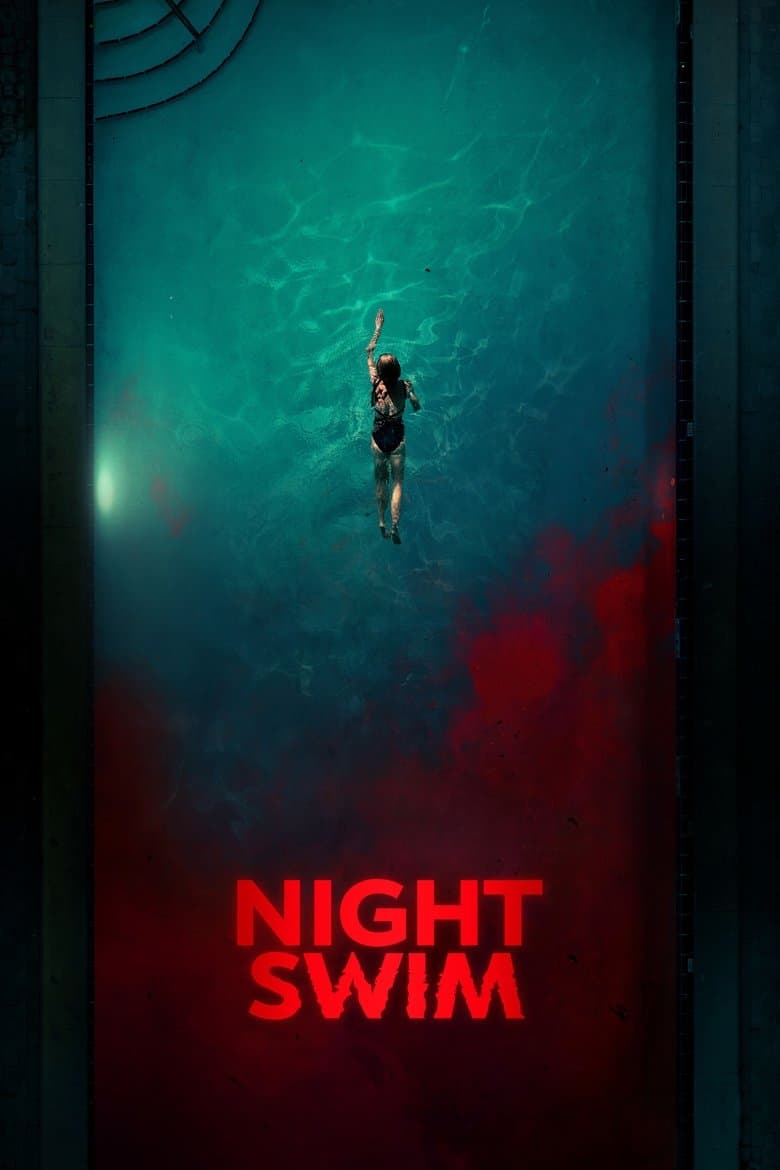
Ray Waller is a former major league baseball player whose multiple sclerosis forces him to leave the sport early. He moves with his wife, Eve, and their children, Izzy and Elliot, into a suburban house with a backyard pool. Ray hopes the water will help his body and let him return to baseball, but the pool hides a deadly secret. The film mixes family drama with ghost horror, dark water, sudden attacks, and growing fear.
The film includes a brief romance between white teen Izzy and Ronin, a black swimmer from her new team. Their relationship is treated as a normal teenage crush, and it does not shape the main conflict. The main story follows Ray’s fear of losing his old life and his family’s struggle with the cost of his recovery. The pool rewards his wish for better health while demanding sacrifices, so the final choice centers on love, guilt, and putting family before personal glory.
Community feedback
Was our 12% Woke rating accurate?
Breakdown
These are the editorial factors and ratings behind our score for Night Swim.
Woke representation / casting
The film gives white teen Izzy a black romantic interest, Ronin, and it also uses Asian and Latino supporting characters. This creates a mild, audience-visible diversity pattern in the cast. The modern Minnesota setting makes these choices plausible, and no interview or marketing frames them as a larger representation goal. The identity choices stay in a small subplot and do not drive the horror story.
12%
Woke political dialogue
Not present. The dialogue focuses on illness, baseball, family, and the haunted pool. No character gives an activist, left-wing, or identity-politics speech.
0%
Identity-driven story themes
Not present. The story centers on illness, fear, family loyalty, and a deadly wish. Izzy’s brief romance with Ronin is a normal teen subplot, not an identity lesson. The movie does not make race, gender, sexuality, or DEI the main subject.
0%
Western institutional / cultural critique
Not present. Ray becomes selfish and dangerous after the pool restores his strength, but the movie treats this as a supernatural family tragedy. The film does not turn his behavior into a modern attack on fathers, marriage, religion, capitalism, or Western institutions.
0%
Woke character or canon changes
Not relevant. The movie expands McGuire and Rod Blackhurst’s 2014 short into a family story. The added illness, baseball, and sacrifice plot is a normal feature expansion, not an identity-driven rewrite of established material.
0%
Anti-woke backlash and complaints
A few small X accounts called the film part of a “woke Biden administration” and objected to Izzy dating Ronin, a black teen. Another complaint attacked the father becoming monstrous and dying, but that post does not prove an ideological motive in the film. The posts had little reach, and no boycott, review-bombing drive, or large culture-war campaign appeared.
12%
Creator track record context
The supplied Bryce McGuire and casting-director scores are low. Most producers also have low scores, while Jason Blum has some political and inclusion-related context. Cynthia Francillon and Sarah Paek have stronger identity-focused background work. No title-specific activist framing was found, so the overall crew context remains mild.
16%
Production
Movie · 2021
Alice is a young hearing-impaired girl who, after a supposed visitation from the Virgin Mary, is inexplicably able to hear, speak and heal the sick.

Movie · 2021
A lone drifter suffering from partial memory loss accepts a job to look after a psychologically troubled woman in an abandoned house on an isolated island.

Movie · 2020
Inside the halls of an elite arts academy, a timid music student begins to outshine her more accomplished and outgoing twin sister when she discovers a mysterious notebook…
Movie · 2016
A young American woman takes a job as a nanny in a remote English village, soon discovering that the family's eight-year-old son is a life-sized doll that comes with a list of…

Movie · 2021
Paranormal investigators Ed and Lorraine Warren encounter what would become one of the most sensational cases from their files.

Movie · 2017
Twenty years after three teenagers disappeared in the wake of mysterious lights appearing above Phoenix, Arizona, unseen footage from that night has been discovered, chronicling…

Movie · 2016
A determined young woman and a damaged occultist risk their lives and souls to perform a dangerous ritual that will grant them what they want.
Movie · 2023
Jess, a newly separated mother and nurse, moves into her old family farmhouse with Tyler, her teenage daughter, and Owen, her eight-year-old son.
