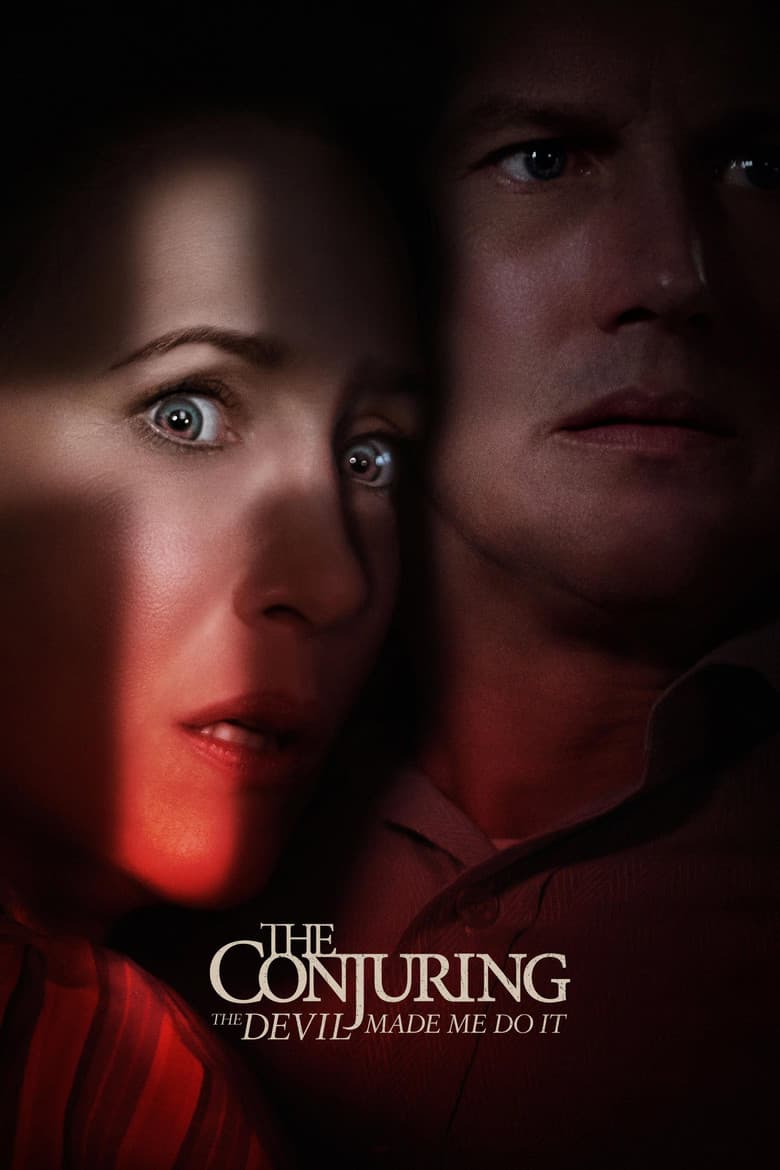
Movie review
The film is based on the 1981 Arne Cheyenne Johnson murder trial and Warren case files. After a child exorcism, Arne invites a demon into himself, kills his landlord, and claims demonic possession. Ed and Lorraine Warren dig into the case and uncover a witch’s curse and a human occultist named Isla, not only a haunted-house demon. The story focuses on faith, marital love against evil, possession, and satanic occultism.
There is little modern identity politics on screen. Dialogue covers possession, court defense, occult and witchcraft talk, Catholic and priest material, and the Warrens’ faith and love. Jessica and Katie are presented as friends, and any queer reading is subtext or comes from a separate comic, not clear film dialogue. Institutions like the church, courts, and police appear as the setting for a possession case. The film affirms the Warrens’ faith worldview and treats faith and love as the answer to real demonic evil.
Community feedback
Was our 1% Woke rating accurate?
Breakdown
These are the editorial factors and ratings behind our score for The Conjuring: The Devil Made Me Do It.
Woke representation / casting
Not present. Cast matches the 1981 Connecticut and New England true-case core with white leads and ordinary supporting roles, not a quota pattern or diversity marketing.
0%
Woke political dialogue
Not present. Dialogue covers possession, court defense, occult material, and the Warrens’ faith and love, not modern activist or identity-politics speech.
0%
Identity-driven story themes
Not present. Core story is demonic possession, a murder trial defense, and Christian-coded faith and love defeating an occult curse, with Jessica and Katie friend-coded on screen.
0%
Western institutional / cultural critique
Not present. Church, courts, and police appear as setting while the film affirms the Warrens’ faith worldview rather than ridiculing Christianity or Western culture in activist terms.
0%
Woke character or canon changes
Not relevant. Fictional occultist and Katie and Jessica material are standard horror dramatization of Warren lore, not identity-driven race or gender swaps.
0%
Anti-woke backlash and complaints
Not present. No documented anti-woke campaign against DEI or identity politics. Complaints target scares, structure, and franchise quality.
0%
Creator track record context
Key creatives have low cached woke scores across the board. Their work is horror and faith franchise craft rather than activist careers. That track record matches this film’s low identity-politics content.
5%
Production
Movie · 2023
Jess, a newly separated mother and nurse, moves into her old family farmhouse with Tyler, her teenage daughter, and Owen, her eight-year-old son.
Movie · 2017
When a priest is jailed for the murder of a nun on whom he was performing an exorcism, an investigative journalist strives to determine whether he in fact murdered a mentally ill…
Movie · 2023
Between the events of 'Saw' and 'Saw II', a sick and desperate John Kramer travels to Mexico for a risky and experimental medical procedure in hopes of a miracle cure for his…

Movie · 2020
A fur trapper leaves his wife and daughter behind to kill a rogue wolf in the remote wilderness, but they soon become increasingly worried when their peaceful existence is…
Movie · 2025
Two parents enter a race against time when they receive a distressing late-night phone call from their daughter after she caused a tragic car accident.

Movie · 2016
A group of archaeologists working in Northern Canada uncover a strange structure dating over ten thousand years before the present.
Movie · 2022
When twin brothers arrive home to find their mother’s demeanor altered and face covered in surgical bandages, they begin to suspect the woman beneath the gauze might not be their…
Movie · 2020
After a family moves into the Heelshire Mansion, their young son soon makes friends with a life-like doll called Brahms.
