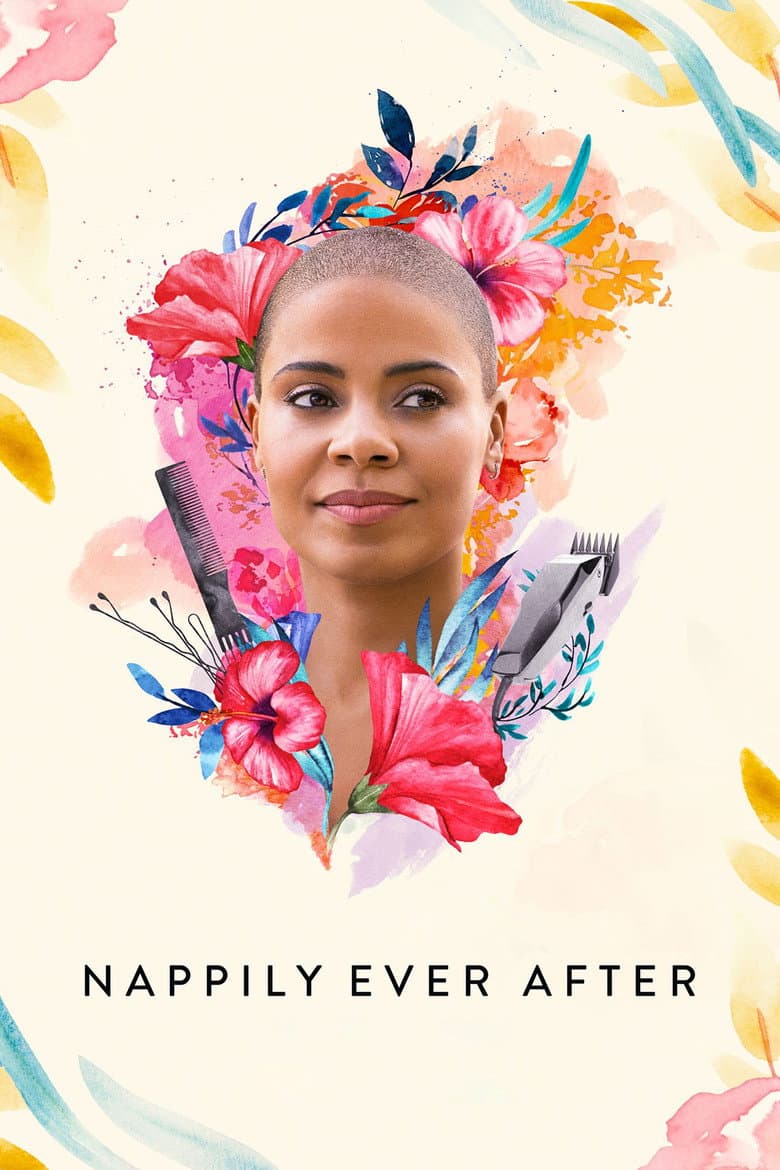
Violet Jones is a successful advertising executive in present-day Atlanta who seems to have the life she planned. She has a handsome doctor boyfriend, a close family, and hair that takes hours to keep straight and perfect. When Clint gives her a dog instead of an engagement ring and a salon accident ruins her hair, Violet loses control of the image she built. The funny but sometimes serious romance follows her through breakups, bad choices, family pressure, and a search for a life that feels like her own.
The film makes black women's hair the center of Violet's growth. It shows her mother teaching her that straight hair, perfect clothes, and a future husband will make her worthy, while other scenes link those ideas to white beauty standards and advertising. Violet's natural hair, her choice to leave a beauty job, and her final pitch for products that support natural hair all carry the film's main message. The story also says that a woman should choose her own identity instead of living only as the girl a man wants, although it still ends with an implied romantic future.
Community feedback
Was our 71% Woke rating accurate?
Breakdown
These are the editorial factors and ratings behind our score for Nappily Ever After.
Woke representation / casting
Not present. The film centers a black family and mostly black friends in a modern American story. The cast matches that story world, and no clear identity message is attached to a race, gender, or sexuality casting choice.
0%
Woke political dialogue
The film repeatedly says that media teaches black women that long, straight hair is beautiful. Will says he is battling television, commercials, and magazines, while Violet says ads should show real women. The final pitch calls natural hair beautiful and says women may wear weaves or straighten their hair by choice. The dialogue stays on hair and beauty instead of wider party politics.
45%
Identity-driven story themes
The film makes Violet's struggle over straight hair, perfect looks, and a man's proposal the main conflict. It links that pressure to Black hair, white beauty standards, and the way black girls are taught to behave. Violet rejects the idea that she must be the girl a man wants and rebuilds her life around her own choice. Her natural hair and final campaign for natural hair products make identity and self-acceptance the central message.
82%
Western institutional / cultural critique
The film presents advertising and popular media as forces that keep a white beauty standard alive. It shows a workplace choosing a blonde-model ad over Violet's idea about different women, and it treats that choice as part of the problem. It also presents pressure to marry a doctor and look perfect as harmful family and social rules. The film does not attack Christianity, capitalism, or Western society as a whole.
54%
Woke character or canon changes
Not relevant. The adaptation changes names and plot points from the 2000 novel, but no race, gender, sexuality, or hero-role change is confirmed. The black female lead and central romance remain part of the source's basic setup.
0%
Anti-woke backlash and complaints
Not present. Reviews and audience posts discuss the film's quality, romance, and hair message, not a DEI or identity-politics agenda. The separate X check found no anti-woke reaction or specific complaint.
0%
Creator track record context
Several key creators have a record of stories about black women, women's agency, self-worth, and representation. Gina Prince-Bythewood, Trisha R. Thomas, Sanaa Lathan, Tracey Bing, and Kim Taylor-Coleman fit that pattern in the cached context. Haifaa al-Mansour often tells women's freedom stories but has a milder public political record, while several producers show little activist history. This gives the film a moderate creator track record that matches its central themes.
49%
Production
Movie · 2023
Two romantic burnouts, Jane and Will, are immediately drawn to each other at a mutual friend’s wedding. After a disastrous hookup in the coatroom, the two spend the next 24 hours…
Movie · 2023
Mira Ray, dealing with the loss of her fiancé, John, sends a series of romantic texts to his old cell phone number… not realizing the number was reassigned to Rob Burns' new work…
Movie · 2022
Divorced couple Georgia and David find themselves on a shared mission: they team up and travel to Bali to stop their daughter Lily from making the same mistake they once made 25…
Movie · 2024
Fran likes to think about dying. It brings sensation to her quiet life. When she makes the new guy at work laugh, it leads to more: a date, a slice of pie, a conversation, a…
Movie · 2016
A boy growing up in Dublin during the 1980s escapes his strained family life by starting a band to impress the mysterious girl he likes.
Movie · 2016
The story of a young man who arrives in Hollywood during the 1930s hoping to work in the film industry, falls in love, and finds himself swept up in the vibrant café society that…

Movie · 2017
When a hapless but dedicated talent manager signs his first client who actually has talent, his career finally starts to take off.
Movie · 2022
Lina is about to graduate high school and has her sights set on her future at MIT. But when her mom gets sick, she encourages Lina to follow in her footsteps and have “the summer…
