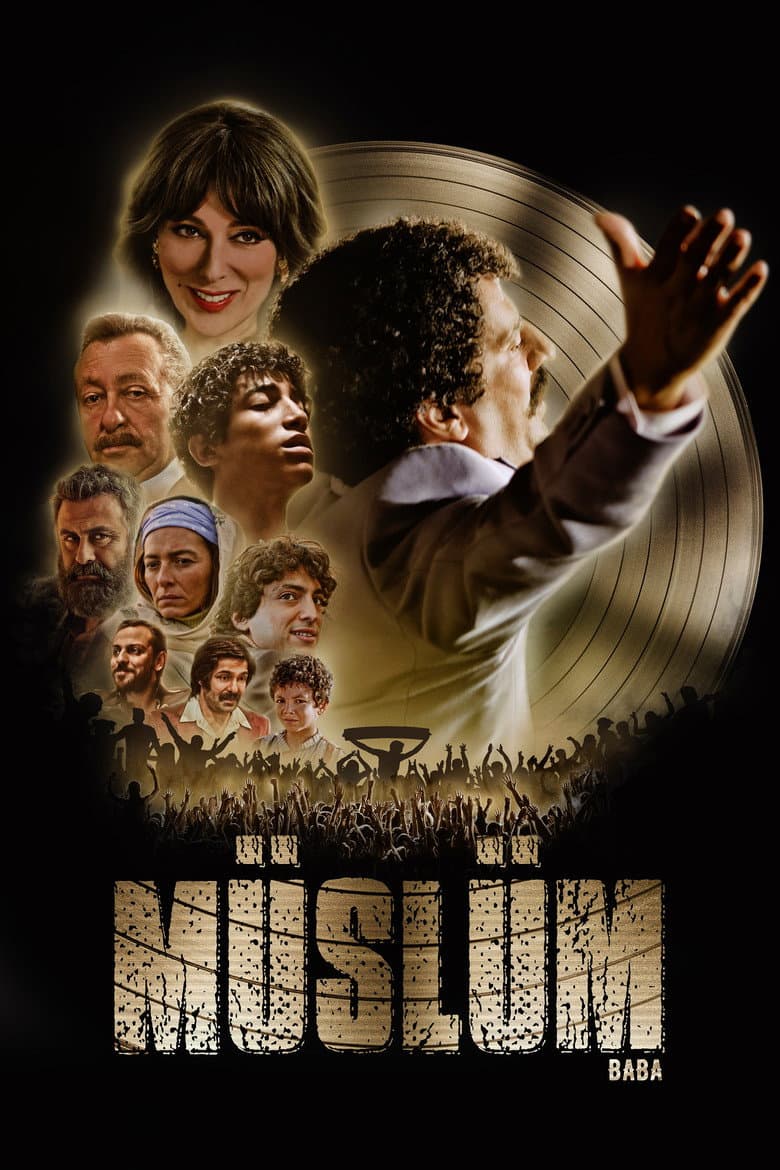
Müslüm follows Müslüm Gürses from a poor childhood in southeastern Turkey to fame as a major arabesque singer. His violent father, the deaths of his mother and baby sister, a serious road crash, and later alcohol problems leave deep scars. Music gives him a way to survive, while a meeting with the older actress and singer Muhterem Nur brings love and a steadier home. The film moves between childhood, Adana, Istanbul, and later concerts, and its tone stays dark, sad, and emotional.
The story treats pain as the source of his songs and shows how poor young men found a voice in his music. The film presents the father’s control and violence as the main force that damages the family. Müslüm later repeats some of that harm toward Muhterem Nur, then faces her leaving before she gives him another chance. Their bond, his choice to forgive his father, and his fear of becoming a father shape the film’s message about love, guilt, and survival.
Community feedback
Was our 4% Woke rating accurate?
Breakdown
These are the editorial factors and ratings behind our score for Muslum.
Woke representation / casting
Not present. The main cast is Turkish and plays Turkish people from the subject’s life. The film does not build an identity-based ensemble or present its casting as a diversity campaign.
0%
Woke political dialogue
Not present. The spoken lines focus on pain, music, family, love, and survival. The film does not use modern identity, DEI, or activist speeches.
0%
Identity-driven story themes
Not present. The film shows poverty, family violence, addiction, and grief as parts of one man’s life. It does not turn those events into a modern identity-politics message.
0%
Western institutional / cultural critique
Not present. The father’s abuse and the couple’s conflict belong to the subject’s family story. The film does not attack Western institutions, Christianity, conservative beliefs, or traditional family life through modern activist framing.
0%
Woke character or canon changes
Not relevant. The film changes the timing and dramatic arrangement of some real events. Those changes concern biography and pacing, not race, gender, sexuality, or another identity.
0%
Anti-woke backlash and complaints
Not present. Audience and news coverage centered on acting, music, accuracy, melodrama, and script rights. No sustained complaint said the film pushed woke, DEI, or identity-politics content.
0%
Creator track record context
Hakan Günday has a documented record of politically engaged fiction about marginalization, authoritarianism, and social breakdown. His comments about this film focus on Gürses’s endurance, compassion, and refusal to become cruel. The other key creators have mainstream records without a clear activist or DEI pattern, so this is a mild context signal.
18%
Production
Movie · 2017
In 1950, amidst the ravages of the Korean War, Sergeant Süleyman stumbles upon a a half-frozen little girl, with no parents and no help in sight and he risks his own life to save…
Movie · 2020
A man refuses all assistance from his daughter as he ages and, as he tries to make sense of his changing circumstances, he begins to doubt his loved ones, his own mind and even…
Movie · 2022
Based on a true tragedy, the emotionally triggering film sheds light on the plight of Kashmiri Pandits (Hindus), a religious minority in the 1990s Kashmir valley, who were…
Movie · 2022
A quiet, neglected girl is sent away from her dysfunctional family to live with relatives for the summer. She blossoms in their care, but in this house where there are meant to be…
Movie · 2025
A logger leads a life of quiet grace as he experiences love and loss during an era of monumental change in early 20th-century America.
Movie · 2017
Members of the Granite Mountain Hotshots battle deadly wildfires to save an Arizona town.
Movie · 2016
After his older brother passes away, Lee Chandler is forced to return home to care for his 16-year-old nephew.
Movie · 2016
On 15 January 2009, the world witnessed the 'Miracle on the Hudson' when Captain 'Sully' Sullenberger glided his disabled plane onto the Hudson River, saving the lives of all 155…
