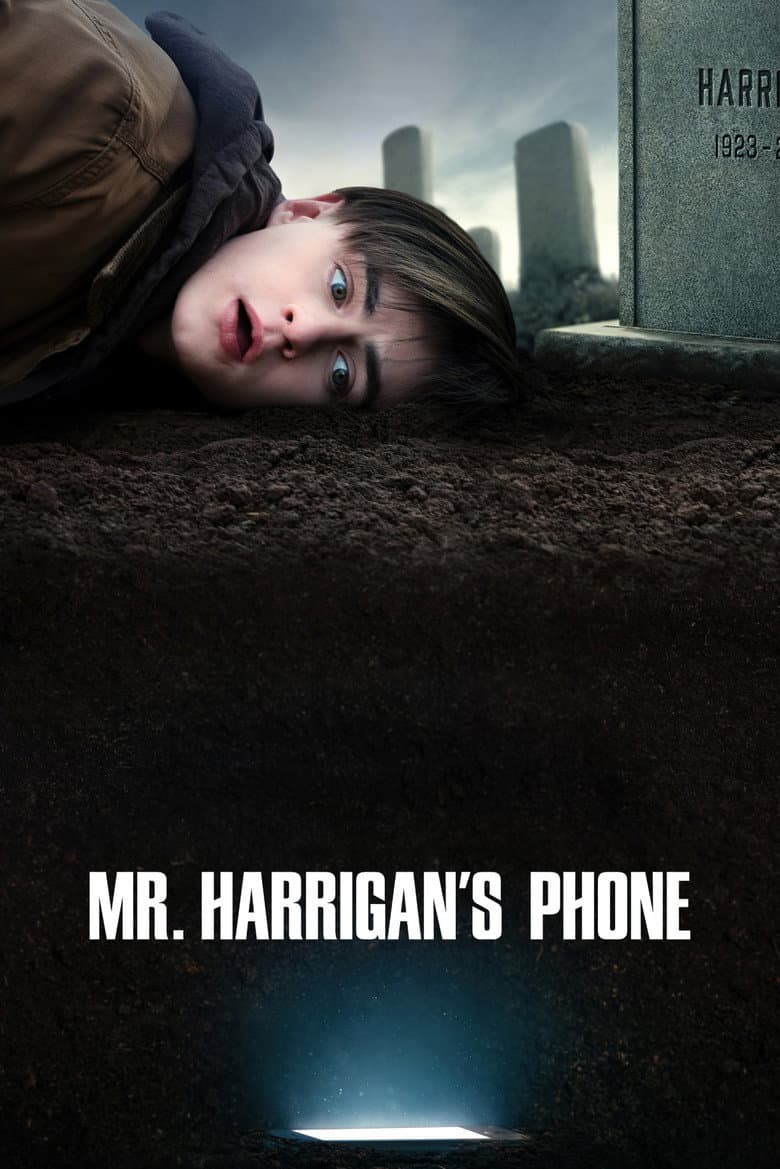
Craig is a quiet boy in a small Maine town in the early 2000s. After his mother dies, he starts reading books to John Harrigan, an older and very rich man who lives alone. Craig and Harrigan become close through books and the first iPhones, but Harrigan dies and still seems to answer from his buried phone. The film uses a slow, sad, and uneasy tone as Craig grows up and faces grief, bullying, and the harm caused by revenge.
The clearest identity-related choice is Ms. Hart, a black female biology teacher who becomes Craig’s trusted guide at school. She is a caring and capable adult, but the story does not make her race or gender part of the conflict. The main messages concern phone addiction, online lies, grief, bullying, revenge, and personal guilt. Craig must learn that asking the dead to punish people does not remove his own responsibility.
Community feedback
Was our 14% Woke rating accurate?
Breakdown
These are the editorial factors and ratings behind our score for Mr. Harrigan's Phone.
Woke representation / casting
Kirby Howell-Baptiste plays Ms. Hart, a black female biology teacher who is one of Craig's main adult supporters. Her role is visible and strongly positive, so it adds a small representation signal. The film does not build a repeated pattern or market the role as a diversity statement.
15%
Woke political dialogue
Not present. The film warns about fake news, social media, and phones, but it does not present a left-wing, identity-driven, or activist political message.
0%
Identity-driven story themes
Not present. The central themes are grief, bullying, revenge, guilt, death, and responsible use of technology, not race, sex, gender, or queer identity.
0%
Western institutional / cultural critique
Not present. The film questions online information and a drunk driver's light sentence, but it does not attack Western culture, patriarchy, or core institutions through activist messaging.
0%
Woke character or canon changes
Not relevant. The movie expands Stephen King's novella for a feature film, but no identity-driven change to an established character or real event is clearly reported.
0%
Anti-woke backlash and complaints
Not present. Public complaints focus on slow pacing, weak scares, and misleading horror marketing. No notable anti-woke or anti-DEI backlash appears in the reviewed coverage.
0%
Creator track record context
Ryan Murphy has a strong history of identity-driven shows and diversity programs. Alexis Martin Woodall has a long producing history on Murphy projects. Stephen King is a liberal public figure, but his fiction is not built around modern identity politics. John Lee Hancock and most other listed producers have no clear activist record, and this movie does not repeat Murphy's strongest themes.
32%
Production
Movie · 2018
After suspecting that their police officer neighbor is a serial killer, a group of teenage friends spend their summer spying on him and gathering evidence, but as they get closer…
Movie · 2017
In a small town in Maine, seven children known as The Losers Club come face to face with life problems, bullies and a monster that takes the shape of a clown called Pennywise.
Movie · 2023
Between the events of 'Saw' and 'Saw II', a sick and desperate John Kramer travels to Mexico for a risky and experimental medical procedure in hopes of a miracle cure for his…
Movie · 2017
A supernatural love story that centers on two parents whose life together falls apart after their son dies. The man, now a successful lawyer, and the woman, now married and an…
Movie · 2019
In this documentary, Alex trusts his twin, Marcus, to tell him about his past after he loses his memory. But Marcus is hiding a dark family secret.
Movie · 2023
In this office satire, Orson, a straight-laced employee, retreats to a blissfully empty corner office to get away from his lackluster colleagues.
Movie · 2016
A young, lonely woman is consumed by her deepest and darkest desires after tragedy strikes her quiet country life.
Movie · 2021
A lone drifter suffering from partial memory loss accepts a job to look after a psychologically troubled woman in an abandoned house on an isolated island.
