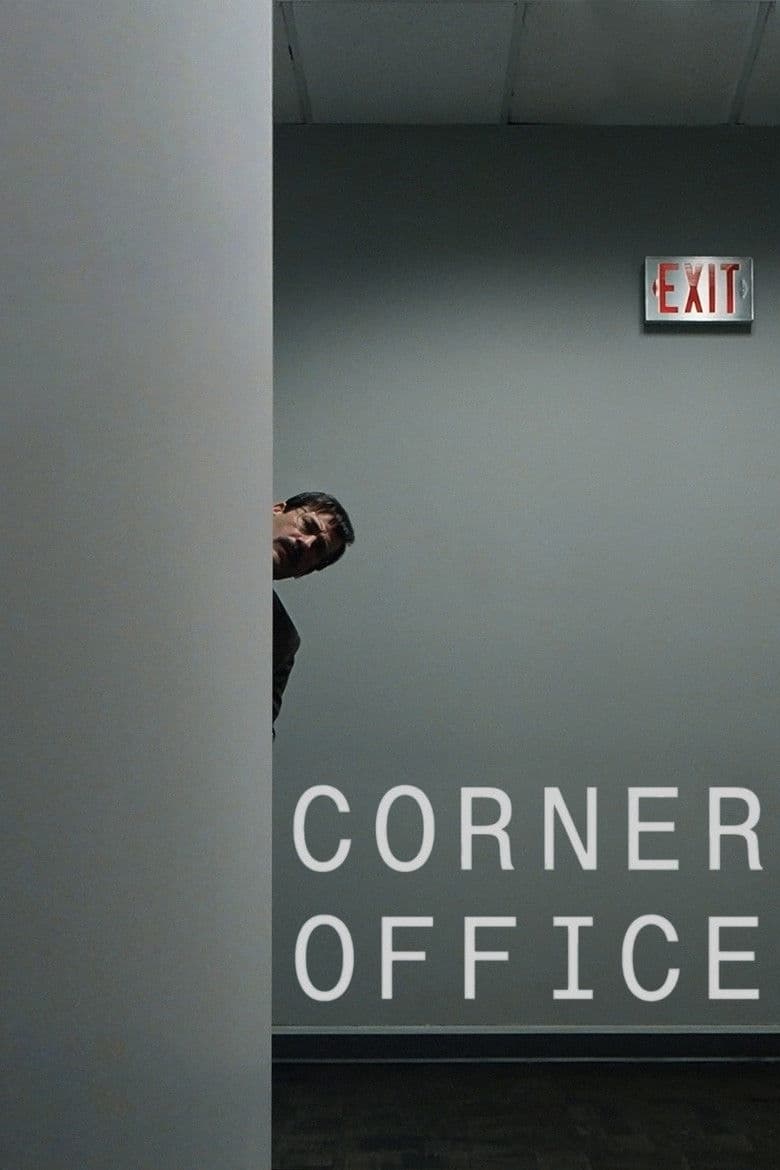
Orson is a strict new worker at a large company called The Authority. He dislikes messy desks, weak work, and small talk with his co-workers. He finds a warm, empty corner office that seems to exist only for him. The dark comedy uses dry jokes, quiet scenes, and a strange mystery to show his climb through the company.
The office gives Orson peace and helps him produce work that wins praise from his boss. The room also makes him act confident and powerful, even though other workers see only a wall. Orson treats his own view as the truth, while the company calls his behavior a problem and removes him when he refuses to stop. The story explores loneliness, rigid work rules, private fantasy, and the cost of forcing every person to act normal.
Community feedback
Was our 4% Woke rating accurate?
Breakdown
These are the editorial factors and ratings behind our score for Corner Office.
Woke representation / casting
Not present. The office group is mixed, but the movie does not present that casting as a diversity message. No main character is framed around race, gender, sexuality, or another identity issue.
0%
Woke political dialogue
Not present. The characters do not argue about current politics, race, sex, sexuality, or DEI. Their complaints stay focused on office rules and personal behavior.
0%
Identity-driven story themes
Not present. The movie follows an odd worker’s private reality and his conflict with office norms. It does not build the story around race, gender, sexuality, or a modern identity campaign.
0%
Western institutional / cultural critique
Not present. The film mocks a cold company and its office rules, but it does not attack Christianity, family life, traditional gender roles, or Western culture. Its corporate satire remains general and is not tied to current activist politics.
0%
Woke character or canon changes
Not relevant. The movie adapts Jonas Karlsson’s novel The Room as a strange office story. No established character or real historical figure is changed for identity reasons.
0%
Anti-woke backlash and complaints
Not present. Public reviews and posts focus on the slow pace, strange humor, corporate setting, and possible mental health themes. No substantial anti-woke complaint about DEI, identity politics, or representation was found.
0%
Creator track record context
Public background on the director and two writers shows no clear activist or DEI focus. Casting director Judy Lee has joined a discussion about diversity in media. Producers Theodore Melfi and Kimberly Quinn worked on Hidden Figures, which centers on black women at NASA. Producer Oliver Ridge has supported a Pakistani film about a same-sex relationship and artists from different cultures. None of those past links is tied to Corner Office.
18%
Production
Movie · 2016
When a Hollywood star mysteriously disappears in the middle of filming, the studio sends their fixer to get him back.
Movie · 2016
A brother and sister return to their family home in search of their world famous parents who have disappeared.

Movie · 2016
In 1967, four undercover CIA agents were sent to NASA posing as a documentary film crew. What they discovered led to one of the biggest conspiracies in American history.

Movie · 2020
A once-celebrated kid detective, now 31, continues to solve the same trivial mysteries between hangovers and bouts of self-pity.

Movie · 2022
The roguishly charming and endlessly troublesome Fletch becomes the prime suspect in a murder case while searching for a stolen art collection.

Movie · 2026
Through unlikely bonds formed during night shifts at a local aquarium, Tova, an elderly widow, learns of a life-changing discovery that may bring her joy and wonder once again.
Movie · 2019
Agent Sai Srinivasa Athreya is a brilliant, underrated detective from Nellore who runs an agency called FBI which sees no business.

Movie · 2016
Taking place after alien crafts land around the world, an expert linguist is recruited by the military to determine whether they come in peace or are a threat.
