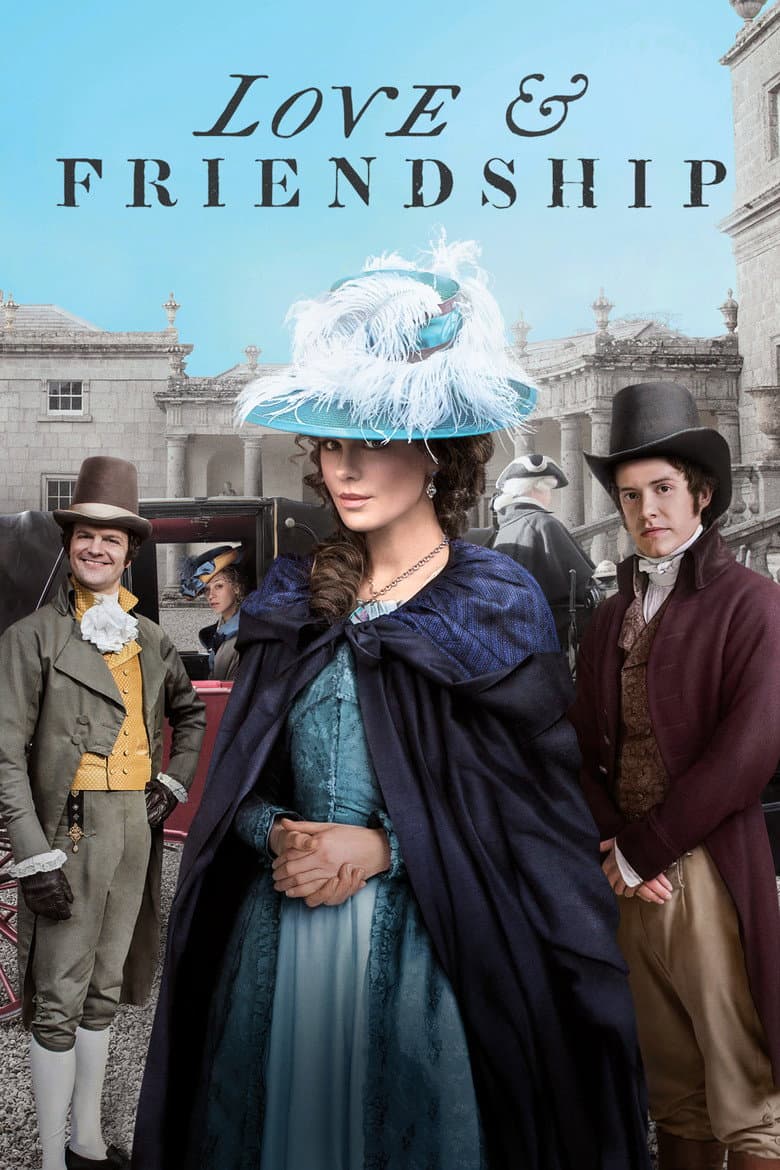
In the 1790s, recently widowed Lady Susan Vernon is beautiful, broke, and open to scandal. She stays with her in-laws at Churchill while she and her American friend Alicia Johnson scheme for rich matches for herself and her daughter Frederica. She charms younger Reginald DeCourcy, pushes dull but wealthy Sir James Martin on Frederica, and keeps up an affair with married Lord Manwaring. She largely gets away with it. The tone is a sharp comedy of manners about money, reputation, and witty cruelty more than romance.
The film is a largely faithful take on Austen’s Lady Susan as a period manners comedy. Casting fits 1790s British gentry, and the talk stays in flirtation, fortune-hunting, and reputation jokes. There is no modern activist speech or identity-politics framing of the plot. The core story is an amoral social climber working the marriage market, with classic class and manners satire rather than a present-day culture-war message. Almost no woke signal shows up in story, cast, or public reaction.
Community feedback
Was our 1% Woke rating accurate?
Breakdown
These are the editorial factors and ratings behind our score for Love & Friendship.
Woke representation / casting
Not present. Period-accurate 1790s English gentry ensemble with Sevigny’s American Alicia matching the source character and no diversity-first casting or race swaps.
0%
Woke political dialogue
Not present. Dialogue is period social satire on flirtation, fortune-hunting, and reputation with no modern activist or identity-politics rhetoric.
0%
Identity-driven story themes
Not present. Core story is Austen’s amoral social climber in the marriage market as source-faithful manners comedy, not modern identity messaging.
0%
Western institutional / cultural critique
Not present. Satires upper-class pretension and marriage for money without modern culture-war reframing of institutions.
0%
Woke character or canon changes
Not relevant. Ordinary literary-to-film craft adapting Lady Susan into dialogue and comic business, not identity-driven rewrites of characters or history.
0%
Anti-woke backlash and complaints
Not present. No substantive anti-woke or DEI backlash found, and reception was critical praise for period manners comedy.
0%
Creator track record context
The main voice is Stillman adapting classical Austen, not activist remakes. Cached profiles put Stillman and most producers low, with Austen a bit higher. One producer scores higher only for gender-focused industry mentoring. That background does not turn this film into identity-driven content.
3%
Production
Movie · 2016
Mia, an aspiring actress, serves lattes to movie stars in between auditions and Sebastian, a jazz musician, scrapes by playing cocktail party gigs in dingy bars, but as success…

Movie · 2024
Fran likes to think about dying. It brings sensation to her quiet life. When she makes the new guy at work laugh, it leads to more: a date, a slice of pie, a conversation, a…

Movie · 2023
Two romantic burnouts, Jane and Will, are immediately drawn to each other at a mutual friend’s wedding. After a disastrous hookup in the coatroom, the two spend the next 24 hours…
Movie · 2016
The story of a young man who arrives in Hollywood during the 1930s hoping to work in the film industry, falls in love, and finds himself swept up in the vibrant café society that…
Movie · 2023
Michelle and Allen, who have reached the point in their relationship where they are considering next steps, decide to invite their parents to finally meet and to offer some…

Movie · 2023
The dramatic comedy is based on the true story of writer and pinball wizard Roger Sharpe, chronicling his journey to overturn New York City’s 35-year ban on pinball.
Movie · 2024
After discovering their significant others are siblings, two resentful exes must spend Christmas under one roof — while hiding their romantic history.
Movie · 2017
After the early death of his wife, a mourning father moves with his teenage son across the country for a private school teaching job.
