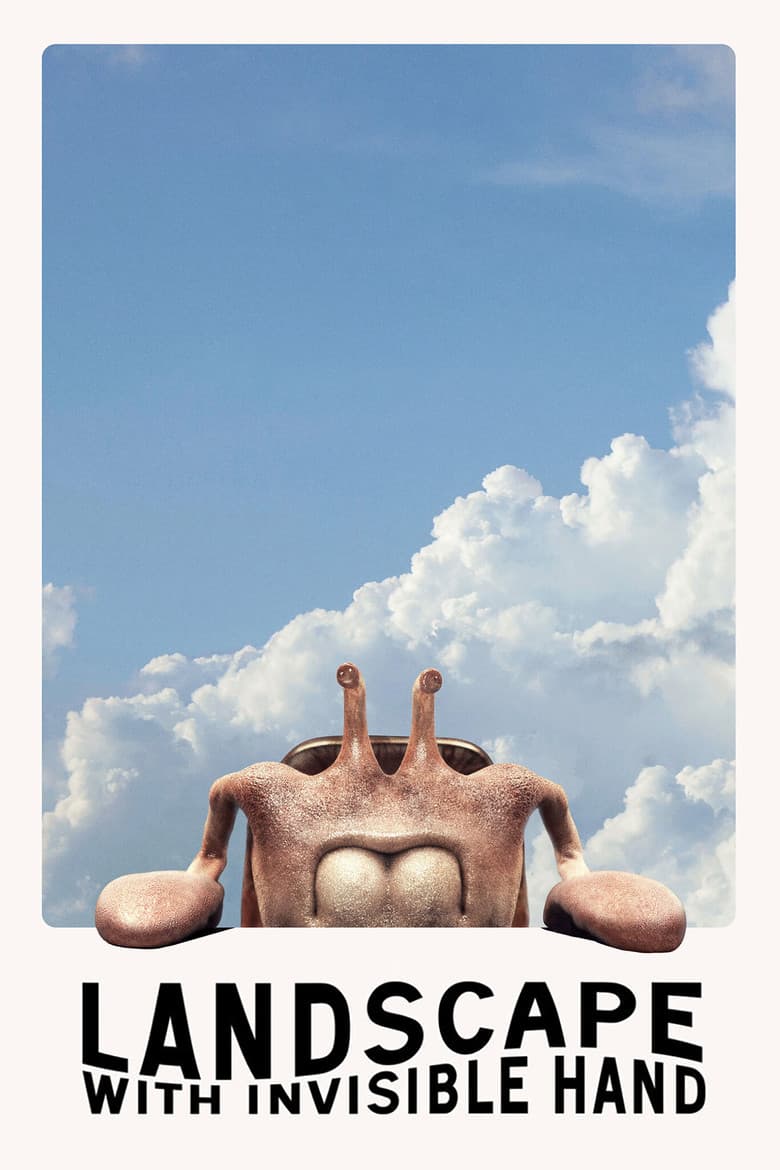
Landscape with Invisible Hand is a dark science-fiction comedy set in 2036, after the Vuvv aliens take control of Earth through better technology and business deals. Adam Campbell is a teenage painter who lives with his mother and sister while most human jobs disappear. Adam and his classmate Chloe Marsh start broadcasting their romance because the aliens pay to watch human love. The plan helps both families, but it turns love into a job and brings a lawsuit when the teenagers stop feeling the same way.
The movie centers a black family and places them against a white family that has lost its former wealth, so race and class tension sit under the household conflict. The story attacks job-killing technology, alien control of schools, and the idea that people must sell their feelings or art to survive. Beth rejects the alien’s old idea that a man should provide while a woman stays home, while Chloe’s father is pushed into the housewife role. Adam finally refuses to change his mural into praise for the rulers, which makes honest art and human feeling the movie’s answer to control.
Community feedback
Was our 74% Woke rating accurate?
Breakdown
These are the editorial factors and ratings behind our score for Landscape with Invisible Hand.
Woke representation / casting
The film puts a black family at the center and a white family in its basement. The director said the book did not spell out race and that the movie used this contrast to add class tension. The family conflict places race under arguments about home, money, and status. The teenage couple is also a major pairing between people of different races, but the film does not sell it as a diversity message.
50%
Woke political dialogue
The characters repeatedly talk about jobs, class, and the Vuvv’s control. The families also argue about who deserves space, money, and respect, with race shaping the tension between them. Beth pushes back against the alien’s provider-only view of women, and the Marsh father resists becoming a housewife. Adam rejects a speech that would make his art praise the rulers. These lines recur in separate scenes, but the film has no long activist speech.
38%
Identity-driven story themes
The film makes race and class tension part of the two families’ main conflict. The Black Campbells have a home, while the white Marshes have lost their old wealth and resent their hosts. The story also mocks the old provider husband role when Beth works and the Marsh father becomes a housewife for the alien. The teens’ romance becomes paid content, and Adam chooses honest art over the rulers’ approved message. These themes recur, but the movie mixes them with a strange teen romance and broad comedy.
55%
Western institutional / cultural critique
The Vuvv take power through business deals and technology instead of war. Their system removes jobs, leaves families homeless, and places wealthy humans above everyone else. The school teaches Vuvv propaganda, and the film treats corporate control, class rank, and paid entertainment as harmful. The ending rejects the Vuvv’s demand that Adam praise their rule, so this critique shapes the full story.
66%
Woke character or canon changes
The novel does not spell out the races of the two families. The movie makes Adam’s family black and Chloe’s family white, and the director said this change added race and class tension. The movie also adds a fake marriage plot around Beth and a housewife role for Chloe’s father. These are visible identity changes from the book, but the race issue stays mostly under the surface.
45%
Anti-woke backlash and complaints
One mainstream review called the film virtue signaling while criticizing its race, class, and gender material. That complaint was brief and focused on weak writing, not on a larger campaign against woke content. A Reddit thread argued about landlords, racism, and sexism, but it came from a left-leaning discussion and does not count here. The supplied X research found no anti-woke reaction or named complaint.
12%
Creator track record context
The cached scores are low to mild, with Cory Finley at 20 and M.T. Anderson at 12. Producer scores are also mostly low to mild, although Dede Gardner is 35, Jeremy Kleiner is 33, and Tiffany Haddish is 32. Finley described this title as a free-market alien invasion about capitalism, colonialism, and taking culture from other groups. No title-specific diversity campaign was found.
22%
Production
Movie · 2023
A lonely dog's friendship with his robot companion takes a sad turn when an unexpected malfunction forces him to abandon Robot at the beach. Will Dog ever meet Robot again?
Movie · 2017
Thirty years after the events of the first film, a new blade runner, LAPD Officer K, unearths a long-buried secret that has the potential to plunge what's left of society into…
Movie · 2026
A 'Man from the Future' arrives at an LA diner where he must recruit the precise combination of disgruntled patrons to join him on a one-night quest to save the world from the…
Movie · 2024
In 1985, the murder of a government-sponsored superhero draws his outlawed colleagues out of retirement and into a mystery that threatens to upend their personal lives and the…

Movie · 2026
When their plan to book a show at the Rivoli goes horribly wrong, Matt and Jay accidentally travel back to the year 2008.
Movie · 2018
A family is forced to live in silence while hiding from creatures that hunt by sound.

Movie · 2015
During a manned mission to Mars, Astronaut Mark Watney is presumed dead after a fierce storm and left behind by his crew.
Movie · 2020
At the height of the Cold War, a Soviet spacecraft crash lands after a mission gone awry, leaving the commander as its only survivor.
