Movie review
October 1, 2025 · 165 min · U/A 16+ · Kannada · Fantasy · Action · Drama
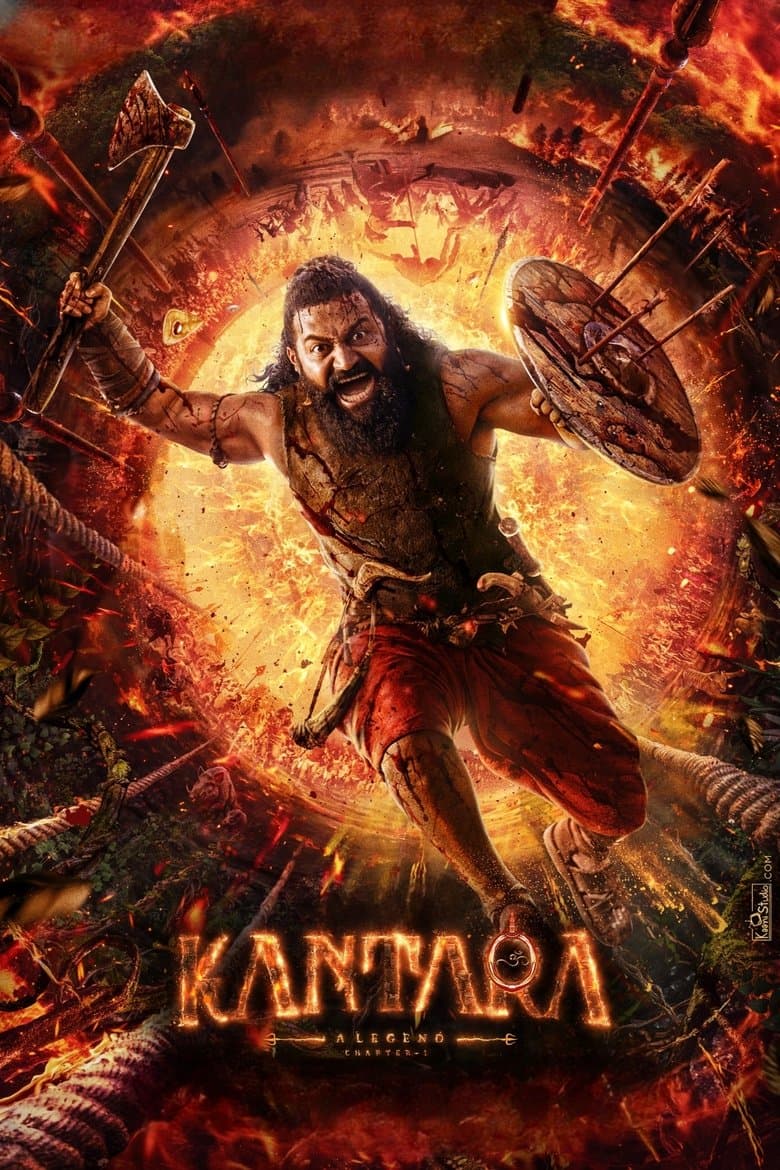
Kantara: A Legend: Chapter 1 is a period fantasy set in coastal Karnataka during the Kadamba era. Berme, a young leader from the forest village of Kantara, wants to improve his people’s lives by trading the spices that grow in their sacred land. He faces Prince Kulashekara, whose hunger for power and control brings the kingdom into war with the villagers. Princess Kanakavathi stands between the two sides, while spirits, old rituals, and the forest shape the final battle. The tone moves from village humor and romance to brutal action, grief, and a loud supernatural climax.
The clearest woke element is the story’s repeated focus on a tribal people who are treated as lower, shut out of royal power, and pushed from their land. Berme answers that treatment by building trade, demanding equal respect, and defending his community’s right to its forest and faith. The film also gives Kanakavathi a visible power role as treasury chief, fighter, and skilled royal figure, although the main hero remains a man and the story still gives him the final rescue. These ideas are part of the main conflict, but the film presents them through old folklore, kings, social rank, and divine justice rather than modern activist politics.
Community feedback
Was our 29% Woke rating accurate?
Breakdown
These are the editorial factors and ratings behind our score for Kantara - A Legend: Chapter 1.
Woke representation / casting
Kanakavathi is a prominent princess who runs the treasury and fights with a sword. The film gives her more power and action than a usual love interest. The story still centers a male hero, and this is one strong female role rather than a repeated representation pattern.
18%
Woke political dialogue
Not present. The film has lines about slavery, borders, trade, and equality. Those lines belong to the old kingdom conflict and do not push modern identity, DEI, or gender politics.
0%
Identity-driven story themes
The film centers a forest tribe whose land and sacred customs are targeted by a royal family. Berme seeks trade and equal standing for his people, and the story shows their exclusion, enslavement, and fight to keep their home. These themes shape the main conflict and are easy to notice. The film frames them through old folklore, faith, and divine justice rather than a current activist campaign.
32%
Western institutional / cultural critique
Not present. The film attacks royal greed, land seizure, and abuse of power in a pre-colonial Indian setting. It does not target modern Western institutions, Christianity, family life, or traditional gender roles with activist framing.
0%
Woke character or canon changes
Not relevant. The prequel adds new ancestors and expands the daiva lore. It does not change an established character’s race, gender, or sexuality.
0%
Anti-woke backlash and complaints
A minority of Hindu-right commentators called the film a leftist caste-oppression story because a tribal hero faces upper-caste royal power. A few smaller accounts also called it missionary or Christian conversion propaganda. The complaints were repeated in posts and videos but did not lead to a boycott, review-bombing, or a broad news cycle. Right-leaning praise that the film is cultural and not woke is approval, not backlash.
30%
Creator track record context
Rishab Shetty has a low recorded score and a recurring focus on local folklore, community identity, nature, and social issues. The writers have no known activist or DEI record. The producers also have little such history, although Vijay Kiragandur has mild social and cultural messaging. The creative team adds a weak social concern signal, not a strong activist track record.
12%
Production
Movie · 2024
In the year 2898 AD, around 6000 years after Kurukshetra war, Ashwatthama gears up for his final battle of redemption at the sign of hope in a dystopian world and Bhairava, a…
Movie · 2017
Manji, a highly skilled samurai, becomes cursed with immortality after a legendary battle. Haunted by the brutal murder of his sister, Manji knows that only fighting evil will…

Movie · 2020
Tanjiro Kamado, joined with Inosuke Hashibira, a boy raised by boars who wears a boar's head, and Zenitsu Agatsuma, a scared boy who reveals his true power when he sleeps, boards…

Movie · 2022
Known as America’s Poet, Henry Wadsworth Longfellow leads an idyllic life – until the day his world is shattered by tragedy.
Movie · 2020
After the vicious slaughter of his family by stone-cold mercenary Sub-Zero, Hanzo Hasashi is exiled to the torturous Netherrealm.

Movie · 2017
A supernatural love story that centers on two parents whose life together falls apart after their son dies. The man, now a successful lawyer, and the woman, now married and an…

Movie · 2022
The vicious, power-mad Kano is determined to take over Earthrealm, one soul at a time. Assisted by a trio of cold Black Dragon mercenaries, he embarks on a brutal assault from…
Movie · 2020
Earth is decimated after intergalactic tyrant Darkseid has devastated the Justice League in a poorly executed war by the DC Super Heroes.
