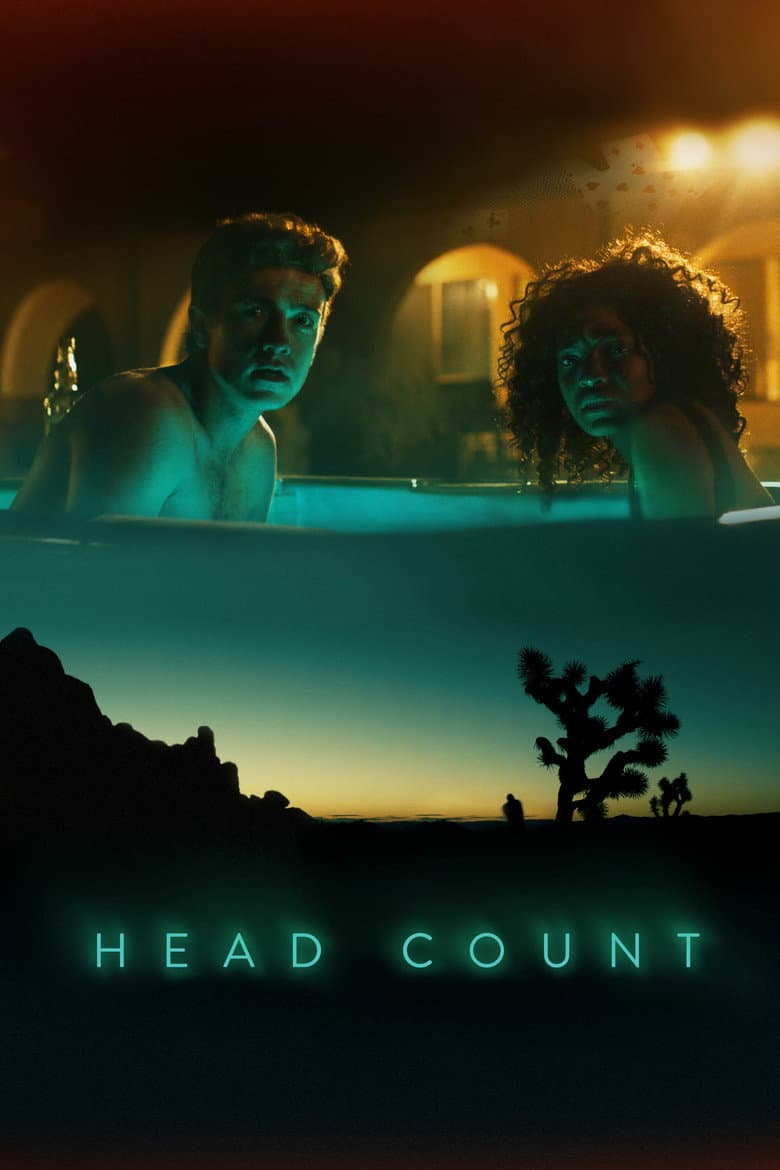
College freshman Evan visits his older brother Peyton near Joshua Tree during a school break. Evan feels stuck between his family and the new group of young people he meets in the desert. He chooses the group after he is drawn to Zoe, but he soon learns that a strange chant has brought a shape-shifting creature into the house. The film uses a slow, uneasy horror tone, with drinking, sex, drugs, ghost stories, and sudden danger building toward a grim ending.
Head Count mainly follows Evan’s wish to belong and his painful choice to leave Peyton behind. The lonely creature reflects that same wish, but it turns inclusion into control and death. The group must count faces and bodies because the creature hides by copying people and splitting them into groups of five. The story also uses Evan and Zoe’s attraction, Zoe’s link to Max, and the brothers’ damaged bond to give the monster plot a human center.
Community feedback
Was our 2% Woke rating accurate?
Breakdown
These are the editorial factors and ratings behind our score for Head Count.
Woke representation / casting
Not present. The college group includes male and female friends from more than one background, but the film does not frame that mix as a message. No identity is used to make a character a leader, genius, or special hero.
0%
Woke political dialogue
Not present. The characters talk about ghost stories, relationships, partying, family, and the creature. The film has no modern identity, DEI, or activist speech.
0%
Identity-driven story themes
Not present. The story uses loneliness, fitting in, jealousy, and family tension to build horror. The creature’s wish to be included is supernatural and is not tied to current identity politics.
0%
Western institutional / cultural critique
Not present. The danger comes from a supernatural creature and bad choices during a desert trip. The film does not attack men, families, religion, capitalism, or Western institutions.
0%
Woke character or canon changes
Not relevant. Head Count is an original story about a new creature and original characters. No established characters or real events are changed.
0%
Anti-woke backlash and complaints
Not present. Public complaints focus on the slow pace, too many characters, suicide scenes, creature effects, and rushed ending. No clear anti-woke or anti-DEI complaint appears in the researched coverage.
0%
Creator track record context
The available creator record describes Callahan as a genre filmmaker with no sustained public activism or DEI campaign. Eric B. Fleischman’s past films include modest feminist and social-justice subjects. Other cached crew profiles show little or no activist record. Head Count interviews focus on folklore, horror, loneliness, and family.
10%
Production

Movie · 2019
A lone fisherman on his daily run finds himself lost in a thick fog which proves impossible to navigate. The worst is yet to come when his encounter with a seemingly abandoned…
Movie · 2025
Two parents enter a race against time when they receive a distressing late-night phone call from their daughter after she caused a tragic car accident.
Movie · 2016
Set in the Aokigahara Forest, a real-life place in Japan where people go to end their lives. Against this backdrop, a young American woman comes in search of her twin sister, who…
Movie · 2020
When a father is forced to abruptly depart for work, he leaves his children, Aidan and Mia, at their holiday home in the care of his new girlfriend, Grace.
Movie · 2023
Jess, a newly separated mother and nurse, moves into her old family farmhouse with Tyler, her teenage daughter, and Owen, her eight-year-old son.
Movie · 2017
1920, rural Ireland. Anglo-Irish twins Rachel and Edward share a strange existence in their crumbling family estate.
Movie · 2021
A female serial killer who killed four young girls is sent away to prison, but a fifth victim escaped with her life.
Movie · 2016
Four friends break into an abandoned insane asylum in search of a death certificate which will grant one of them a large inheritance.
