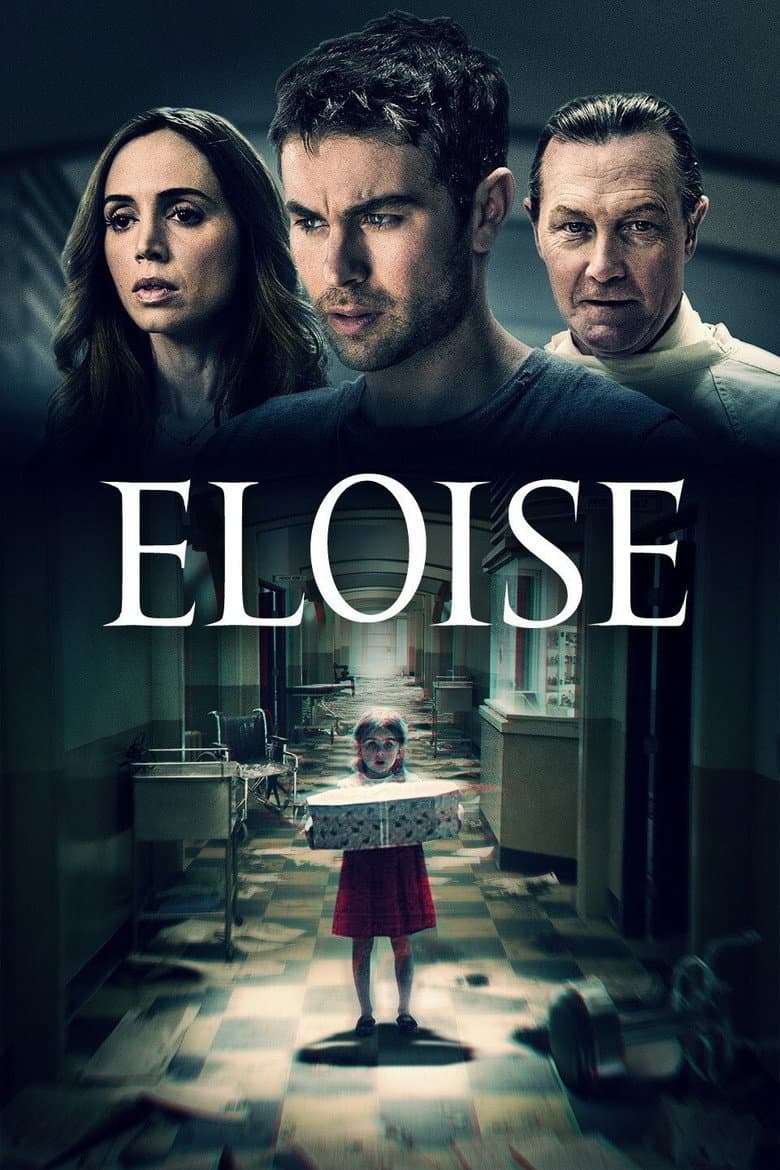
Eloise follows Jacob Martin after his father dies and leaves him a large inheritance. Jacob must prove that an aunt who vanished inside a closed Michigan asylum is dead, so he brings three friends into the old buildings to find her record. The group soon meets ghosts, visions, and scenes from the asylum’s violent past. The film uses a dark, tense horror tone and jumps between the present and the past.
The film’s main ideas concern greed, family secrets, suicide, fear, and the harm caused by cruel doctors. Pia is the most active survivor, but her skill serves the escape plot rather than a message about women or identity. The mixed friend group includes one black man and several white characters, yet the story does not frame this as a diversity point. The asylum’s abuse is treated as part of its old history, with no clear modern political or activist message.
Community feedback
Was our 2% Woke rating accurate?
Breakdown
These are the editorial factors and ratings behind our score for Eloise.
Woke representation / casting
Not present. The main group has a white male lead, a white female co-lead, a black male friend, and a white male brother. This looks like ordinary modern casting, and the film does not present the cast as a diversity statement.
0%
Woke political dialogue
Not present. The film has no speech about DEI, gender politics, or activist causes. It has brief jokes about white friends and profiling, but those jokes do not push a political idea.
0%
Identity-driven story themes
Not present. Pia acts bravely, frees herself, and rescues Jacob, but the movie uses her actions for the horror plot. The story centers on money, family secrets, fear, and ghosts instead of a message about gender or identity.
0%
Western institutional / cultural critique
Not present. The film shows Dr. Greiss hurting patients with cruel treatment in the asylum’s past. The movie does not link that abuse to a modern political group, Western culture, family life, or a present-day institution.
0%
Woke character or canon changes
Not relevant. The film fictionalizes the asylum’s past, but it does not make a race, gender, sexuality, or leadership change to an established character or real historical figure. The main characters are original creations.
0%
Anti-woke backlash and complaints
Not present. The supplied X pass found no anti-woke reaction. News, audience pages, and indexed social discussion focus on quality, pacing, scares, and plot confusion, not woke or DEI claims.
0%
Creator track record context
The cached context gives Robert Legato and Christopher Borrelli low scores and no clear activist pattern. Most producers also have low stored scores and work mainly in genre film. Deborah Aquila has spoken about wider chances for women and diverse talent, while Lisa Zambri has credits on feminist and LGBTQ projects. Neither is tied to an identity message in this movie’s story or marketing.
8%
Production

Movie · 2021
Paranormal investigators Ed and Lorraine Warren encounter what would become one of the most sensational cases from their files.
Movie · 2018
Following the death of the Leigh family matriarch, Annie and her children uncover disturbing secrets about their heritage.

Movie · 2017
1920, rural Ireland. Anglo-Irish twins Rachel and Edward share a strange existence in their crumbling family estate.

Movie · 2019
A rebellious teenage boy, struggling with his parents' imminent divorce, encounters a terrifying evil after his next-door neighbor becomes possessed by an ancient witch that…

Movie · 2016
Set in the Aokigahara Forest, a real-life place in Japan where people go to end their lives. Against this backdrop, a young American woman comes in search of her twin sister, who…

Movie · 2016
In the town of Cutter, most people keep to themselves. But when John comes home to find his girlfriend missing, he sneaks into his neighbor's house, finding his girlfriend and…

Movie · 2020
After a family moves into the Heelshire Mansion, their young son soon makes friends with a life-like doll called Brahms.
Movie · 2022
When twin brothers arrive home to find their mother’s demeanor altered and face covered in surgical bandages, they begin to suspect the woman beneath the gauze might not be their…
