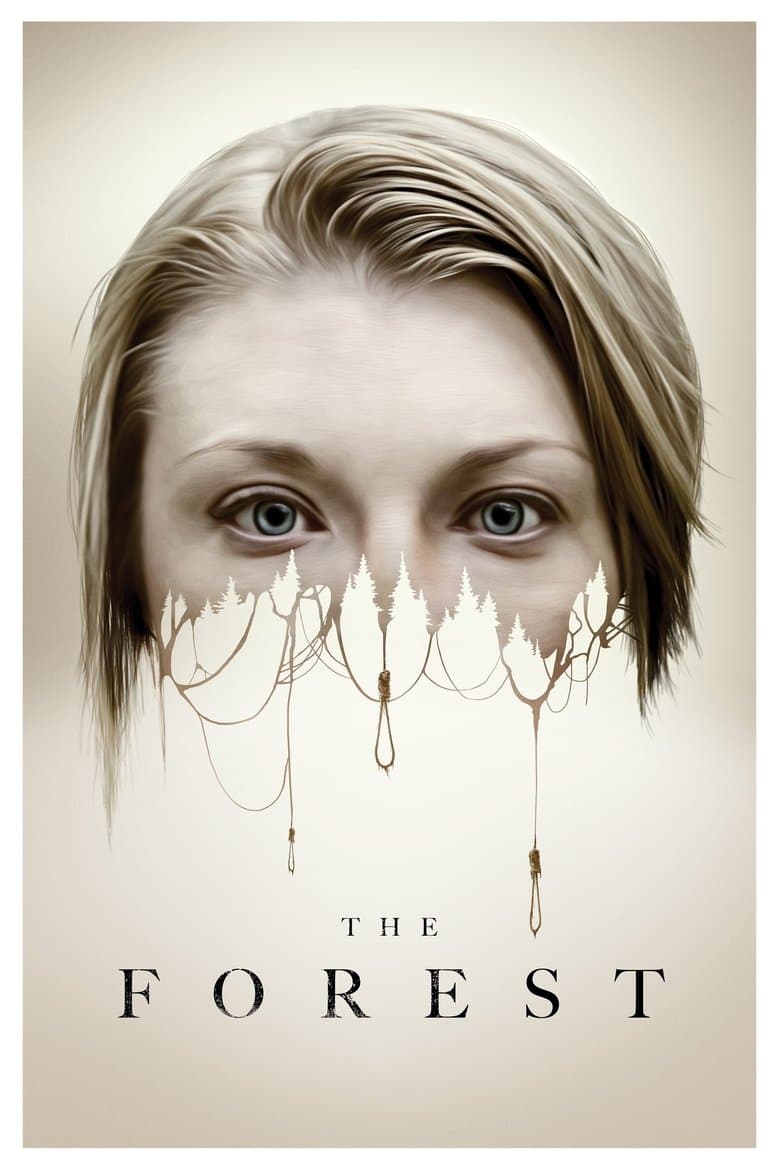
American Sara Price travels to Japan’s Aokigahara forest to find her missing twin sister Jess. Both sisters are played by Natalie Dormer. The story follows her search through a place tied to suicides and ghost folklore. Family trauma, guilt, the twin bond, and mental breakdown drive what happens. The film is supernatural psychological horror built around private tragedy and fear.
There is little or no audience-visible woke content. The main themes stay on grief, sisterly loyalty, and ghost scares. Dialogue covers forest rules, lies, and fear rather than identity politics. Casting matches an American-abroad horror setup, with Japanese actors in local roles. Public controversy focused on using real suicides for thrills and outsider views of Japan, not on diversity messaging.
Community feedback
Was our 3% Woke rating accurate?
Breakdown
These are the editorial factors and ratings behind our score for The Forest.
Woke representation / casting
Not present. Cast matches a contemporary American-abroad horror premise with white American twins and Western supporting leads, and Japanese actors in Japanese local roles, without quota-style casting or diversity marketing.
0%
Woke political dialogue
Not present. Dialogue is plot and horror exposition about forest rules, twin bond, lies, and fear, with no modern identity, DEI, or activist political talk.
0%
Identity-driven story themes
Not present. Core themes are family trauma, twin loyalty, grief, guilt, mental fragility, and supernatural yūrei scares rather than race, gender, or queer identity politics.
0%
Western institutional / cultural critique
Not present. No sustained critique of Western institutions, Christianity, patriarchy, capitalism, or toxic masculinity as ideology, and outsider-in-Japan framing was criticized as exoticizing Japan instead.
0%
Woke character or canon changes
Not relevant. as an original screen story rather than an identity-driven remake of established characters or canon.
0%
Anti-woke backlash and complaints
Not present. Reported controversy is progressive or sensitivity-side about suicide trivialization, Orientalism, and white-centered storytelling, with no documented anti-woke campaign.
0%
Creator track record context
The lead director and main writers are not known for activist identity politics. Some producers have mild progressive institutional ties, while others are commercial genre hands. The project still reads as craft and commercial horror. Casting advocacy in general does not match this film’s white-centered reception.
14%
Production

Movie · 2019
A lone fisherman on his daily run finds himself lost in a thick fog which proves impossible to navigate. The worst is yet to come when his encounter with a seemingly abandoned…
Movie · 2021
Paranormal investigators Ed and Lorraine Warren encounter what would become one of the most sensational cases from their files.
Movie · 2018
Following the death of the Leigh family matriarch, Annie and her children uncover disturbing secrets about their heritage.
Movie · 2016
In the town of Cutter, most people keep to themselves. But when John comes home to find his girlfriend missing, he sneaks into his neighbor's house, finding his girlfriend and…
Movie · 2020
A fur trapper leaves his wife and daughter behind to kill a rogue wolf in the remote wilderness, but they soon become increasingly worried when their peaceful existence is…
Movie · 2023
Jess, a newly separated mother and nurse, moves into her old family farmhouse with Tyler, her teenage daughter, and Owen, her eight-year-old son.
Movie · 2016
A stranger arrives in a little village and soon after a mysterious sickness starts spreading. A policeman is drawn into the incident and is forced to solve the mystery in order to…
Movie · 2025
Four years after defeating The Grabber, Finney Blake is struggling with life after captivity. When his younger sister Gwen begins receiving calls in her dreams from the Black…
