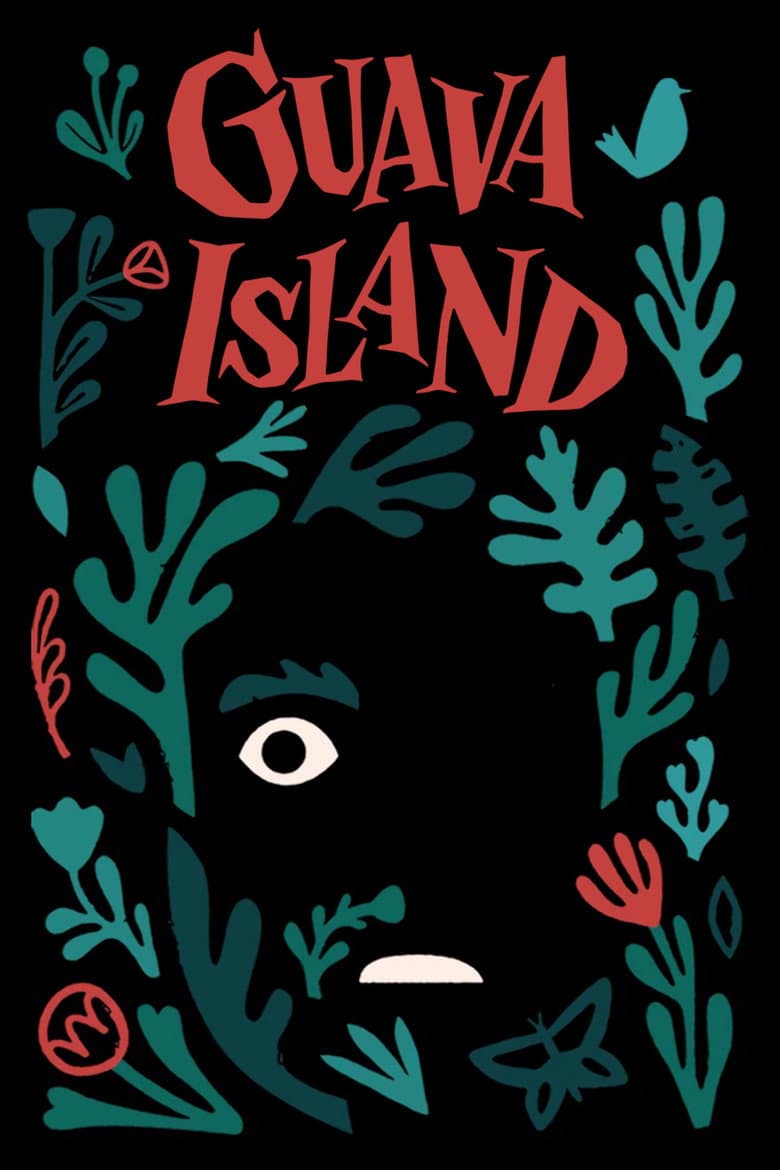
Guava Island follows Deni Maroon, a beloved local musician who works on the docks and dreams of giving his neighbors one joyful day. Deni lives with his girlfriend Kofi on a bright island where a powerful family controls the silk trade and keeps most people working almost every day. Deni plans a music festival, but the factory owner Red orders him to cancel it because the event could interrupt work. The film mixes romance, comedy, songs, colorful animation, and a sudden burst of violence as Deni risks his life for the festival.
The story treats music as a way for ordinary people to share hope and stand together. Deni calls the island a paradise that its workers cannot enjoy, and he says that America is any place where one person gets rich by making someone else richer. The film presents Red's business as a system that controls time, work, and freedom, while the festival becomes a public act of resistance. The film also centers a Black Caribbean community and its music, but its main message is about art, class, work, and the cost of freedom rather than a debate about race, gender, or sexuality.
Community feedback
Was our 52% Woke rating accurate?
Breakdown
These are the editorial factors and ratings behind our score for Guava Island.
Woke representation / casting
Not present. The film uses a Black Caribbean community, so its black-led casting fits the story world. The film does not make casting a diversity message or build its main group around a mix of identity labels.
0%
Woke political dialogue
Deni says that workers deserve a day off after working almost every day. Deni says that America is any place where getting rich requires making someone else richer. The film repeats this anti-capitalist idea through factory scenes, radio lines, and a reworked performance of “This Is America.” The message is clear and central, but it does not focus on race, gender, or DEI policy.
47%
Identity-driven story themes
Deni builds the story around a black island community that uses music to protect shared joy and dignity. Kofi's story adds a conflict between leaving the island and staying with the people she loves. The film links freedom to black cultural expression, community, and control over time, but it does not center gender, sexuality, or a modern identity campaign. Class and artistic freedom remain stronger themes than identity politics.
30%
Western institutional / cultural critique
Red's family controls the silk trade, the factory, and most people's work. The workers labor almost every day, and Deni treats the festival as a way to reclaim their time. Deni says that America is a system where one person gets rich by making someone else richer. The film makes anti-capitalist criticism a major part of the conflict, although it uses a simple fictional tyrant instead of naming real institutions.
58%
Woke character or canon changes
Not relevant. The film uses original characters on a fictional island. It does not change an established character or a real historical figure.
0%
Anti-woke backlash and complaints
Not present. The available X search showed no anti-woke reaction or specific complaint. Other public discussion focused on the music, style, short plot, and anti-capitalist message rather than calling the film woke or DEI propaganda.
0%
Creator track record context
Hiro Murai and Donald and Stephen Glover are linked to Atlanta, which often explores black identity and culture. Fam Udeorji has publicly supported fairer paths for people of color behind the camera. The team carries a moderate social and cultural focus into this film's black-led setting and anti-capitalist story. The record is mixed rather than centered on constant political activism.
36%
Production
Movie · 2019
After faking his death, a tech billionaire recruits a team of international operatives for a bold and bloody mission to take down a brutal dictator.
Movie · 2019
Los Angeles, 1969. TV star Rick Dalton, a struggling actor specializing in westerns, and stuntman Cliff Booth, his best friend, try to survive in a constantly changing movie…

Movie · 2026
A dysfunctional couple head to a remote cabin to "reconnect", but each has secret intentions to kill the other.
Movie · 2023
Inspired by a true story, an oddball group of cops, criminals, tourists and teens converge in a Georgia forest where a 500-pound black bear goes on a murderous rampage after…
Movie · 2017
In downtown Madrid, a series of mysterious gunshots trap a motley assortment of people in a decrepit bar.
Movie · 2018
In a suburban community, moms and dads, one after the other, mysteriously feel the irresistible impulse to attack and kill their own offspring.
Movie · 2019
When their car breaks down, a couple on the run headed southbound for a fresh start in the Sunshine State break into a nearby house looking for a new set of wheels.
Movie · 2016
Ronnie runs a Disco walking tour with his son, Brayden. When a sexy woman takes the tour, it begins a competition between father and son for her love.
