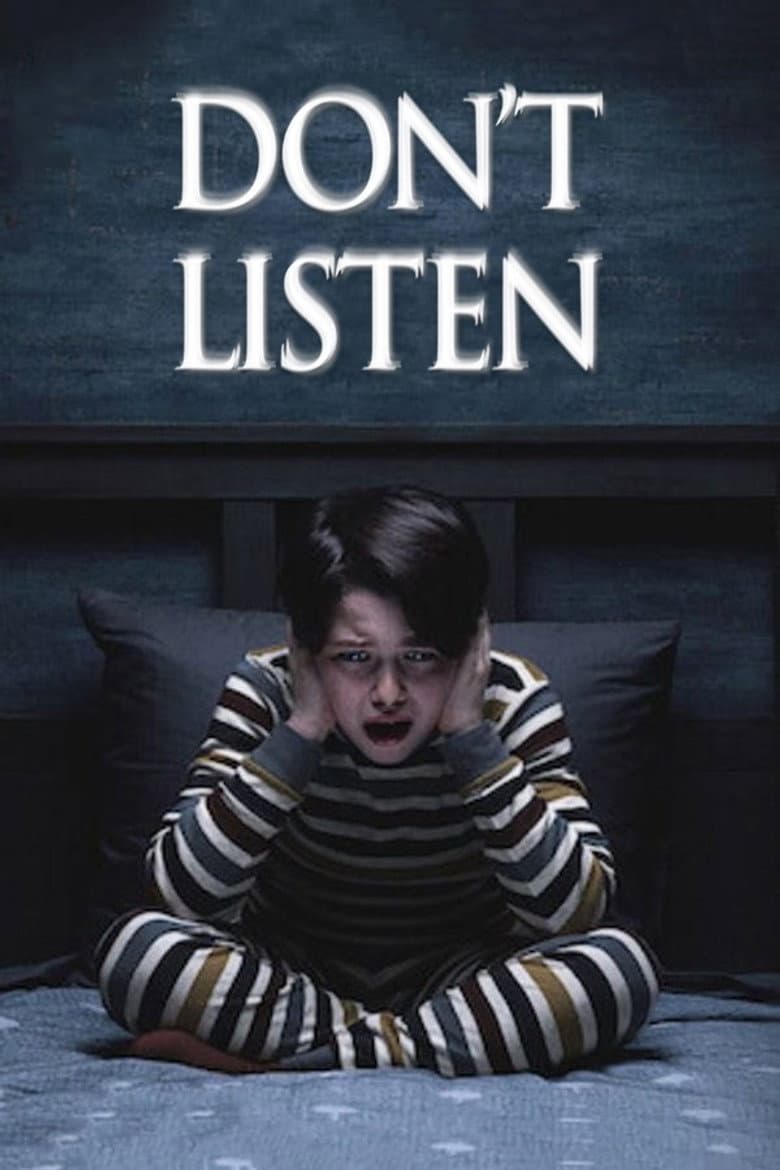
Daniel and Sara move with their young son Eric into an old house in the Spanish countryside. They plan to repair the house and sell it, but Eric soon hears voices through his walkie-talkie. After a terrible death tears the family apart, Daniel hears Eric asking for help from beyond the grave. He turns to Germán, a famous paranormal expert, and Germán’s skeptical daughter Ruth. The film has a dark, tense horror tone, with grief and family guilt driving the mystery.
The story links the haunting to an old house used by the Spanish Inquisition, where women accused of witchcraft were tortured and killed. The ghost uses voices, flies, and memories of dead loved ones to control people and drive them to hurt themselves. The story uses that history to give the haunting a grim origin. Its main themes are grief, guilt, family bonds, and the danger of trusting what people hear. Ruth brings a skeptical, technical view to the investigation, while the family drama keeps the horror personal.
Community feedback
Was our 3% Woke rating accurate?
Breakdown
These are the editorial factors and ratings behind our score for Don't Listen.
Woke representation / casting
Not present. The movie presents a Spanish family and a father-daughter paranormal team. The casting is not framed as a diversity or identity statement.
0%
Woke political dialogue
Not present. The dialogue discusses paranormal evidence, family grief, and the house’s past. It does not contain modern identity, DEI, or activist lines.
0%
Identity-driven story themes
Not present. The film’s active themes are grief, guilt, family loss, and paranormal danger. The Inquisition and women accused of witchcraft form a historical horror backstory, not a modern identity or activist message.
0%
Western institutional / cultural critique
Not present. The old Inquisition is shown as a cruel part of the house’s past. The story does not turn that history into a modern attack on Christianity, family life, or Western institutions.
0%
Woke character or canon changes
Not relevant. The movie is an original Spanish horror story. It does not change a known character, source story, or real historical figure.
0%
Anti-woke backlash and complaints
Not present. Public discussion focuses on scares, family grief, the ending, and the Inquisition setting. The separate X pass found no anti-woke complaints, and searches found no sustained DEI or identity-politics backlash. One audience review vaguely asked if the film was “Movie Politics,” but it named no woke element and did not gain public reach.
0%
Creator track record context
Producer Guillermo Sempere has backed projects about terrorism, domestic abuse, and sexual harassment. The director and three writers have no clear activist or DEI profile in the available summaries. Sempere’s wider work is mixed, and this film is a classic supernatural horror story. The track record is a weak supporting signal.
15%
Production
Movie · 2020
A couple on a road trip through America encounter a terrifying dark force older than the country itself. An evil that transforms loved ones into someone terrifying, the entity has…

Movie · 2020
When an outbreak hits, Aidan barricades himself inside his apartment and starts rationing food. His complex is overrun by infected Screamers, and with the world falling apart into…
Movie · 2017
Liam wakes from a car crash with no memory of who he is. As he makes his way into town to look for help, he finds only dead bodies, all with strange pale eyes.
Movie · 2017
In a small town in Maine, seven children known as The Losers Club come face to face with life problems, bullies and a monster that takes the shape of a clown called Pennywise.
Movie · 2018
Failed architect, engineer and vicious murderer Jack narrates the details of some of his most elaborately orchestrated crimes, each of them a towering piece of art that defines…
Movie · 2018
A teenager's quest to launch Norwegian Black Metal in Oslo in the 1990s results in a very violent outcome.

Movie · 2016
A struggling painter is possessed by satanic forces after he and his young family move into their dream home in rural Texas.
Movie · 2018
A disgraced children's puppeteer returns to his childhood home and is forced to confront his wicked stepfather and the secrets that have tortured him his entire life.
