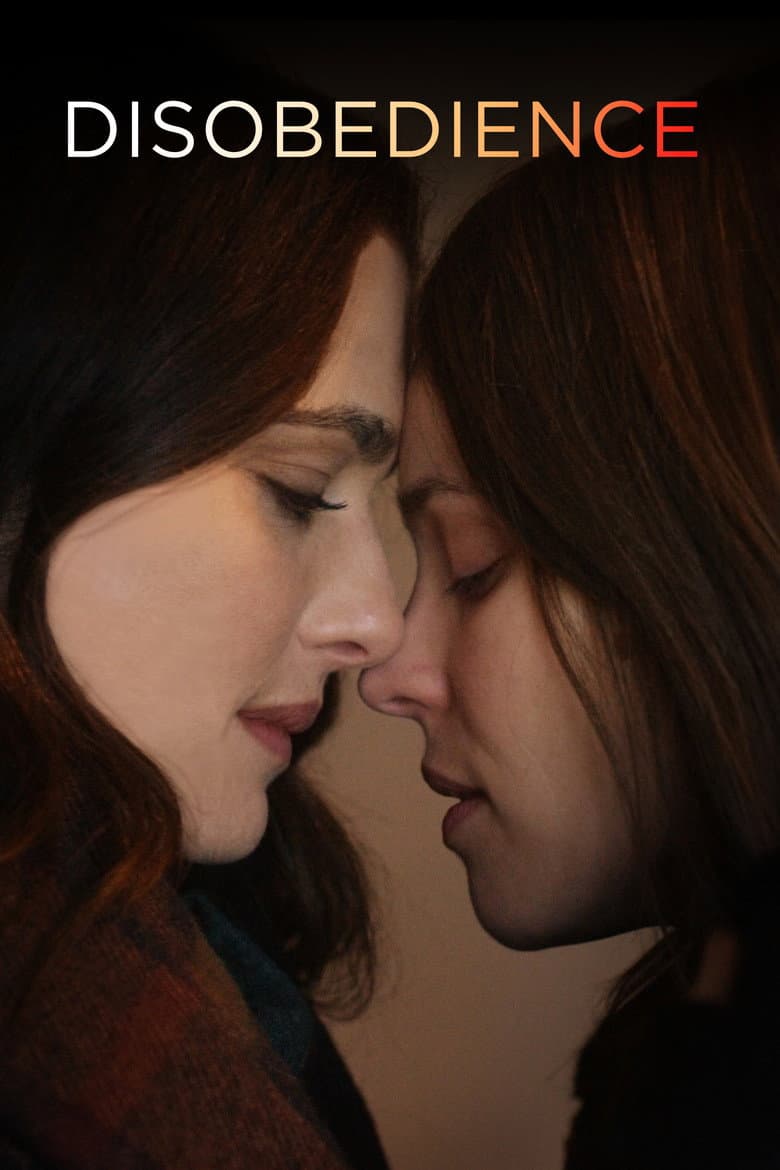
Ronit is a New York photographer who returns to North London after her rabbi father dies. She was pushed out of her Orthodox Jewish community after a childhood romance with Esti. Esti is now married to Dovid, the man who may become the community’s next rabbi. The three former friends face grief, guilt, faith, marriage, and old desire in a quiet but intense drama.
The movie makes the love between Ronit and Esti the center of the story. Esti must choose between her marriage, her religious community, and the freedom to live by her own feelings. Ronit openly questions rules about marriage, women’s names, and sexual desire. The story treats shame and strict religious rules as barriers, but it also shows a warm community and a kind religious man who finally lets Esti choose her own path.
Community feedback
Was our 91% Woke rating accurate?
Breakdown
These are the editorial factors and ratings behind our score for Disobedience.
Woke representation / casting
The two main roles are women whose lesbian relationship drives the film. Interviews and publicity stress female desire, female sexual agency, and women’s stories. The cast choices make queer identity the most visible part of the film’s audience appeal. The story gives both women the key emotional choices while the male lead mainly responds to them.
75%
Woke political dialogue
Ronit calls marriage an institutional obligation and questions rules that make women change their names. Ronit also says she would have killed herself if she had been married off. Dovid’s final speech turns a lesson about free will into a reason to let Esti choose. The dialogue repeats freedom and choice, but it stays inside the personal religious conflict.
30%
Identity-driven story themes
The film’s central romance is between two women who were forced to hide their feelings. Esti’s lesbian identity shapes her marriage, faith, work, and future. The story presents sexual freedom and living honestly as the way out of shame and fear. The ending gives Esti more control while keeping her tied to faith and community.
96%
Western institutional / cultural critique
The Orthodox community sets rules about marriage, sex, names, dress, and contact between men and women. The film shows public shame, school complaints, and family pressure as forces that make Esti hide her sexuality. Ronit openly treats marriage and religious rules as harmful limits. The film also shows caring friendships, meaningful faith, and a decent religious man, so the critique is strong but not one-sided.
48%
Woke character or canon changes
The film is based on Naomi Alderman’s novel. The movie makes the central sex scene more direct than the book, and coverage says the scene was expanded to place the women’s desire at the center. That change makes the lesbian identity theme more visible to the audience. The movie also changes the ending, but available interviews do not show that this change was made for an ideological reason.
28%
Anti-woke backlash and complaints
The separate X research pass found no anti-woke reaction or organized campaign. One published opinion piece called the film an attack on Jewish tradition and complained that it treats secular Hollywood freedom and a lesbian affair as the answer to Orthodox life. Other Jewish and Orthodox responses focused more on accuracy and casting than on woke politics. The backlash evidence is limited to a small number of critical comments.
15%
Creator track record context
Sebastián Lelio has a known history of films centered on transgender identity, LGBTQ representation, and women outside social norms. Naomi Alderman is an explicitly feminist writer whose work examines patriarchy, gendered power, and women’s equality. Rebecca Lenkiewicz has written about women’s rights and sexual misconduct by powerful men. Rachel Weisz has spoken about sexism in Hollywood and wants more stories with women at the center. These backgrounds strongly support the film’s identity-driven focus.
75%
Production

Movie · 2017
Nothing is as it seems in this riveting World War 2 thriller as a wary soldier goes to investigate a mysterious German monarch at his secluded mansion, leading him into a web of…

Movie · 2018
Seasoned musician Jackson Maine discovers — and falls in love with — struggling artist Ally. She has just about given up on her dream to make it big as a singer — until Jack…

Movie · 2017
A brilliant but impulsive young surgeon spirals into self-destruction after a painful breakup, struggling to cope with love, loss, and the consequences of his own temper.
Movie · 2019
An extraordinary look at the lives of a middle-aged couple in the midst of the wife's breast cancer diagnosis.

Movie · 2018
A man and a woman meet in the ruins of post-war Poland. With vastly different backgrounds and temperaments, they are fatally mismatched and yet drawn to each other.

Movie · 2016
Canadian folk artist Maud Lewis falls in love with a fishmonger while working for him as a live-in housekeeper.

Movie · 2020
When illness strikes two people who are polar opposites, life and death bring them together in surprising ways.
Movie · 2016
Tough ex-convict Inder and traditional mousy Saraswati fall in love and get married, but a tragedy changes their lives forever.
